Category Archives: Photography

Canon and Goebbels

Imitating the Great Liar

That infamous master of propaganda, Joseph Goebbels, remarked that if you tell a big enough lie and keep repeating it, people will eventually come to believe it.

Generations of politicians, lawyers and marketers (many of these know all about lying, of course) have taken that to heart, none more than Canon in their advertisement for their latest consumer grade DSLR. This sells for $750. Doubtless a competent and effective tool and you can see their slick ad here.

But that’s not the point. Clearly the TV ad is advertising their inexpensive mass market camera body.

No. What gets my goat is that there’s another video wherein Canon prides itself on explaining just how the ad was made – the second one of the choices on the right. A minute or so into it and we are told that no fewer than ten Canon EOS 1Ds Mark III cameras were used by the pros to take the snaps in the ad video. Last I checked those run $7,800 a pop or some ten times the cost of the featured product.

So how, pray, do pictures taken on a $7,800 camera end up misrepresented as having been taken on a consumer DSLR one tenth of the cost? And why, if the new cheap model is so good, was it not used to take the snaps in the ad? Never mind the carefully chosen words in the above (“….real photographs taken by Canon digital SLR cameras….”) the opening shot of the ad shows Mrs. Housewife clearly using the consumer DSLR, immediately cutting to the snaps taken by pros using the top of the line $8k honker. Not that you would know, of course. Anyone watching the ad would conclude exactly what Canon and its sleazy US management and lawyers intend – that all the pictures you see were taken on the camera shown.

Shame on you, Canon.

Brand awareness

We are all guilty of it.

There’s a car that is one of the fastest in the world. It is exceptionally affordable. It is supremely reliable, has very high engineering standards and comes in red, if you want. It’s possibly the fastest production car made yet the manufacturer cannot give them away because the brand is wrong. It connotes nothing so much as beer-bellied ol’ boys at the ball park on a lazy Sunday afternoon. Not the image you quite want for something that is meant to advertise “I am single, available and sexy”.

That car, of course, is Chevrolet’s Corvette. A Ferrari with like performance and looks (OK, like performance) is five times the price.

A branding failure, no matter how much GM tells you it’s there to reinforce the message of Chevy excellence. I wouldn’t be seen dead in one.

It’s the same with watches. We have all been told a thousand times that a quartz Timex keeps time as well as anything, and that is correct, yet I have two manually wound timepieces in the desk drawer which cost egregious sums to acquire and are anything but accurate, not to mention needing constant, costly maintenance. I wear neither so there they are, waiting for …. I know not what. But the makers, unlike Chevy, got the branding dead right. Low production volumes, word of mouth advertising, scarcity, exclusivity. That’s what makes a brand.

It used to be that way with cameras.

The esteemed brands which shared the qualities of those watches were few. In the ’50s the Speed Graphic (crude and effective) and the Linhof (anything but crude, and equally effective) ruled, but only one was a brand in the sense of this piece. It was not the Speed Graphic.

Rolleiflex has always been a brand and remains so to this day. Any number of great photographers used waist-level Rolleis, ungainly as they may be, and some great studio work is being done to this day with their ne plus ultra medium format, single lens reflexes. I owned one of these nuclear deterrents many years (a 6003 Pro) and it was as easy to use as any medium format camera can ever claim to be easy to use. And it was a real Brand. When you locked that Zeiss Planar or Distagon lens on the body you were not the sort of person to be messed with.

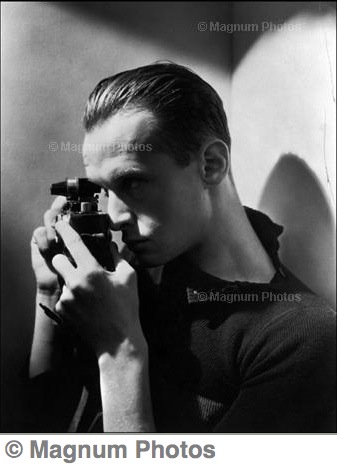
In the ’60s there was really only one 35mm brand. The Leica. Cartier-Bresson used one. That’s all you had to know and no advertisements were needed to remind you of that.

The final years of great brands were the ’70s. A fading Leica gave way to the Nikon F which is to the Leica like Hulk Hogan is to Audrey Hepburn. Neither breaks easily, but one also doubles as a blunt weapon. Thanks to an America which appears yet again to have invaded the wrong country, Viet Nam gave the Nikon F its baptism. Thereafter there were no excuses needed for its Far East provenance. It had become a brand.

Then something funny started to happen to the whole brand idea. Maybe taking a leaf out of Chevy’s book they reasoned “We have the Corvette. Why not make some econoboxes. The brand might wear off.” So Canon, Nikon et al started making genuinely horrid consumer cameras, emblazoned with their name in a prominent, contrasting shade on the front. Now Aunt Maude could make sure everyone knew that she too, like Donald McCullin, used a Nikon.

Others came at it from the opposite direction. So desperate was Olympus to be seen that they gave British birdman Eric Hosking several sets of gear to displace his aging Zeiss Contarex. It worked. The former maker of toys was suddenly being taken seriously. Pentax did the same with David Bailey and Sam Haskins while Minolta did it with David Hamilton. More recently, new brands have piggybacked on their reputations in other fields. Ricoh and Casio make great copiers, so why not cameras? Samsung of TV fame? Why, cameras of course. And there’s no need to go on about Sony and HP.

So brand identity, in a strange way, lost its elitist leanings. First, counterculture chic dictated that the rich be seen wearing Swatch watches and using disposable cameras (for their equally disposable photographs). Second, who was to know whether your Leica was the cheapy Panny from China with the red dot, or the more-money-than-sense M8 (probably also from China but they aren’t telling)? Labels, in other words, had obsoleted brands. If you can get millions to buy your Benetton emblazoned T shirt so that you can go motor racing, then clearly the label means more than the brand.

So rather than further rue the demise of Great Brands, let me just let you gaze at some of the finest, most of which I have been fortunate to use and exult in.

The Man who was Never Caught

Cycling pays.

Only the most naïve think that professional sports are clean. I’m at the other end of the spectrum, depending on that old rule which applies across all fields of human endeavor:

“Go where the money is”.

Or, stated differently, I would bet that nearly all professional sports are rigged. Whether it’s the obvious – like professional wrestling – or the less so – like baseball and American football, there’s simply too much money at stake to attract the virtuous. Those icons of American entertainment are rigged, you say? Surely not.

Well, check out the most famous baseball game ever (generally referred to as “The Shot Heard Around the World”) or the New England Patriots’ more recent cheating. Rigged.

At least I take comfort in the knowledge that the only sport I actively follow – Formula One – is totally rigged. The guy with the best stolen secrets and the biggest pocket book wins every time. So at least we know where we stand. It makes the entertainment that much better when you are realistic about its parameters.

Which brings me to cycling. After weightlifting it’s hard to think of a more corrupt sport. I very much doubt that any winner of the Tour de France has been ‘clean’ in the sense we think of that description. It’s just that some are smarter than others. And boy, is there money in it or what?

That showcase of displays of wealth, Architectural Digest, profiles one such famous cyclist’s home in the current issue. Go to the home theater and there are his seven TDF jerseys, signifying an unbeaten winning streak. And one good thing about AD is that the interior photography is pretty interesting from a technical perspective, even if the displays of money on the walls leave me cold. And to show you just how much money there is in the game, the famous cyclist’s home is on the cover, no less.

The photography is great. The home of The Man who was Never Caught.

If you like good interior photography – thought some HDR might help occasionally – pick up a copy of Architectural Digest. Just don’t look for the pure of heart inside.

Update August 24, 2012:

Well, Mr. Armstrong can now continue his work as a paid spokesman for Pfizer.

Guilty as sin. Zonker Armstrong ceases denials.

Attention spans

Blame Google.

The Atlantic, an East coast monthly magazine focused on political science (arguably as big a contradiction in terms as ‘military intelligence’) has a beautifully written article in the current issue titled ‘Is Google Making us Stupid?”. On the cover they spell it ‘Stoopid’ which seems more apt. The thrust of the piece is that Google and its ilk have forced us to reduce our attention spans to the point where the writer says he can longer read a book. He exists solely on news snippets. Sad.

But there’s more than a smidgeon of truth in this piece. Deal with anyone these days, not just young people – anyone – and chances are you will find that attention spans have indeed fallen. Communicate in monosyllabic grunts and you get what you want. Ask politely and make some small talk and you are switched off by the listener. Efficiency has relegated decorum to a back seat.

But you and I are guilty, too. You are reading one thing on the screen then ‘ping’, the machine announces an email and you dutifully jump into email at the computer’s bidding. What you were reading fades forever from memory. I can only hope that you were not reading this when that email arrived ….

Do the same symptoms affect photography? I think the answer must be a resounding ‘Yes’. As one example look at the demise of the photographic print. Why pay for something large, static and unwieldy when you can zap into it with a few clicks and look at it for 2 seconds on that miserable screen attached to your computer? You move on, the image as forgotten as that article interrupted by the email ping. You tell yourself that you are using time effectively where, in fact, you are wasting it horribly by flitting between incomplete tasks, nothing learned.

Here’s a snap I took back in the ’70s – unconsciously reflecting the surrealism of Cartier-Bresson with whom I was besotted at the time:


Speakers’ Corner. Leica M3, 35mm Summaron, TriX/D76

Appearances apart, there was very little unplanned about this picture, whose goal was to show political isolation and passivity. The flag’s position is no accident – I waited for the moment; the chap on the grass was in no hurry, after all. The London pigeon was a stroke of luck (missing from the other snap of the same subject taken that day), it’s true, and maybe adds to the overall effect, but the point of the picture is not readily grasped in a two second glance. It rewards thought.

Now open your favorite news magazine and this is what you will see:


Today’s news snippets

These are actually incredible events, all three. The nation’s highest court has just slapped down the President on constitutional grounds (you or I would be in the slammer for like behavior), yesterday’s prima ballerina at a leading Wall Street brokerage is now no more and the guy in charge of our largest bank has just closed the business he got over $150mm for a year ago en route to the executive suite of the buyer. All major, earth shattering, news events yet most will scan the above , shrug and move on. There are lessons here about hubris, corruption, power, politics, perception, strategic skill and on and on. So much to be learned. Yet the word on Wall Street has it that “…the broad at Lehman got whacked”. No analysis. No opinions. Just the facts, ma’am. No time for discussion. Get to the bottom line.

And while I grew up on Wall Street and have mostly good things to say about it (Greed is Good) I rue the days before Google for they seemed, to me, a more civilized time. Back then you repaired to Harry’s Bar after a tough day for conversation and conviviality. Now you get on the Internet. We no longer pause to sniff the flowers, we merely ask the price.

So does that obsolete the wall mounted photographic print? For many, I’m afraid the answer is ‘Yes’.

But they are not my audience and, if you read these columns, they are not yours either, for I cannot imagine my world without the luxury of time to stop and gaze at a beautiful photograph.

There goes another $50,000

Who wrote this claptrap?

Sometimes you have to think that anyone can make a living in the great country that is the USA. After all, Kodak just paid some fool in advertising to blow $50,000 of their rapidly disappearing shareholder’s equity to run this monumental piece of garbage in today’s Wall Street Journal:

Let’s pause to analyze what is wrong:

  • The audience demographic is completely wrong
  • There’s not a product in sight
  • There is no message
  • When you read that “The emotional truth of pictures is under attack”, you quickly conclude that the best use for this page is as a barf bag

You can only agree with the second paragraph. As have the markets:

But worst of all, Kodak, what on earth was wrong with that brilliant little ditty you paid copywriters for a hundred years ago? It goes something like this:

“You take the pictures. We do the rest”

Simple. Magic. Still works well. Saves ink and shareholders’ money, too. Shame on you, Kodak.