No, we are not talking about the great Hungarian composer/pianist
Humans love to make lists. Whether they are Democrats (win election, raise taxes, claim credit for economy), Republicans (win election, lower taxes, claim credit for economy), shoppers (butter, eggs, blame politicians for prices) or photographers (blame anything and anyone when the picture does not come out). Lists can aid failing memory or can force fulfillment of commitments. They can educate, cajole or just nag.
My list, as a photographer, is mentally revised from time to time, and focuses on The Most Important Inventions in Photography. It’s more fun, though, to write the list down as that makes for amusing reviews years later, generally accompanied with statements like ‘Boy, how dumb was that?’ and ‘What was I thinking of?’. So, as of now, here’s my list in attempted chronological order which, I’m sure, you will correct where errors are involved. Because list entries must have reasons, I have appended those also.
1 – Roll film, especially once unstable, combustible nitrate stock (great for making fuses for Molotov Cocktails) was replaced with inert modern plastics. Roll film made the camera both easily portable and capable of recording many images in quick succession, though you might argue the latter attribute was its biggest drawback, especially when you contemplate Gary Winogrand’s work. Credit George Eastman, Kodak’s founder, with that one, in 1888.
2 – Modern multi-element lenses that rendered most optical aberrations insignificant. Small film (see #1) means big enlargements, so optical magic was called for to allow reasonable enlargement of the images on the roll. Hard to date this one, but multi-element lenses were available well before roll film. You might argue that ‘modern’ really did not apply until anti-reflection coating (later ‘multicoating’) came along, or zooms, or aspherical surfaces, but I would disagree. By the time the Leitz Elmar and the Zeiss Tessar were commonplace in the 1930s, little was left for optics to improve, whereas film was continually improved until its demise a couple of years ago. So maybe circa 1900 for this one?
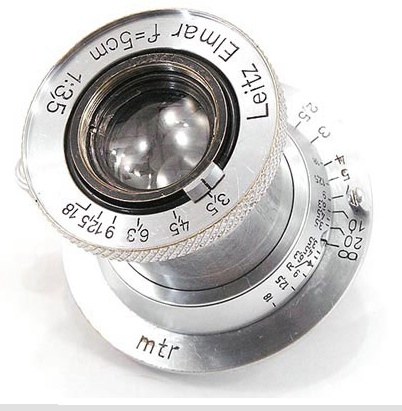
The personification of the 4 element, 50mm lens. After this improvements were marginal
3 – The coupled rangefinder. Now you could focus your small camera accurately, leaving only camera shake and bad exposure to mess things up. The idea came, like many good things in our lives, from the military, who used rangefinders to shoot at people more accurately, but some genius came along and linked the device to the focusing ring on the camera and everything was suddenly in focus. Probably around 1915, but it took until 1954 for the device to be perfected – meaning parallax adjustment and a super sharp delineation of the rangefinder patch which was finally integrated into the viewfinder. Contax had tried it in their 35mm cameras with mediocre execution. Leitz Wetzlar got it dead right in the Leica M3, then added perfection where improvements seemed impossible in the M2 a few years later.
4 – Kodachrome. A quantum leap in technology with an exceptionally fine-grained, fade-free emulsion. Make that Color Film. This one made big color prints from roll film cameras a possibility. While the product is all but discontinued, it can still lay claim, in its final iterations, to being the best color film ever. 1939 saw the first rolls for sale. With entrepreneurial insight that they sorely lack today, Kodak put up the cash for that one and it took two Jewish musicians to do the job. No one ever said that God apportions grey matter evenly across the world’s peoples.
5 – Automatic exposure. Search me who invented this but I do recall that one of America’s very early manned space shots saw the astronaut John Glenn take an automatic Minolta Himatic 35mm rangefinder point-and-shoot with him, so all he had to do was focus. Now only focus and camera shake remained to ruin a snap. No idea when this came about but I’m guessing in the 1950s or so.
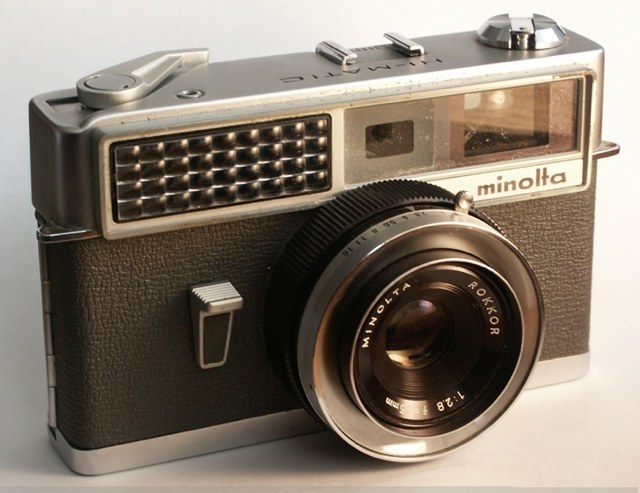
NASA’s space camera before they realized how easy it is to milk the taxpayer for Hasselblads
6 – Autofocus. Now only camera shake remained to spoil the picture. My memory is poor on this one, but Leitz messed about with their Correfot system, originally invented by Honeywell, some time in the seventies, before ceding primacy to the Japanese. An invention of sublime subtlety, it may have caused as many wrongly focused pictures as ever there were before but at least the lens was focusing on what it was pointed at. Operator error remained a foe which modern face recognition technologies are trying to address. Never overestimate the intelligence of your customer.
7 – The digital sensor. Kodak again, in the mid-1980s. Though digital sensors predate Kodak’s first 1 megapixel sensor of that year, Kodak’s was the first practical use of the technology which would go on to kill its annuity income stream from one hundred years of film sales. I doubt this was the sort of creative destruction they were thinking of at the time. A few years later and most written communication would be obsoleted by image sharing.
8 – Anti-shake cameras and lenses. Now you had no reason for a bad picture. Other than your native talents. I have no idea who invented this but it sounds awfully like something the military (meaning the US military) would have built into its aircraft spy cameras. Now given our predilection for invading the wrong place at the wrong time, quite why the military felt it needed the attendant level of detail that anti-shake conferred upon its images is lost on me.
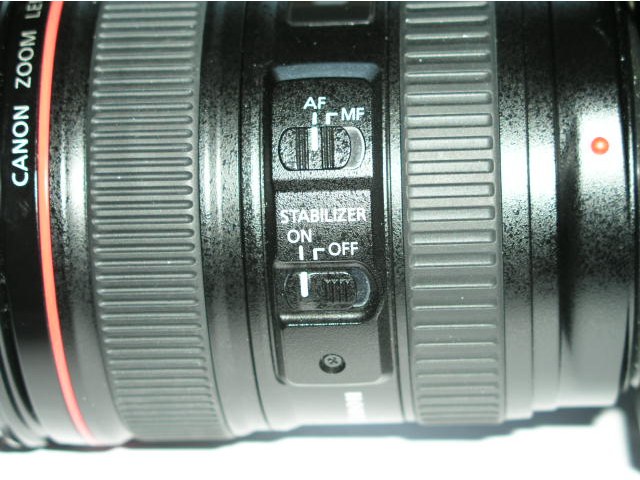
Canon’s 24-105mm L lens with IS
9 – Minituarisation. This one just sort of happened over the last one hundred years until we are now at a point where cameras cannot get much smaller owing to the finite size of our hands which, at least for now, we need to operate the camera with. The point and shoot pocketable digital camera is infinitely superior in every way to the 1901 Kodak, yet fits comfortably in your (designer) jeans’ pocket. Why, it’s almost as small as the Minox which predated it by some fifty years.
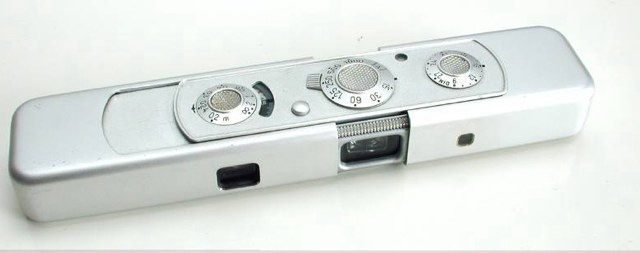
The palm-sized Minox spy camera
10 – The Internet. Well, I know who didn’t invent that one – that guy currently cleaning up on global warming. Call it the early-1980s. Now the audience for your pictures was expanded from those close to you to the whole world. And that may just be the greatest photographic invention ever.