Where to get your Rolex.

D2x, 85mm f/1.8 AFD Nikkor. Click the picture for the map.
Where to get your Rolex.
D2x, 85mm f/1.8 AFD Nikkor. Click the picture for the map.
Not for calls.
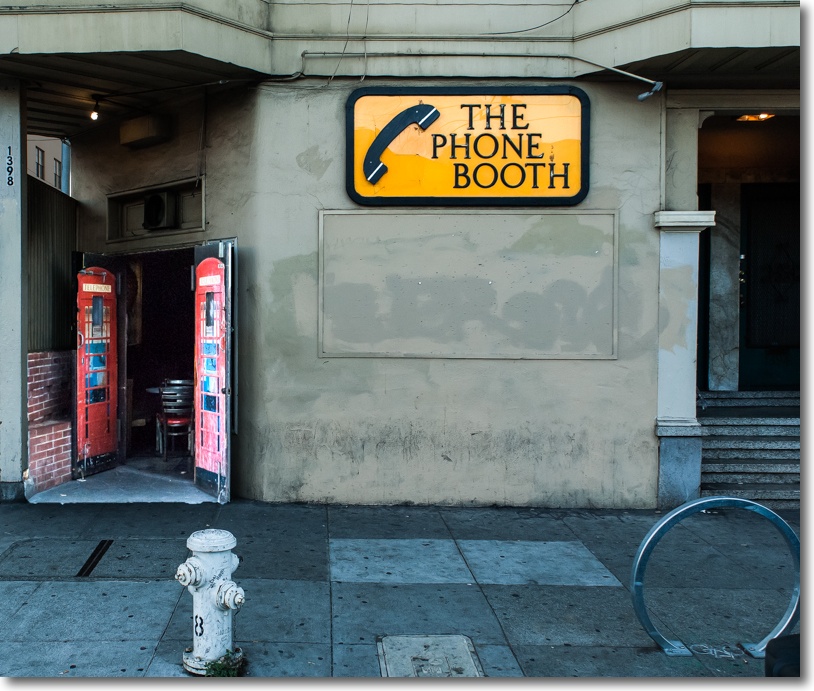
In the Mission District, SF. D2X, 20mm Nikkor. Click the image for the map.
The sort of place you might expect to bump into Charles Bukowski.
A new integrated unit.
I have had great success with the Aoka GPS receivers attached to my two Nikons – the D2X and D700. You can read all about the technology here, where you will see that a separate data logger must be used. This goes in your pocket and receives GPS data from the satellite and passes it to the device on the camera’s body. The logger has a small rechargeable battery which can be recharged from any USB socket on your computer.
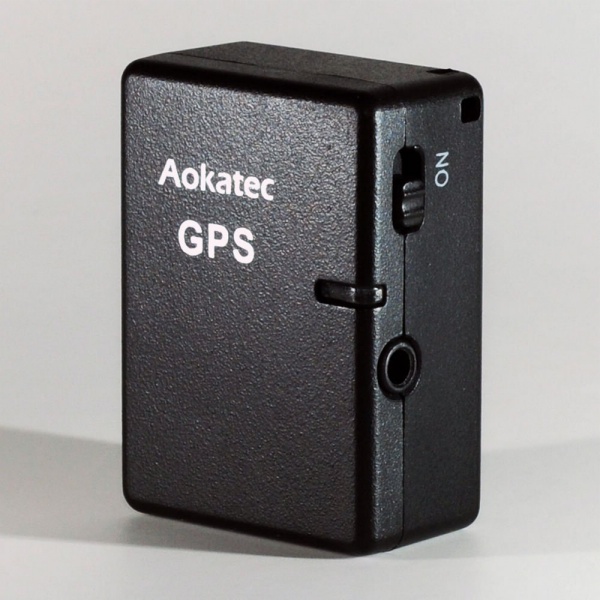
The new integrated Aoka GPS receiver.
The new receiver integrates the data logger and receiver which I use. It’s a little wider but has the advantage that it’s impossible to forget to take the logger along with you, something I have managed once or twice. The drawback is that it drains more power from the camera’s battery as there is no separate logger battery to recharge. While I have not used it, the price is attractive. eBay asks $80, Amazon has it for more. One Amazon review has some useful battery drain metrics.
The device (model AK-G1) fits the Nikon D4/3/2 in all their iterations, D800/800E, D200/300/300s, D700 and Fujifilm S5Pro. There are other models to fit the Nikon D3100, D5000, D5100, D3200, D600 (model AK-G2), and the AK-G7 for the Nikon D7000, both costing $80 on eBay. The AK-G9 for the Nikon D90 has no integrated data logger ($40 – eBay) so a separate logger would have to be used.
The only failures I have had with mine result from ‘canyons’ in the city shading the satellite or not giving the device the 2-3 seconds to wake from sleep after a period of inactivity. I have also found that the older D2X is far faster at re-displaying the ‘GPS’ flag on the top LCD display than is the D700. So much for progress. The new device looks like a better mousetrap, especially as my separate logger can only support one camera at a time. Switch the D2X and the D700 on simultaneously and the D2X grabs and hogs the signal every time. The one logger cannot simultaneously drive two camera receivers.
Here’s the device on a Nikon DSLR – stock photo from the maker; I’m guessing it’s a D300:
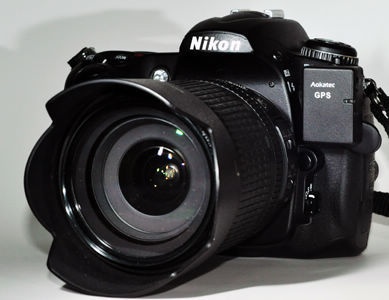
As a friend of the blog and GPS expert points out, as GPS technology improves the advantage of these devices is that they can be inexpensively upgraded rather than having to buy a new camera body.
For comparison, here’s the earlier unit attached to the D2X, along with the small, separate data logger.
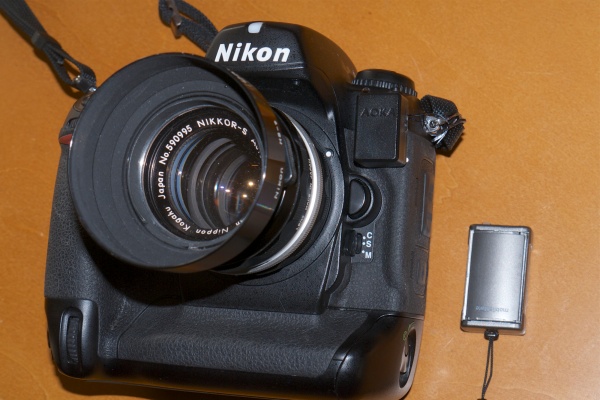
D2X with receiver and data logger.
I cannot find inexpensive aftermarket devices for Canon DSLRs. The factory units run $195 for a Nikon shoe-mounted unit with a clunky cord connection to the socket and $250-279 for the various Canon units. Both seem ridiculously over-priced to me.
The book of the show.
For an index of all my book reviews click here.
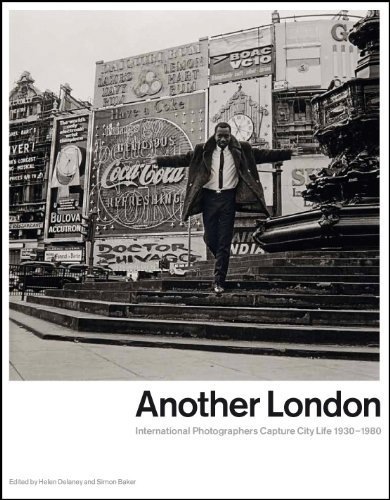
Click the picture for Amazon US. I get no click-through payment.
‘Another London’ ran at the Tate in London July 27 – September 6, 2012 and the book will be available in the US March 5, 2013, though you can order it from Amazon UK now.
It is excellent.
This book is especially poignant to me as it roughly ends – 1970, there’s little content after that – with where I started taking London street snaps (1971 – 1977) before immigrating to the US. My point is that every street snapper should be doing this sort of work. Why? Because even my 1977 efforts are now instant history, impossibly dated in the light of the great changes London has seen in the past 35 years. As the rate of change accelerates, a street snap taken in any major city today will be history ten years hence.
You can download a free PDF of my book, Street Smarts, by clicking the picture below.
Click the picture to download my book.
City surroundings and architecture have never been more ephemeral and every good street photographer has something akin to a duty to document that which he sees around him, for it will be gone before he knows it. And he needs to do this before the world is taken over by Starbucks, McDonald’s and Apple stores.
Late sun.

Nikon D2X, 20mm Nikkor. Click the picture for the location.
The many electrical cables were removed in PS CS5 using the Spot Healing Brush Tool in Content Aware Fill mode. A touch of perspective correction was also applied in Photoshop using the technique described here. That’s a better method than using the tools in Lightroom 3/4 as far less is lost using PS. Similar results can be accomplished using GIMP, which is free.
The sheer stupidity of Americans refusing to invest in infrastructure and burying power cables is seen annually. Bad weather takes out power for whole cities, often for one or two weeks at a time (can you say Hurricane Sandy?) at enormous cost to the economy, yet all we do is simple repair the utility poles and restring the fragile cables above ground. The opponents of doing it right? The same morons who drive to work on government provided roads using government provided GPS while cussing out ‘big Government’. The one-off cost of a permanent fix would be repaid in a couple of years. And photographers everywhere would be grateful, too!
Here’s the version with the cables in place: