The Fuji X100 – time to wait

Not ready for prime time.

I have been reading David Pogue, the New York Times’s technology columnist, for ages. What he lacks in sheer technical knowhow he more than makes up for in his ability to get to the point of the real world user. Sort of like Consumer Reports. Neither may know exactly how fuel injection works, say, but both will tell you straight whether the car can be guaranteed to start when the ignition key is turned. That’s what users need.
So while his review of the Fuji X100 is replete with a howler or two which will make ‘experts’ cringe (he describes it as a great portrait camera, despite the short lens, etc.) he does hit the nail on the head in disclosing what is now a worryingly frequent complaint on chat boards from those lucky enough to have got an example of this rare beast. And as I am more likely to believe Pogue than I am the average chat board aficionado, here it is, plain and simple:

“You should also know that the camera doesn’t focus quickly, especially in low light.
It does have an autofocus assist lamp that comes on in dim rooms,
briefly providing enough illumination for it to focus,
but time is going by meanwhile.”

First, forget using an autofocus lamp. This camera is meant to be stealthy, not a walking advertisement. Next, with my jarring experience with the 20mm Panasonic for the G1, which I returned almost as soon as I bought it, I am super sensitive about fast autofocus. The Panny was simply unable to focus fast enough for street snapping, delivering a 30% focus failure rate in the almost 500 exposures I made with it, and I don’t propose to relive the experience with the X100. I suppose you could use the camera for landscapes or whatever, but fail to see what it adds compared to the regular DSLR in that regard. The fact that the X100 is small, has a real optical finder and is quiet and unobtrusive, is what turns my crank, and street snaps are what I mostly do.

Yes, there are several other quirks in the design which can be cured by Fuji tweaking the software (button assignments, menu layout and the like), but speeding up the focus operation is not, I would guess, one of them. Your focus motor is either fast or not. In this case, it increasingly seems not.

This is not the low risk prospect that buying the iPad on Day One of availability was. Apple had several years of touchscreen development under its belt with the iPhone so screwing up the iPad was not a big risk. By contrast, what we have in the Fuji is a camera with a massively complex EVF/OVF eye level finder from a low volume manufacturer not known for making like products. That’s high risk in my book. The X100 Mark II will likely get it right, and I’m also hoping that the likes of Panasonic come out with something as good or better by then, at a saner price.

So, for now, I will either cancel my X100 order or flip the camera on eBay if it still commands today’s 50-100% black market premium at my date of purchase. Free money is never a bad thing. The latter option will, at least, allow me to try it for myself.

City Lights

An icon.

Go to any American bookshop, if such a thing still exists in your area, and you will find some 10% of the shelf space dedicated to what is collectively referred to as ‘Self Help’. Billions have been made from telling others how to do it, enriching the authors and publishers but must certainly not the readers. How to Make a Million, How to Sell Real Estate, How to Find a Spouse, How to Use a Computer, How to Take Pictures (good luck with that), How to Find Inner Peace, How to Beat the Stock Market (same as finding Inner Peace in my book and just as hard) and, funniest of all, How to Find Yourself.

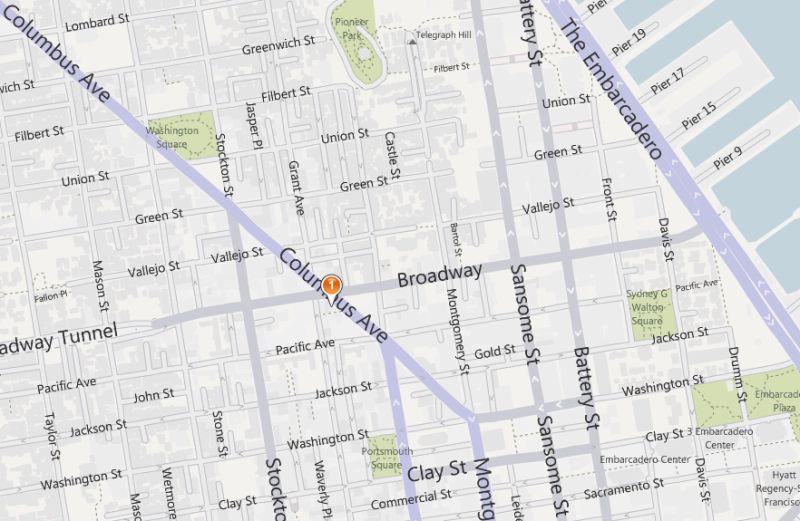
Judging from the prevailing content at City Lights Books on Columbus Avenue, at the foot of Little Italy in San Francisco, most of their patrons are lost, because psychology, philosophy, new age stuff and so on quite dominate the store. There are lots of patrons trying to find themselves here. While I would argue that little of worth in the field of philosophy postdates the writings of the Frenchman René Descartes (the dour stoic who gave us “I think therefore I am”, Descartes was that rarest of Frenchmen, a man without passion) and the Scot David Hume (the empiricist who pronounced “Reason is, and ought only to be the slave of the passions”, Hume was that rarest of Scots, a man of passion) this in no way takes away from the need for a great bookshop like City Lights.

City Lights. G1, kit lens @ 24mm, 1/640, f/4.8.

I removed the ugly overhead wires using a combination of the Content Aware Fill and Clone Stamp tools in PS CS5.

The focus here is resolutely on the left or, as the current euphemism has it, ‘progressive’. That in no way takes anything away from a fine bookshop.

So no visit to the jewel of the west coast is complete without a call at City Lights. So famous is the store that it even has its own Wikipedia entry and, around the corner, there’s a street named after one of the founders. Shades of literary France.

City Lights Books is an amazingly fun place to visit. Not only are the chances high that you will find some fascinating gem to read but just observing the patrons is pleasure enough in itself.

Then and now

Group vacations.

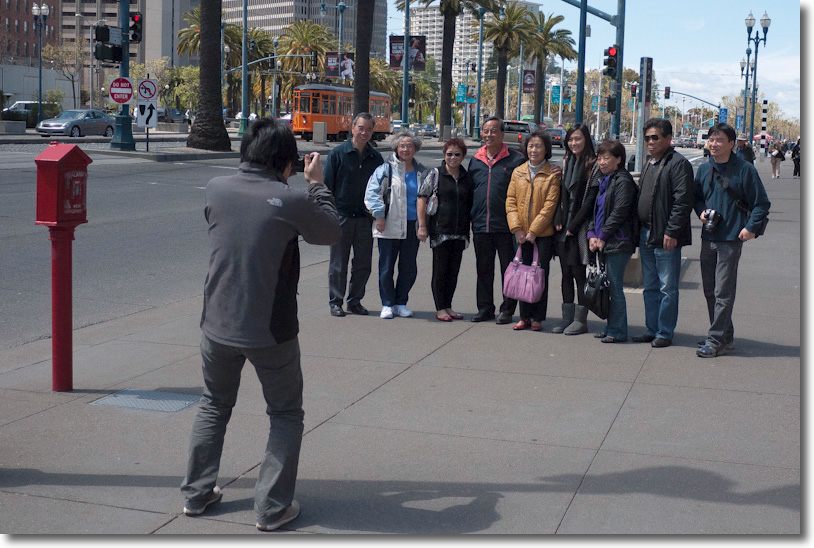
I was reminded of a picture I took in the early seventies when snapping this yesterday:

Japanese tour group, 2011. G1, kit lens @ 18mm, 1/2550, f/3.9, ISO 320

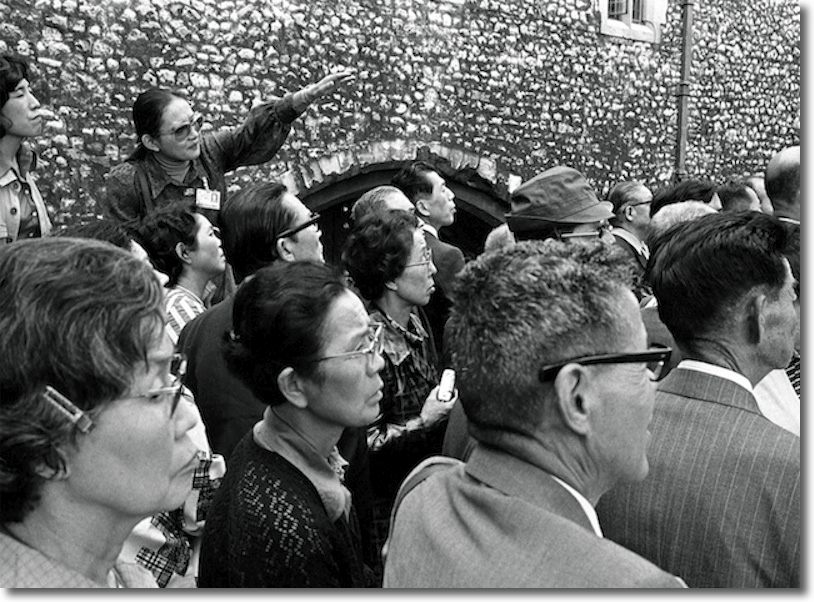
Here’s the earlier version, from the Tower of London:

Japanese tour group, 1974. Leica M3, 35mm Summaron, TriX.

Not much changes. The same unity of focus, the same group mentality, the same adherence to instructions. Nice people, though. Had the big earthquake been in San Francisco, the headlines would be replete with tales of looting and theft. All we saw in Fukushima was peaceful cooperation, courage and decency,

Another fine Photoshop CS5 book

Evening again.

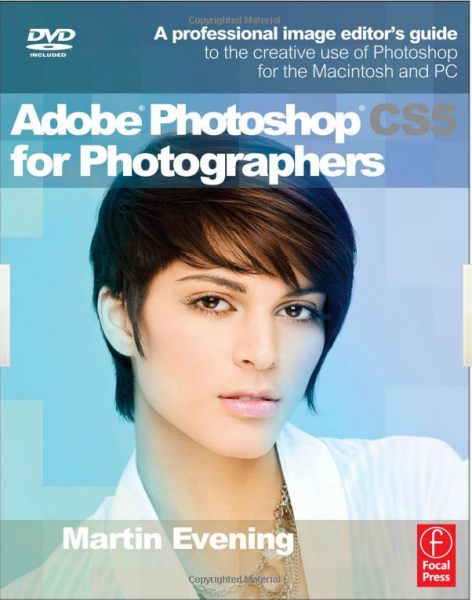
I made mention of Martin Evening’s fine photography and technical writing when I looked at his Lightroom 3 book a while back. Having just upgraded from Photoshop CS2 to CS5, I favorably commented on Richard Harrington’s book recently. It excels for its author’s clear language and an abundance of videos, even if the definition in those is sorely lacking.

Given my previous experience with Martin Evening’s work I went ahead and splashed out on his CS5 book. By contrast to Harrington’s it’s more print than video; the quality of the videos is simply outstanding and I only wish there were more. His video on masking and replacing the background in a subject is so well done that I tried it with a couple of my own snaps and the instructions worked perfectly first time. The chapters are color tabbed so that you can jump to what you want with ease, and taking this large work in bite sized chunks is, I find, the way to learn. It took a couple of decades to get PS to where it is to day, so no one is going to learn it overnight.

Click the picture to go to Amazon.

I find I tend to watch the Harrington book videos on my TV whereas I tend to sit at the HackPro and work my way through the Evening examples. Like Harrington’s, the book comes with a DVD replete with pictures and videos.

Recommended. And I have to go back on what I wrote about the LR3 book; it’s far easier to use a paper copy than an iPad version. It’s just easier to look things up in a book.

Small sensor noise

Working with the G1.

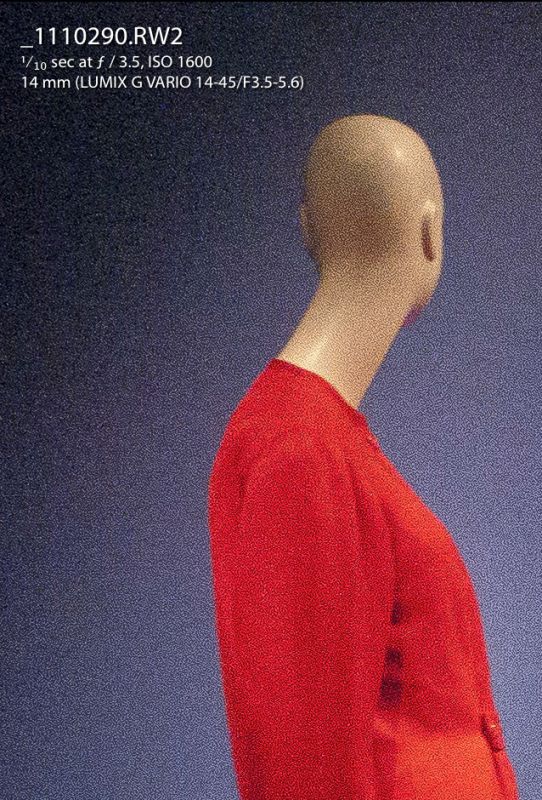
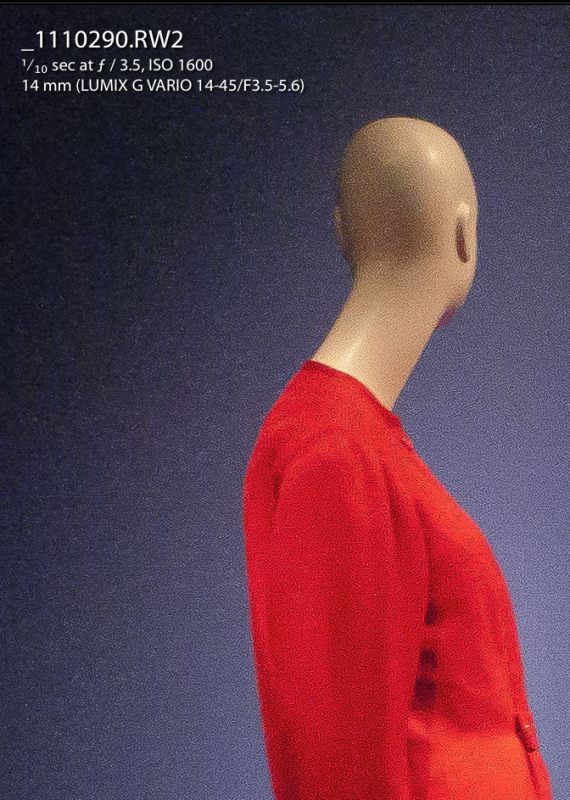
In addition to avoiding the Nazi guards trying to enforce a truly moronic ‘No Photography’ rule at the de Young Balenciaga show, I had to contend with camera shake and noise from the Panasonic G1’s small sensor which, even cranked up to ISO 1600, was resulting in long shutter speeds. While the OIS in the kit lens helps greatly, adding two full stop’s worth on the shutter speed front, it’s still all I could do to get a half decent image in the low lighting used at the show. The 1/10th shutter speed in the images below figures to probably an effective 1/40th as regards camera shake with the benefit of the magic that is OIS anti-shake technology. The 28mm (FFE) focal length used also helps, adding a further stop compared to a 50mm standard lens, so that 1/10th makes me look a lot better than I really am, figuring to an equivalent 1/80th or so with a 50mm lens and no OIS.

You can see the original snap which I am talking about here.

In the following images I show enlarged screen shots from Lightroom 3 which are equivalent to a 30″ x 45″ print, meaning huge.

Here’s the first snap with only standard sharpening applied on import of the file to Lightroom, meaning 100/1.1/64 which I find optimal in counteracting the anti-aliasing filter in the G1. Noise reduction in LR3 was set at 0:

Luminance noise is clearly visible though I also have a 13″ x 19″ print in front of me, made on the HP DesignJet90 printer on HP Premium Plus Satin paper (the textured surface tends to mitigate noise to some extent compared with glossy paper) which is perfectly fine unless you stick your nose in it.

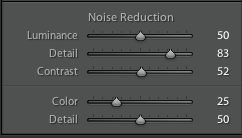
In the next picture I applied the following settings in the Detail panel of the Develop module in LR3:

Anything much over 50 on the Noise Reduction – Luminance slider results in artifacts, and falling definition, so it’s a juggling act between noise reduction and sharpness.

The bottom line is that, even at ISO 1600, the small MFT sensor in the Panny can more than cope with noise at any reasonable reproduction ratio for your images. And, as I wrote here, anyone knocking the Panasonic kit zoom as a piece of plastic junk is simply clueless and would likely be better employed telling innocent patrons not to take photographs at costume exhibitions.

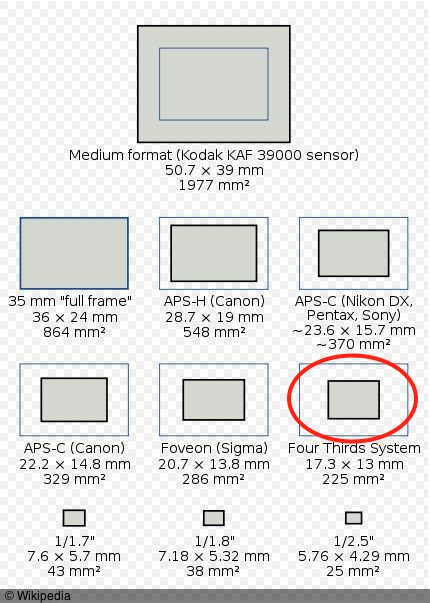
To get an idea of the relative size of the Micro Four Thirds sensor (same as Four Thirds – circled) the following image from Wikipedia tells all – it’s approximately one quarter of the area of a full frame sensor as found in the costliest DSLRs:

Incidentally, with the near-grainless sensors in full frame 35mm DSLRs it’s very hard to make a case for the extremely costly medium format DSLRs from the likes of Hasselblad (made by Fuji), Leica with their S2 and others. The gear is far heavier, the lenses bulky and the cost exorbitant, not to mention having to cope with huge file sizes which will need superior computer gear to process efficiently.