No looking back

An interesting exchange with a reader.

A friend of the blog left an interesting Comment/question the other day which I was pleased to debate. Absent a digital point-and-shoot, Michel is still largely a film user of all formats from 35mm to 4″ x 5″, with Leica M6 and R hardware as well as a Hasselblad 501. He’s thinking about a G series Panny for the same reason I took the leap – small, decent sensor, good lenses. Our exchange is repeated below, with Michel’s permission.
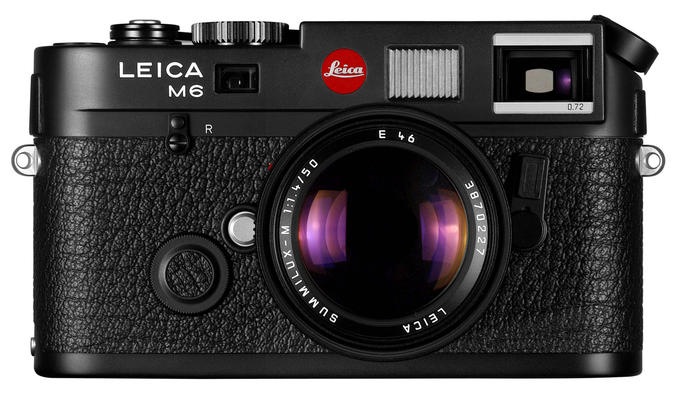
The M6 – an exemplar of the last generation of film cameras.
Michel – interesting question.

Full frame cameras:

First I cannot go back to a heavy full frame camera owing to wrist and back pain. Second, I cannot adopt an M9 owing to absence of autofocus and silly pricing. Lenses have a decent life expectancy, sensors do not, so $7k for an already obsolete sensor fails my basic test of economics and useful life. Case in point, I took a beating on the sale of the 5D whereas all my Canon lenses sold at 80-90% of my cost of 5 years ago.

Until/if FF cameras get much lighter, I have no interest in one. Equally, had you told me five years ago that I would be selling the 5D for an MFT sensor (which did not exist at the time) I would have laughed. So ‘never-say-never’. The design genius residing in Japan is quite capable of crafting a Full Frame body which takes a series of compact, high spec lenses and has a superb EVF which is, even in the G1, superior to anything on any Leica RF in poor light. However, if the Japanese continue to perceive there is too small a market for those, we will never see one. Great design and consumer demand/profits are not the same thing.

Small sensors:

I expect small sensor cameras to only improve over the next few years. Case in point, tests (not mine, as I have yet to try it) suggest that the second ever sensor made for MFT cameras (all Panasonic and Olympus models have used the same sensor until now), the one found in the costly Panasonic GH2, is noticeably better than the original model in the G1, EP-1, etc. I wrote off the MFT format when it was introduced and I was dead wrong. (Well, I did call the iPad right, buying two on the first day!)

The most used camera:

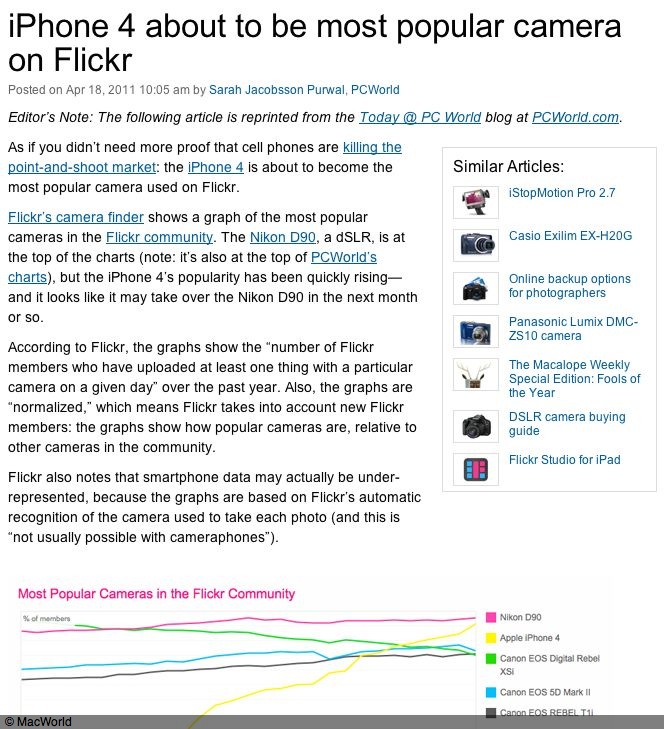
I just read today in MacWorld that the most used camera on Flickr is about to be …. the iPhone4. So I am not alone in wanting small, light and take-it-with-you-without-excuses gear. Interestingly the big body DSLRs seem to be peaking, looking at the chart below.
Cameras and trucks and prints:

A while back Steve Jobs said that the desktop PC (and, by inference, the traditional laptop) will become the ‘truck’ of the computing world. It will be a limited use, special tool for the few power users who need it. I believe the full frame and medium format digital cameras of today are already heading in the same direction. Those who need big enlargements will continue to justify putting up with the bulk, weight, noise and cost of the gear. But given that even the cheapest point-and-shoot more than adequately fills a 50″ LCD screen at home and with a little care will yield 13″ x 19″ enlargement (the maximum the ‘prosumer’ printer can do) and that paying just a little more gets you an excellent APS-C Nikon/Canon or MFT Panny/Oly which can scale to 18″ x 24″ paper prints without too much difficulty, who needs more? How many prints larger than that does the average consumer have at home on the wall? I would bet none. There’s is a growing case to be made for the argument that the traditional photo print is, in fact, dead.

One size fits all:

You make the valid point that Ansel Adams might not be the right candidate for a small sensor digital. Agreed. His descendants will happily continue using trucks. And you don’t need me to tell you that ‘One size fits all’ seldom works. Choose the right tool. However, given my avocation for street snaps and the occasional studio portrait, rather than the other way around, MFT works fine for me and I’m sure if I did the research there are some APS-C bodies every bit as capable. Pentax is a master at miniaturization and has produced some nice small APS-C bodies and lenses. Let’s hope that overpriced baubles like the Fuji X100 (yes, I am on the waiting list!) will spur the big boys into competitive action.
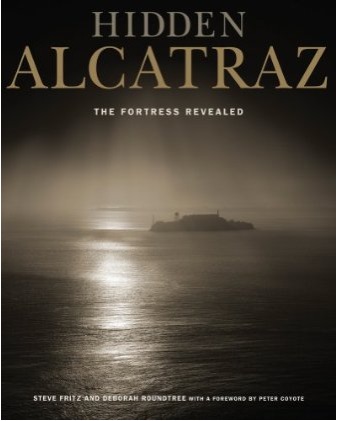
Hidden Alcatraz

Book review.

Click for the book on Amazon

This slim book of some ninety photographs presents a current documentary on the cruel, decaying prison on Alcatraz Island in the bay of San Francisco. Cruel in so many ways, from the views of both the Golden Gate and Oakland Bay bridges, from the sounds of freedom wafting from the mainland on the prevailing wind, for the views of America’s most beautiful city so close yet out of reach. It’s as if it was located to enhance the suffering of the inmates for some sadistic purpose, purportedly in the service of man. The Constitution forbids cruel and unusual punishment and while there’s no excusing the actions of those who ended up in Alcatraz, there’s even less excuse for the sheer brutality of the concept.

Clint Eastwood starred in a fine movie Escape from Alcatraz which speaks to the only successful escape, by three inmates, which shows well the inhumanity of the place. Short, sharp and well acted by all, it’s an excellent companion piece to this book, whose Foreword by Peter Coyote is startlingly well written. What sort of person has it in him to become a prison guard, let alone a governor of such an institution?

This book has current pictures, many of which show the merciful decay of this horror story, and contains many memorable images. Perhaps the most poignant is also the simplest. It’s by Peikwen Cheng, appropriately enough a resident of a prison to over one billion souls, and appears on page 40. Titled ‘Days Go By’ it shows the scratches made on a cell wall by an inmate, counting the days of his incarceration. Nothing could be simpler or more powerful.

A mix of well reproduced color and monochrome images, the book is recommended if you like atmospheric photography with a message.

Tattoo you

Ugh!

I used to think that tattoos were the province of the dregs of society. You know, white trash. (They tend to show poorly on non-white skin ….) Then many years ago I learned that Kind Edward VII of England sported one on the royal behind and realized that poor taste was classless and universal.

The problem for those making a commitment to being voluntarily scarred for life is that the things are very hard to remove. Further, you had better be sure about your loved ones because that tribute to ‘Violet – ’til death do us part’ tends to get a bit old when you find her in bed with your best friend, and the heart on your chest lovingly pierced with an arrow proclaiming ‘Mother’ takes on a new meaning when you find that when the old lady croaked, she left her not inconsiderable pile to the local humane shelter, dashing your visions of that new sports car.

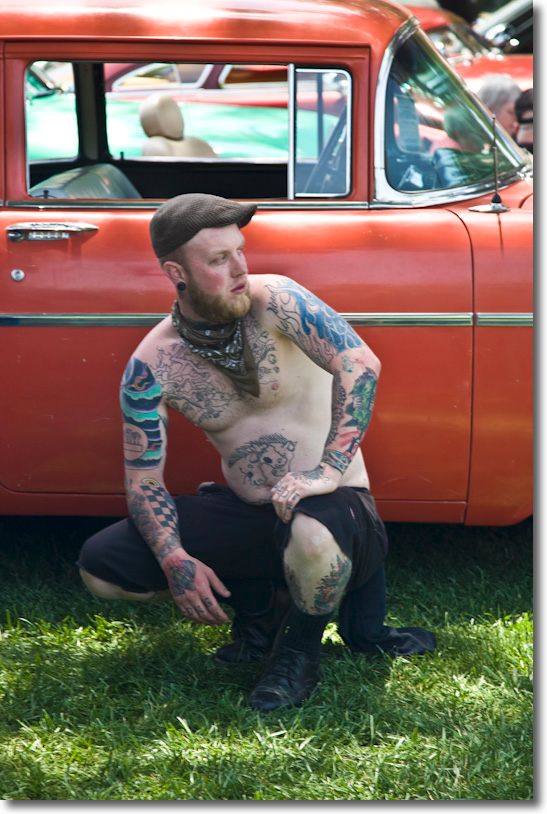
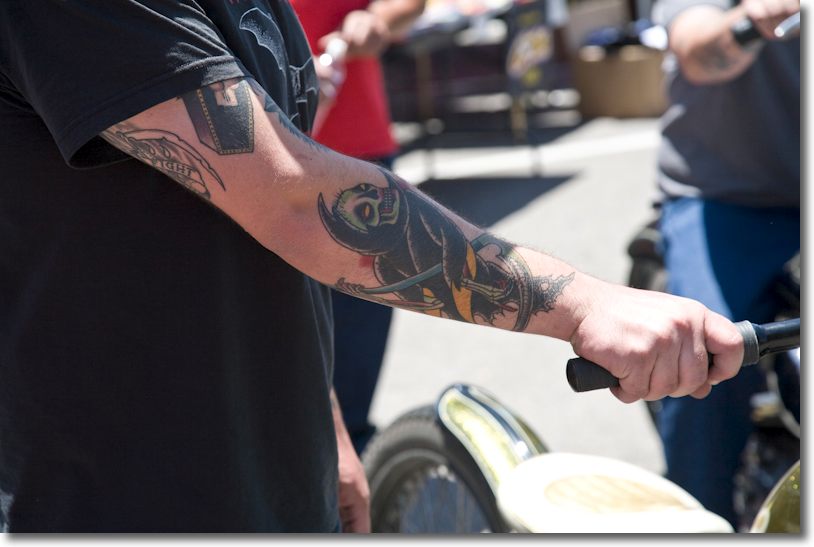
Here are a few of the more colorful irreversible indiscretions I have chanced on in recent times:

Bikers. G1, kit lens @ 28mm, 1/640, f/7.1, ISO320

The car painter. 5D, 24-105mm @ 90mm, 1/90, f/4.5, ISO 125.

Full throttle death’s head. 5D, 24-105mm @ 100mm, 1/500, f/5.6, ISO250

Weddings by Buissink

A true master of the genre.

While I have never wanted to make so much as one penny from taking pictures, I greatly respect those who do.

It’s a very tough way of making a living, made tougher in the digital age of “anyone can take a picture”, whereas in reality the percentage of camera owners who can do so has never been lower. Aunt Nellie with her POS point-and-shoot will make sure that the bride’s dress is eyeball searing white, not an iota of detail left in the trashed highlights and the groom’s tails will be every bit as lacking when it comes to detail in that expanse of black. Of course, there’s a good chance that everyone’s eyes will be closed and there will be a tree growing out of the bride’s head. There’s a reason Nellie’s pix are free and an equally good one why a real pro charges a great deal for his services.

Other than fashion photography where only a handful make a real living, surely one of the toughest fields has to be wedding photography. Except perhaps in Hollywood, there’s no repeat business for the most part. The stress is enormous. The photographer has to be a master orchestrator of diverse personalities on what is, for at least two of the participants, one of the most stressful days of their lives. The one trying to look her best and weak from all the fasting and exercise, the other trying to disregard the hangover. And the pictures must come out. Failure of equipment or technique is simply not an excuse. Further, everyone now expects to see the proofs at the reception after the wedding, so the photographer is running on fumes for the best part of a day. And did I mention the videos? Not my idea of fun, so when I see work of this nature done at an exceptional standard, my respect for the photographer is immense.

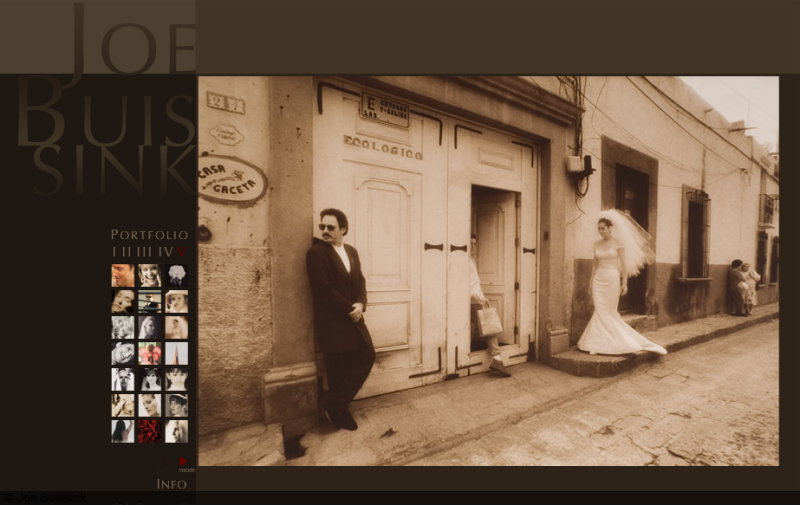
While it’s not a genre I’m especially into – it’s not like you search out wedding snaps to enjoy good photography – I know great work when I see it and none is better than that of Joe Buissink, a high-end wedding photographer in southern California. His work transcends the mere record which is most wedding photography and becomes art. The pictures are great despite the subject.

Here’s an example of the man’s art, taken from his web site. Cartier-Bresson would be proud of this one:

Click the picture for Joe Buissink’s superb web site.

No, you will not find ugly or fat (or ugly fat) people on his site, and for that we should all be truly grateful. His women are gorgeous, the way they should be on this most special of days in their life. His men are handsome. And the children properly dressed and simply divine.

The StackShot

Stepper for macros.

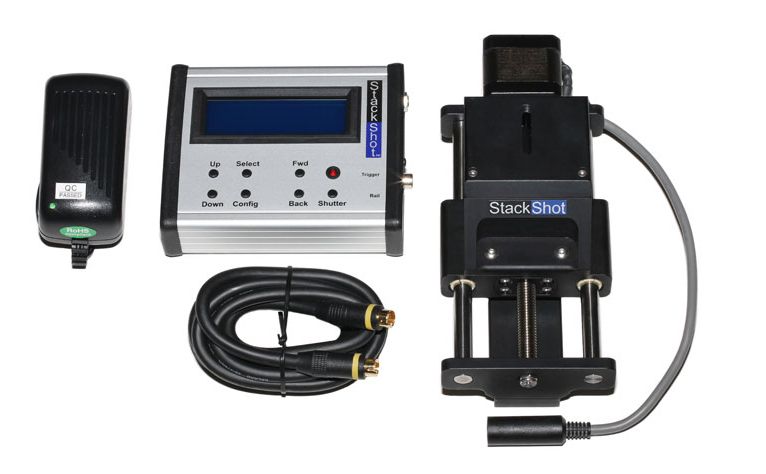
It’s a little strange to be writing a column about macro photography when I just sold my Canon 5D and 100mm Canon Macro to a good home. Still, I found myself sharing some details about Helicon Focus with the new owner and notice that Helicon’s web site now refers to a device named the StackShot. This is a focus rail with a built in stepper motor which allows movement of the camera toward the subject in predetermined steps, all set on a small LCD controller.

I have not used the StackShot so cannot comment but what little there is from users on the web it seems to be a solid device. The value of such a device is with very small subjects – bugs say – where the camera movement between snaps has to be extremely small, owing to the high magnification and small size of the subject. The StackShot’s inter-photo interval can also be varied to permit proper recycling of a flash tube if you use one. The resulting images are then stitched together using HF in the usual way – a process rendered trivially simple by this superb application.

You can see an excellent video of the device in action, made by the manufacturer, by clicking here.

The StackShot kit.

The maker says that steps can be as small as 0.01mm and while it’s not cheap at $475, it does look like just the thing for those special subjects. For another $50 there’s a version with a USB port allowing control from your laptop, but I cannot figure out from the operating manual on their web site whether the software runs on OS X on a Mac.