One hundred yards – Part I

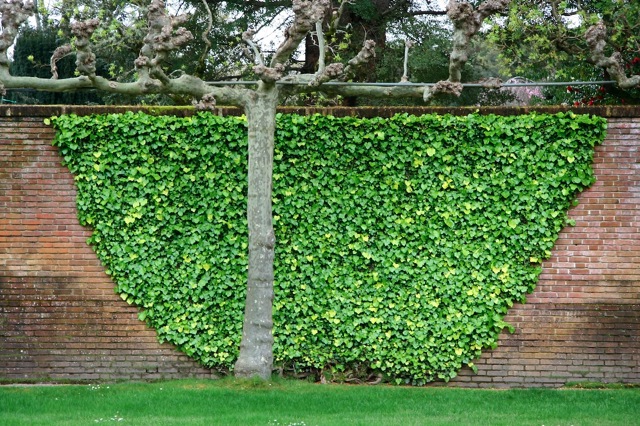
Some of the best pictures are one hundred yards from your doorstep. Or less..

Given how much time we spend in our homes, it’s surprising that many photographers feel they have to journey to remote, exotic locations in search of picture opportunities. They arrive tired, are in a strange location which they have no time to ‘learn’, and leave frustrated. You must make the return flight and have to make do with whatever weather is around at the time.

By contrast, the circle centered on your home, with a 100 yard radius, provides some of the best photographic opportunities. You know the area, are rested and have no deadlines. There is no return flight. And you can wait for the weather to come to you.

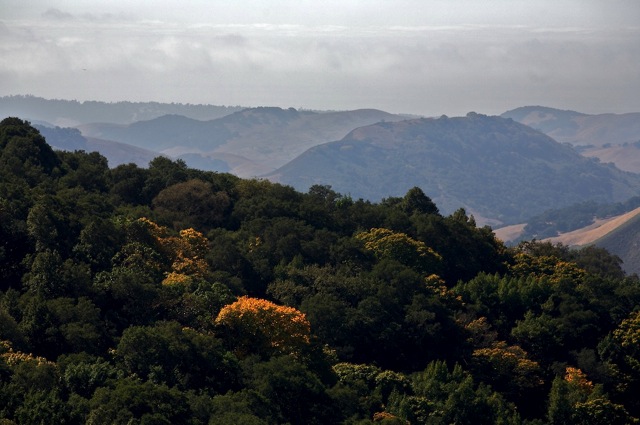
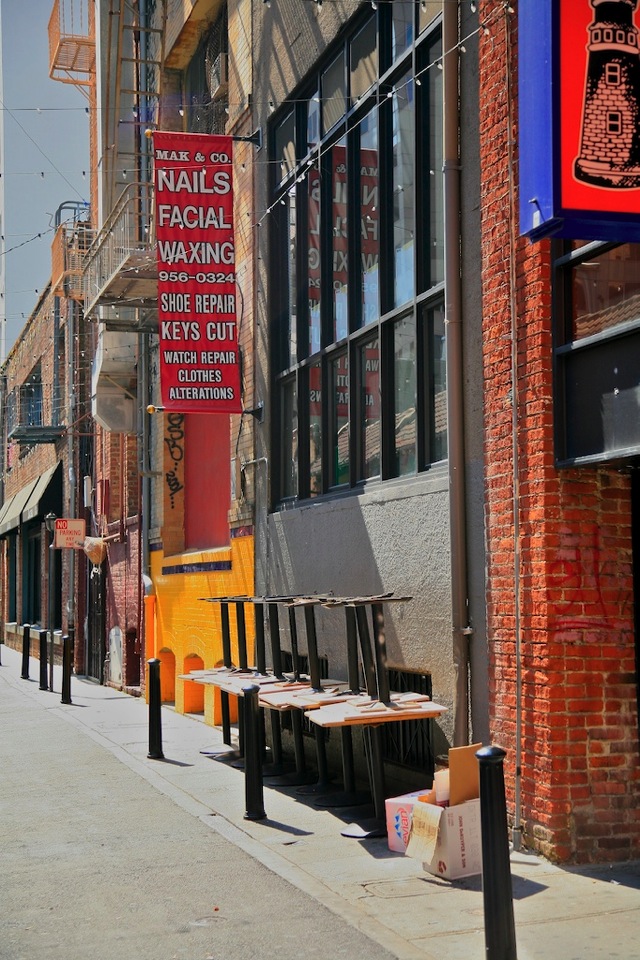
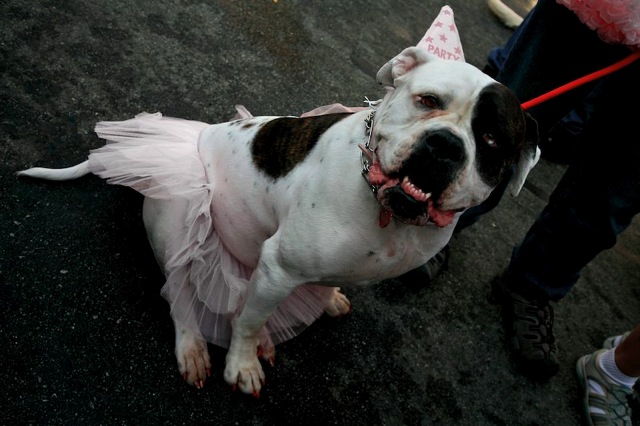
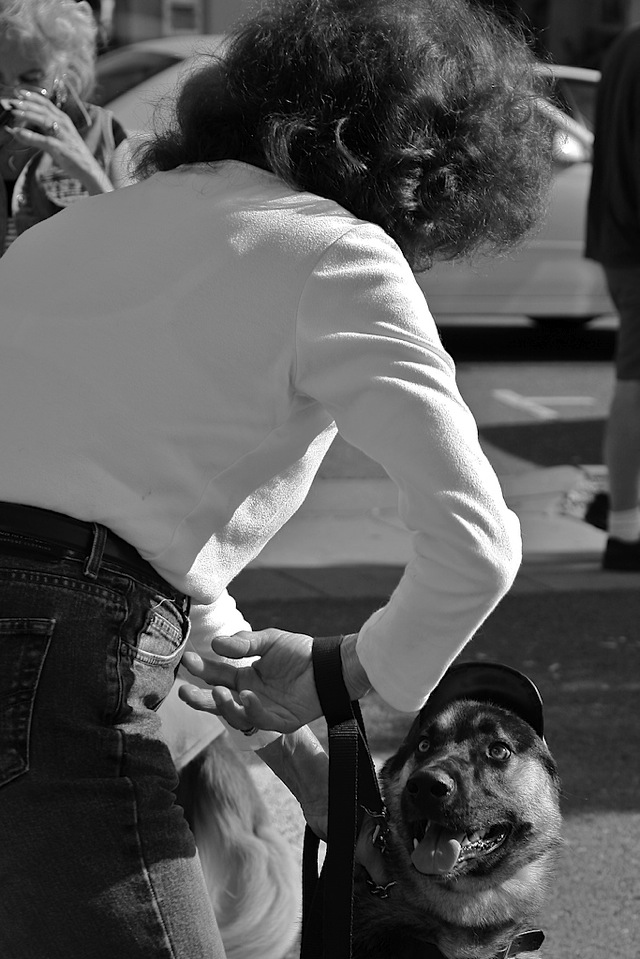
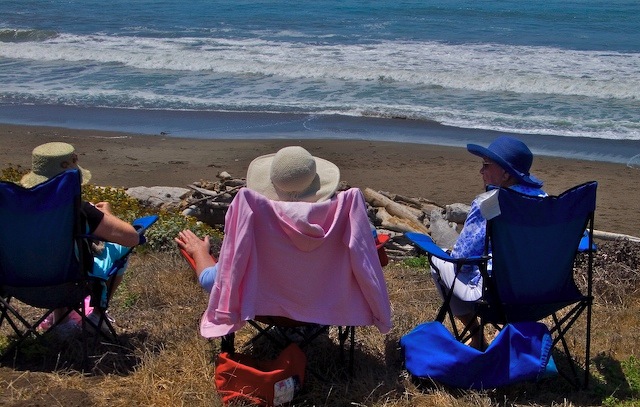
Here are a couple snaps, taken over the years, all within 100 yards or less of where my bed was the previous night. More to come over the next few weekends.


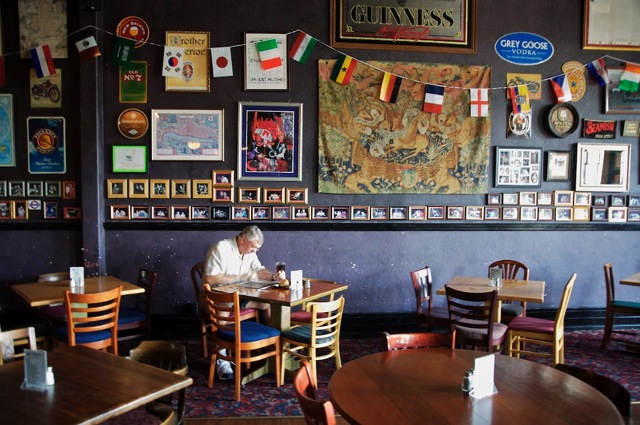
100 yards. San Diego, California. M2, 35mm.


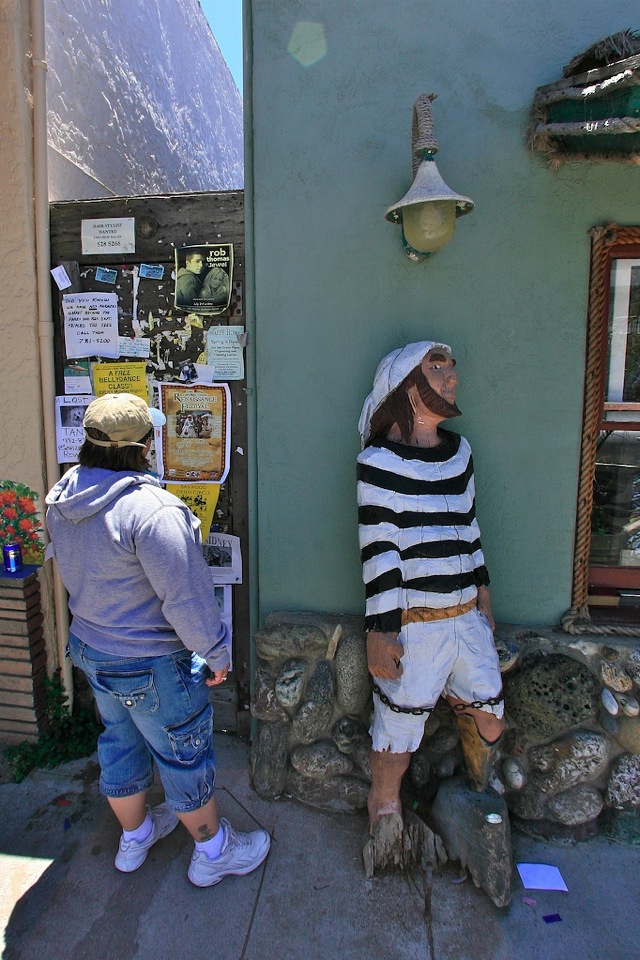
5 yards. Templeton, California. 5D, 24-105mm

For more on this theme, please click here.

Leica’s Watergate

Just another case of a lack of journalistic integrity?.

When I trashed the Panasonic L1 I wrote positively about Michael Reichmann’s objectivity when he wrote about this camera on his web site.

I now have no reason to any longer think that Reichmann is an objective writer.

He has admitted (after clicking the link go to the bottom) that, in ‘reviewing’ the Leica M8 he pulled critical comments from his piece as requested by the Leica Company who had loaned him the camera. It is possible that many who based their purchase decision on his purportedly objective review would have refrained from buying the camera had these comments not been censored.

While he has since bought an M8, I assume using his own money, the reality is he allowed his objectivity to be irrevocably compromised, in this writer’s eyes, by the provision of a free loaner, trading it for self aggrandisement that comes from being one of the favored few to be graced with a pre-production M8. “Look how important I am. Leica gave me a free loaner.” Psychic payola, and good value, had it worked for Leica. They didn’t even have to write a check. In the event, collusion between manufacturer and ‘reviewer’ has, in this case, hurt both.

Had Mr. Recihmann published his adverse findings, explaining that Leica told him they had fixed the problem (they have not) that would have been quite different. In that case he could have stated that he would verify such claims in a follow-up to his review.

As long time readers of this journal know, there is no earthly chance that Yours Truly would ever be given anything free by any manufacturer to ‘review’, as a manufacturer’s publicity machine is not intended to spread truth, justice and the American Way. Rather, its sole intent, which is fine with me, is to sell products. Just don’t expect me to write manufacturer-censored reviews under the guise of objectivity.

You may check my ethics policy by clicking ‘Author and ethics’, below.

The closing three sentences of Reichmann’s apologia are breathtaking and I quote – my underscore. I quote, in case they should one day disappear from his site – please read his whole piece to put these in perspective by clicking on the link in the third paragraph above:

“But, in the end I would do what I did again, simply because I felt that potential owners needed to know what I had learned in my testing, without delay. And, I would have held back again on the issues that I was requested to because that’s the proper way to deal with manufacturers, who one assumes will take their responsibilities to journalists seriously. Enough said.”

If you can reconcile the first and second sentences, please educate me by leaving a comment, below.

So now that you understand Mr. Reichmann’s “….proper way of dealing with manufacturers….” you will know better than to believe anything he ever writes again on his Luminous Landscape web site.

Mr. Reichmann, let me put you out of your naïveté. A manufacturer’s goal in a capitalist system is to get journalists to write what is best for the profitability of the manufacturer. A journalist’s goal is to write unconflicted truth as he sees it, pulling no punches with regard to material facts.

And here is what you really meant to write, and do feel free to copy and paste it into your column – no attribution needed:

“Dear Luminous Landscape readers – I made a serious ethical and journalistic error in withholding information regarding product defects in the new Leica M8. I did this at the request of the Leica Company who had given me a free loan of the camera. In doing so, I made a material misrepresentation to you, my readers. I have seriously compromised my journalistic integrity and accept full responsibility to all of you who bought the camera on my recommendation and now find that, had my findings been uncensored, they would have changed your purchase decision.”

Trust, once lost, Mr. Reichmann, is seldom regained. Print a proper retraction on the lines of the above and I will be happy to publish it here.

As for Leica, the company may have knowingly released a faulty product. If that is the case, the class action lawyers will take care of them, assuming there’s enough money left there to make the suit worthwhile. Why, even Mr. Reichmann would collect something in the settlement.

Balls

Well, ball heads, to be exact.

Novoflex is a German company with a long and storied tradition of making camera gadgets. While their publicity machine in the US seems non-existent, the company for many years made a variety of adapters, bellows and follow focus mounts for Leica and other lenses which earned them a stellar reputation for quality and design. Indeed, for a while in the 1970s, you could buy the Leica 400mm and 500mm f/6.8 follow focus Telyt lenses from Leitz mounted either in the Leitz buttton release follow focus mount or in the Novoflex trigger release style.

The fact that their marketing in the US is lousy does not in any way minimize the quality of their products. Type in ‘Novoflex’ at the B&H site and you will be rewarded with no fewer than eleven pages of Novoflex products, from a $1,200 tilt bellows which can be adapted to just about any SLR made in the past fifty years, to a $19 plant holder clamp (no kidding) which can be affixed to a standard tripod screw.

Want an adapter to mount your Canon EOS lens backwards on the body for extreme close-up work? Novoflex has it. A nicely made, inexpensive, table top tripod? No problem. A forked joint, V-shaped tripod head to support the long barrel of an ultra-telephoto lens on a second tripod? You bet.

In other words, if specialty applications are your thing, there’s a good chance Novoflex makes it.

Having sold off a bunch of stuff left over from the old film camera days, I decided to reward myself with a toy. Something not essential, you understand, but nice to have. Now while I am not in any need of more cameras or lenses, having pretty much all I need, I do recall thinking that a really nice ball head for my Linhof tripod would be a good idea. Until now I have used a Leitz ball head which is very secure, the serrated ball locking firmly with very little force on the knob, but because I like to have both my tripod and monopod in the trunk of the car at all times, I concluded that one necessary luxury would be a second ball head. The Leitz could make its home premanently on the monopod, and the new head would live on the tripod. Like an old rather affluent friend who keeps mistresses in several of the world’s great cities. Luxury indeed!

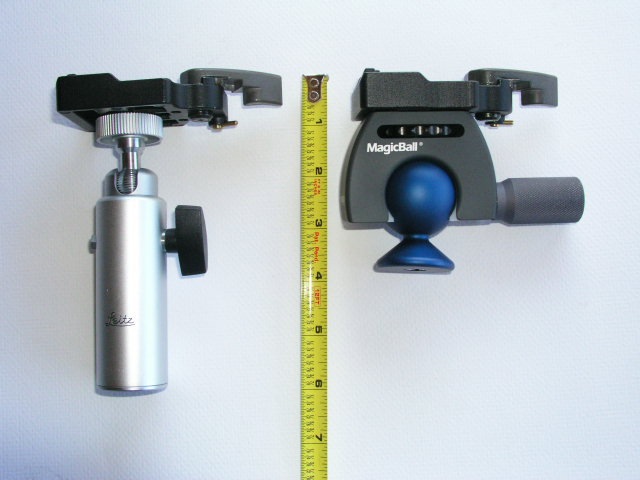
Go to the Ball Heads section of the B&H site and you will find no fewer than nine pages’ worth. Phew! Sort in price order and the costliest, from Arca-Swiss, comes in at nearly $800. Now I like quality as much as the next man but I am not insane. Go down a few pages and you come across a truly funky one, suggesting that the folks at Apple are not the only ones who ‘Think Different’. It is, of course, from Novoflex, and is sold in three sizes (mine is the smallest – the ‘MiniMagic’). Here is how it compares with that inspired and ancient Leitz design:


The Novoflex MiniMagic ball head next to the full size Leitz one

In the above picture both heads are fitted with Manfrotto quick release tripod plates. The design of the Novoflex permits unobstructed rotation of the camera without having to locate the ’90 degree slot’ you can see on the Leitz design. Some inspired designer at Novoflex has basically flipped the design and made the base of the head accept the camera, mounting the ball on the tripod. Genius.


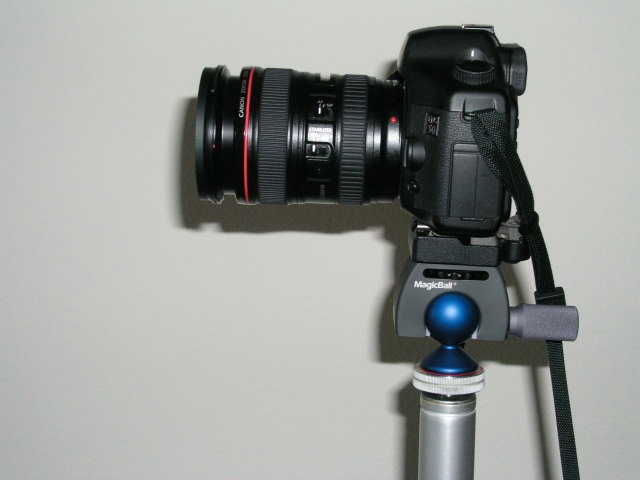
Electric blue adds a nice touch of fun to the inspired design

Novoflex states that the head will support 11 lbs, which means three Canon 5Ds with the standard zoom lens fitted. That’s a lot of weight.


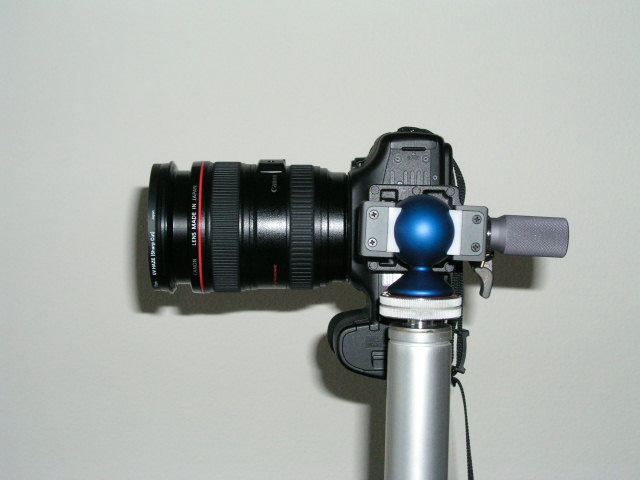
Flipped 90 degrees the nylon friction pads are revealed. Cleaning the ball could not be easier.

The head is fastened by rotating the large serrated protruding handle.

Novoflex makes two larger variants, capable of supporting 15 and 22 lbs., respectively, but for 35mm and medium format work the smallest seems more than adequate, weighing in at all of 11.5 ozs. The larger ones come with friction control, but it’s not something I need; for that matter, gently tightening the handle confers an adequate level of friction control with this model, should you require that to level the camera with small incremental movements. Also, realize that you would have to add the Novoflex Universal Panorama plate if you want calibrated, level rotation, but for panoramas I think you are far better off with something like a proper panoramic head with nodal point offset.


A toy, you say? Think again!

In practice the head is wonderfully easy to use, nothing ever gets in the way, and you can rotate the camera well past 90 degrees for those occasions where your tripod is not especially level. It looks just super on my old Linhof tripod. Recommended without reservations; even the price of $240 seems reasonable for something you will use the rest of your life. And that old Leitz head? Happy as a clam on the Manfrotto monopod, one of the best tools I know of to make your lens deliver its best.

Film or Digital

The answer to yesterday’s puzzle.

At the conclusion of the previous journal entry, I asked readers to determine whether film or digital was used to record the eight images included.

Here are the technical data for the pictures:

Image #1: Canon 350D, 17-85 Canon at 75mm (120mm equivalent), 1/50, f/7.1, ISO 100
Image #2: Canon 5D, 200mm Canon, 1/2000, f/4.5, ISO 200
Image #3: Canon 5D, 24-105 Canon at 58mm, 1/500, f/4, ISO 400
Image #4: Canon 5D, 24-105 Canon at 35mm, 1/250, f/5.6, ISO 250
Image #5: Canon 5D, 24-105 Canon at 73mm, 1/350, f/6.7, ISO 200
Image #6: Canon 5D, 24-105 Canon at 28mm, 1/6 (hand held and IS used big time!), f/4, ISO 800
Image #7: Canon 5D, 15mm Canon fisheye with ImageAlign used to ‘defish’ the picture (12mm equivalent), 1/750, f/8, ISO 400
Image #8: Panasonic Lumix LX-1, 6.3-25.2 Leica at 14mm (63mm equivalent), 1/1250, f/4, ISO 100

In other words, not a roll of film in sight. Properly exposed and processed digital is indistinguishable from properly exposed and processed film until the ISO gets over 200, in which case the Canon 5D beats film hands down every time.

All pictures processed (very little) in Apple’s Aperture.

How did you do?

Digital schmigital

There is no such thing as a ‘film look’ – only bad processing.

I confess to finding all the talk about the classical ‘look’ of printed images taken on film to be so much rot.

(Please note: The pictures in this journal entry are purposefully large to enhance screen quality, so they make take a while to load on slower connections.)

Unless you make prints from film using an enlarger – an all analog chain if you like – every image we see is to a greater or lesser extent digital. Film has to be scanned to be shown on your computer. That’s digital. The scanned image has to be printed on some sort of printer, be it ink jet, dye sublimation, laser, using pigment inks or dyes. All digital. And, obviously, everything seen on the computer screen, where, let’s face it, 99.9% of photographs are now viewed, is digital.

This journal entry was prompted when I read a piece on a chat board written by a fellow extolling the ‘Leica glow’ in images which, he claimed, only his film based Leica camera and lenses could deliver. No indication of the basis for this judgement or, indeed, anything about how he makes prints. The thrust of his poorly reasoned argument seems to be that digital looks ‘plastic’ (the English I learned suggests that plasticity is a good thing in an image, but I’ll let it go) whereas film looks real.

It’s unclear to me why some, like this person, still fight digital imaging. It might be that people who write on chat boards are like visitors to a hospital. They only go there because they have a problem, even if the disease is hypochondria. Part of it is, I suspect, that some practitioners have given digital a bad name through excessive sharpening, contrast, saturation and so on. That hardly exonerates poor practitioners of analog printing who loved garish excess, like Ansel Adams. The reality is that you will get lousy results with any process if you have a lack of skill, taste or both.

Another reason for proclaiming the superiority of film may well be that its defenders have invested such huge amounts in now largely worthless equipment that some sort of justification is called for. They are, of course, Label Drinkers. You buy a Rolls Royce and it has to be good, even if the thing breaks down constantly. How could you admit otherwise? Everyone knows it’s the best. Clearly, the resale value of gear is irrelevant, and all that matters is whether it helps you take good pictures. The only problem for these fellas is that they have to have the latest and greatest and, well, trade-in values on that M6 or M7 Leica just aren’t what they used to be. The ridiculous price of the digital M8 just compounds their problem. Here’s a $5,000 body (no lens!) which is not weather sealed, has manual focus, limited automation and no zoom lenses. Absent low light snaps, where it probably excels, it’s an overpriced, bulky, point-and-shoot (which is what Leica rangefinder photography is all about) far less capable for the most part than any number of $400 offerings from the far east. So economics become a prop for an ill reasoned position. Not the first time that has happened. Makes film a lot more appealing, though, if you are stuck with those old bodies.

Amusingly, the same psychology – it’s expensive so it must be good – comes into play when they finally spring for that M8, having dumped the M6 or M7 at a huge loss. They are now duty bound to proclaim that the digital Leica takes better pictures (!) than anything else out there. But of course.

Unless you are taking pictures in very challenging lighting, requiring fast lenses and low noise, high ISO sensitivity, and you need to make really large prints, then there is simply no difference in the image taken with costly gear like the top Nikons, Canons or Leicas and the $300 point-and-shoot. Digital or film, it makes no difference in regular prints. Up to, say, 8″ x 10″ in hard copy prints or up to a 30″ computer screen, it all looks great. I was reminded how terrific some 6 mp images taken on a Nikon looked, when I examined them on the 30″ Apple Cinema Display the other day in the Apple store. The only reason I know they were Nikon digital originals is because that’s what it said on the file information. You simply could not have asked for a better image – dynamic range on the screen greatly exceeding anything a print could offer. Like looking at projected slides in days of old.

Reverting to that chat board thread, one correspondent confidently stated that he can always tell which images on his computer screen are digital (whatever that means – I suppose he is referring to the original being snapped with a digital camera) – which left me laughing helplessly. Anyway, for that expert and fellow travellers, here’s a selection of my snaps from the archives wherein I invite you to guess which are digital and which film. Meaning, in my world, which were taken on a film Leica as opposed to a digital Canon 5D. And don’t go guessing by aspect ratio – both my Leicas and the 5D share the same native 3:2 image ratio and I crop away depending on my mood. All will be revealed tomorrow. Oh!, and by the way, I hope you enjoy the pictures!

By the way, there as those dogs again….


Image Number 1. Filoli Mansion, Bay Area.


Image Number 2. Autumn from Jack Creek Road, central California.


Image Number 3. Alleyway, San Francisco.


Image Number 4. American Bull.


Image Number 5. Devotion.


Image Number 6. Lunch. Ashland, Oregon.


Image Number 7. Cayucos. “Wanna date, love?”


Image Number 8. Hats. Moonstone Beach.