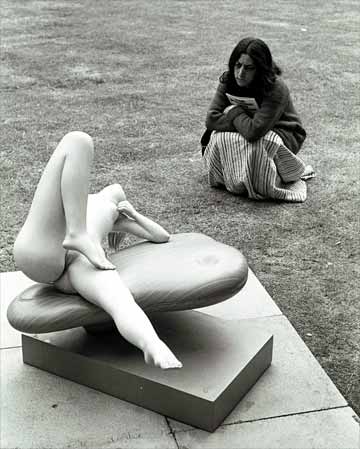
If all else fails, Make Mine Monochrome.

It’s high time we got off the “Monochrome is Art” bandwagon and learned to use Color.

When I was a kid growing up in London, all I used in my Leica, representing some 95% of my worldly assets, was Tri X. Monochrome film. Easy to buy, easy to process, lots of exposure latitude for my wonky exposure meter and not least of all, very macho. Every street ˜shooter™ (that foul word had not yet been applied to photographers) used Tri X. It was a rite of passage. The quirky fellows with the strange odor used HP3 and HP4. You avoided them.

But none of these was the primary reason I used monochrome. The real reason was that it was cheap and cheap was all I could afford. The idea that you could use color never entered my mind. Economically prohibitive and why would you want color when street work dictated monochrome? Why, could Brassai, Kertesz, Cartier-Bresson and Erwitt all be wrong? Of course not. They were Masters. Gods, beyond criticism. Look to points west and further confirmation that Monochrome was Where It Was At could be readily obtained from its American boosters. Adams, Weston, Cunningham, Callahan, Stieglitz, Steichen, the list goes on and on. And while one or two of these would eventually venture into color, they would forever be known for their black and white work. Their subject matter might be the landscape and the nude, but their vision was monochrome. Goodness help us. A monochrome woman….

Then a couple of strange things happened. A great British photographer named Anthony Armstrong-Jones popularized the idea of very grainy pictures, in black and white, of course, whether in his fashion magazine work or in social commentary pieces. Another great British photographer named Sarah Moon, who wisely chose to make Paris her home, followed up on the idea when GAF/Ansco introduced its wildly grainy GAF 500 color slide film. Suddenly, in this world of Seurat redux, pointillism was back and all wrinkles and imperfections disappeared into a gentle haze of colored dots. But there was a photographer far more important than either of these, as regards the history of color, and that photographer was Eliot Porter.

Porter was a devotee of color almost from the beginning, most famously garnering Ansel Adams’s scorn for his adherence to this new medium. Porter, not a voluble man, famously said “I believe that when photographers reject the significance of color, they are denying one of our most precious attributes – color vision.” Porter may not have changed our view of landscape photography, but his vision of the beauty and infinite complexity of nature changed the way we see. If we care to see.

Let’s just make a seismic shift, for a moment, to the mathematical work of Benoit Mandelbrot. Quoting from his paper presented to the Society for Chaos theory in Psychology and the Life Sciences, presented at Berkeley in June, 1996:

Fractals, as all present know, are irregular geometric objects that yield detail at all scales. Unlike Euclidean, differentiable, objects that smooth out when zoomed into, fractals continue to reveal features as more closely regarded. Fractals also have “self-similarity” which, in one meaning refers to the presence of parts that resemble the whole, or to the continual repetition of a feature. Benoit Mandelbrot not only invented the term fractal, but advanced the position that fractal geometry is the geometry of nature. Eliot Porter, the nature photographer, upon reading of Mandelbrot’s work, realized he had been taking pictures of fractals in nature for decades. To promote the point, he produced a collection of photographs for a book titled Nature’s Chaos.

I do not doubt that there is no more important body of work, when it comes to our fundamental appreciation of nature and of color photography, than that of Eliot Porter. Porter made color respectable for the art photographer. It is that simple.

OK, back to the simpler world of situation comedy, beer advertisements and SUVs.

Now it’s time to ‘fess up.

Take one of your color pictures, you know, one of those not good enough to boast about, but not bad enough to throw away. A decent but not a great picture. You know the one. We all have many to choose from. They are the bane of us photographers. Too good to lose, too bad to print, the result being that we keep the disk drive manufacturers, the album makers, the storage sleeve specialists in business for no good reason other than, were we brutally honest, we would simply throw these mediocrities away.

OK, so you are a sane modernist. You may not have gone the whole digital hog, but you are smart enough not to waste time in a darkroom, preferring the civilizing light of nature. You prefer, in other words, Porter’s world. You scan those mediocre negatives and ruminate over them in Photoshop. Now that insanely complex application happens to have a ˜Desaturate’ option in one of its many tediously detailed menus. Don’t fight it. It’s under Image->Adjustments->Desaturate. Click. Yes, Siree Bob!, you have made monochrome from color. Gold from dross. Art from a snap.

C’mon. Admit it. You have done it. Or you have thought about doing it. Because Monochrome is for artistic simpletons. Two dimensional thinkers too constrained in their cages, too bound by convention, too attuned to mediocrity, to think that anything other than black and white, B&W, monochrome, sepia, platinum toning, etc., etc., can be Art.

I think back over five hundred years of painting. From Ucello and Giorgione, via Raphael and Velasquez, through the Impressionist and the Fauves, to the modern day. Not one, not a one of them painted in monochrome. Why? Because there was no cost difference and because patrons regarded monochrome as the province of the poor. The dictate of the sketch. The conté crayon drawing. The pencil rendition. The idea for a painting.

So stop fooling yourself. You can no longer justify it, as I did, on grounds of cost. The very fact that you are reading this on your computer places you in the top 1% of the world’s income bracket. You can afford color. But your excuse is simple. I Am An Artist, you say. What you mean is that you are not good enough for color. Because you cannot handle it. It’s just one variable too many as you avoid making the effort.

Color is hard.

But, as Porter reminds us, color vision is one of our most precious attributes.

Really Large Prints

Big is good.

Something wonderful can happen when the print is much larger than seems reasonable.

Apropos my toe in the water of large format photography, I found myself in a gallery of photographic prints in one of the many charming coastal towns near my estate in central California. A pleasant ride some 25 miles away on Highways 46 and 1, especially on a fine German motorcycle, no excuse is needed for a trip on a summer’s day.

This particular gallery is home to the work of just one photographer, with content limited to the Large Landscapes of the great American West. Now I do not particularly care for his work, hence my reticence in identifying the spot. However, befitting the grandeur of those vistas, the prints on display are truly huge, as large as anything seen outside the world of the delivery trucks used by the supermarket chains, replete with 10 foot high tomatoes.

What makes the prints apparently larger than they really are – sizes range up to 40″ x 60″ – is that the gallery space is fairly long and narrow, making it difficult to stand far back enough to make the whole thing in. Thus, you are forced in close. After the first shocked reaction at the sheer size of the prints, one starts to realize they are really quite effective in conveying some of the grandest landscape anywhere. California, Arizona, New Mexico, Nevada – this is landscape writ large. Who knows what Wagner might have been inspired to write were he a Californian….

There is a mixed reaction of techno-shock – My Goodness, those things are Sharp! – and the deafening sound of early warning bells – How Gauche! – to so over-enlarge a photograph. Large format photography is at work here.

Now the old estate is amply provided with large expanses of walls the better to display art. True, you are more likely to encounter a Seurat or Degas sketch on its walls, maybe some noodlings by Matisse, a Rothko here and there, but that’s in no way a commentary on the world of the photograph. Show me a good one and up she goes. Amazingly, I found myself revisiting the gallery in question several times, once with my three year old whose power of appreciation and observation I value greatly.

So what do these very large prints have to teach us? Simply this. They are involving. Once you get over the shock of their sheer size, you find yourself drawn into the landscape. You are one with it. You step back, pushing against the opposite wall to try and grasp the whole. You step in and wonder at the fine filigree of leaves and branches and grasses which define the whole. You ruminate on the wonder that is nature.

Anyway, this experience a few months ago, spurred in no small part by my boy’s repeated ˜Wows” in the gallery, caused me to make an upgrade in the default print size I adopt when showing my work to friends. For as long as I can remember that has been 8″ x 10″. Why on earth 8″ x 10″? Lethargy. Laziness. Lack of original thinking. Because they make it that way. Because it (used to) fit the print washer. Because the ink jet handles it easily. Because the computer is fast processing it. Because mats come in the right size inexpensively. Because frames are available anywhere.

Ice Cream. Mamiya 6. A Really Large Print.

So for the past few months I have disciplined myself to make one 18″ x 24″ print every day. My excuse is that that’s as big as my printer will make. Not large by the standards of that gallery but Boy, oh! Boy, you should see the look on friends’ faces when you hand them one.

Go ahead. Keep it! Now you have a memento, not just a photograph. And is that not why we take pictures? To make something lasting?

Try making some Really Big Prints really soon. Once you get over the technical challenges maybe you too, like my three year old, will say Wow!

Film is Dead

This article was written just about the time Canon announced the first ‘affordable’ full frame digital camera, the EOS 5D. Unknown to me one would feature in my future, confirming the facts set forth below.

For an index of all my Film related articles, click here.

Film is dead as sure as the LP is dead.

Wake up! Smell the coffee. Don’t fight it.

Digital is better in every way known to man. Think about it. The medium is all of ten years old. We are already debating, frequently acrimoniously, whether the latest 16 megapixel Canon beats medium format.

It started as a joke. One megapixel was a big deal and guaranteed you a crappy postcard print. But it was chic. You could see the result even before you printed it. Take that, Edwin Land! Take that, Polaroid!

The apocryphal story has it that Edwin Land invented the Polaroid process when his little daughter asked why she could not see the picture right away. It didn’t hurt that he was a world class genius constrained only by the mediocrities around him. Further, he was an American, which meant that being a world class chemist/physicist/engineer was not enough. He had to be a world class capitalist, too, and that means making money from his brilliant invention.

If you are over forty and reading this, you will remember the thrill of that first Polaroid. If you are over 50, you will recall pulling apart the monochrome negative and print, wondering about what we now know as metamerism (it had a strange bluish tint when tilted to the light), extricating that foul smelling pink sponge (it had to be pink. Pink is jolly. Ask the cast of Funny Face, made about the time Land was busy being brilliant). Carefully spreading the goo over the print you made it permanent. But Edwin was not content. He had to go the whole hog, so he made it happen in color. Now you separated negative and print, studiously avoiding the deadly caustic chemicals produced and, hey presto!, a dry color picture with no need for the chemical, carcinogenic goo.

A great American photographer made a wonderful career from Land’s genius, taking huge, I mean huge (4″x5″ was a snapshot for her) Polaroids of quirky subjects. Queer sailors, lonely city dwellers, assorted losers, bizarre low key still lifes. Marie Cosindas was the real thing. An artist who saw an outlet for a new technology and capitalized on it brilliantly.

But Edwin was not done. Or maybe that hellion of a daughter simply would not leave him alone. Why have the silly, pungent, dangerous, useless negative, he wondered? Why not, why not, have the print emerge magically from the camera, powered by a disposable motor, blank as a politician’s intellect, and then, magically, proceed to appear in broad daylight for all to see. And he did it. Without a doubt, George Eastman’s ˜You Take the Picture, We do the Rest” had been well and truly one-upped. For any photographer who has slaved in a darkroom, surrounded by smelly chemicals, stuff dripping on the carpet, this was the civilized white man’s gin-martini variation on the heretefore put-upon-minority-digging-for-diamonds-in-a-South-Africa-mine darkroom worker’s wonder at the emerging print in the developing tray.

So, for a while, those who could afford it wondered at Land’s surpassing accomplishment. They were all American, needless to say, having not only the funds to afford the film (like Gillette, Land believed in virtually giving away the cameras to secure the income annuity from the supplies) but that great thirst for immediate gratification that the Founding Fathers had ordained were the American’s birthright. Life, liberty and the pursuit of immediate gratification. And pursue it they did. Edwin Land and his Polaroid Corporation were, deservedly, King.

But Kodak had bigger fish to fry. Or, more accurately, a larger weight of fish to fry, even if the average fish was a minnow, economically speaking. So they struck back. Big Yellow saw that they could not compete on speed – Are you nuts? You want to beat 60 seconds for instant gratification? – but they could compete on price. With reasonable speed. If Mrs. Middle America, 2.4 kids and a Chevrolet, could drop off her film with Johnny on the way to school on Monday and have 36 perfectly foul, unfocused, ill exposed, prints back when dropping off same Johnny on Tuesday, why she could get over the delay when it meant 25% of the cost compared to Mr. Land’s Magic Machine. That could be reserved for the nouveau riches and the Old Money in Greenwich, Park Avenue and Atherton.

So Polaroid died. Not before winning what was then the world’s largest patent infringement fine in 1985 from, you guessed it, Kodak, who had stolen Land’s technology in a pathetic attempt to beat the master. But sunset was in sight for both businesses by then. Polaroid was just too expensive and the Greenwich Dames lost interest and reverted to riding their horses and attending society lunches. Kodak was King once more. Add the Instamatic and its many variants, which made it easy even for the average inpatient at the local loony bin to load a camera and take a well exposed picture, and you had market domination.

By 1985 Kodak, too, was in deep doo-doo. Throughout the 1960s and 1970s you could buy Kodak film just about anywhere on the planet in a dizzying array of formats: Minox, 8mm, 16mm, 35mm, 828, 127, 120, 620, 4×5, 5×7, 8×10 and larger. Nor was the choice of emulsion compromised, with such great names as Panatomic X, Verichrome, Plus X, Super XX, Tri X, Kodachrome, Ektachrome, Vericolor, all standards in their class. Add imaging products for the medical and scientific worlds and a vast selection of chemicals and papers to render the image real, and you have a stunning exercise in world domination. Competition? Well it was a fly on the proverbial elephant’s rump. Adox, Agfa, Ansco, Ilford, Orwo, Perutz and many others held, in aggregate, a share of the market that was little more than a rounding error. Kodak’s products were indecently good when the lack of real competition is considered.

Students of the American stock market will readily remind you that there were 20 stocks in the Dow in 1900. Only one survives today. General Electric. And good old GE dropped out for a while there on account of a little thing known as bankruptcy. Not conducive to a NYSE listing. But the folks at Kodak were poor historians. Why, they reckoned, our founder may have done himself in, gone the hari kari route, smoked the old gun barrel while tugging on the trigger, but we are King. We invented You Take the Picture, etc. We invented Kodachrome. Hell, Hitler was photographed on Kodachrome. Two Jewish violin players who liked to take snaps and happened to be chemistry geniuses, invented Kodachrome. National Geographic would not publish your stuff if you did not use Kodak film. Not for nothing was the producer of film in Rochester, New York, the Company Town, know as the Yellow God. And, ironically, it was a Kodak engineer who invented digital imaging – Steven Sasson – but the heck with him, the Kodak Board decided. People will always use filom.

What the folks at Kodak refused to recognize is that Everything Changes. A disastrous string of CEOs, guys who committed grand larceny every payday, did a superb imitation of the ostrich, disregarding the world around. First, they missed Fuji which, as is the Japanese habit, started making gold after an extended period of dross. Then they missed digital. By a whole decade. Just think. In 100 years, there will be no Microsoft. A consummation devoutly to be wished. No GM or Ford (OK, 30 years in their case). No Democratic Party (everyone will be rich). And no film. But Kodak did not see the world’s biggest technological revolution coming. There would always be a Kodak. A yellow box assuring quality, consistency, availability.

History will judge whether Kodak awoke in time. They only missed the first ten years, after all. But something tells me the film makers of tomorrow will hail from points east of Madison Avenue and will be named Sony, Hitachi and China Somethingorother. Because film, dear photographer, dear consumer, dear searcher for instant gratification, is about as dead as the dodo.

Don’t fight it. It has had a good run. One hundred years and counting. The first records lasted forty years. The LP 30 years. The CD must be about done at 20 years. So film did OK. But it is dead.

Sure, some poorer economies will struggle on with film for a while, but don’t reckon on opening any new processing plants in China. Having gone from no telephones to cell phones in one generation, why think that the world’s fastest growing consumer society will not do the same with photography? And where do you think all those digital cameras and storage media are made, anyway?

Digital has achieved 60, 70, 80%, go figure, of the definition/sharpness/dynamic range of film in ten years. Ten years! And the consumer gets 1,000 or more shots on a ˜roll”. And they are free after the camera is purchased (assuming he values his time at zero, which is reasonable in most cases). And it is irrelevant, dear advanced photographer, what you think as you are not the market. The consumer is the market and he wants things now. Plus he gets to take 3 pictures a second of revolting Aunt Minnie, the one with killer halitosis who doesn’t give a monkey’s how the snaps come out but only that she can see them before she finally kicks the bucket and gives the funeral parlor some well deserved business.

Too bad Kodak didn’t retain her as an adviser.

Crop it Good

You hear this sort of thing a lot from academics and pseudo-intellectuals. The Alfred Rosenbergs of the photography world. Sadly, unlike Rosenberg, they remain alive to propound their mealy mouthed tripe in an earnest attempt to earn what modest living their lack of intellect affords them. It goes something like this:

“No great photographic artist every crops his originals when printing, knowing that true greatness in a photograph can only be attained when the original visualization is rendered truly and uncompromisingly on photographic paper. To crop is to destroy the integrity of the creative process.”

Often this codswallop will be followed by a reference to Cartier-Bresson whose prints are so intellectually honest that they often include the surrounding frame of unexposed film. What art. What genius.

What utter rubbish.

Given that the sole purpose of an art photograph, as opposed to a commercial one, is to provide aesthetic satisfaction for the viewer, it is irrelevant whether the spectator sees all of the frame or just a slice. The only thing that matters is that the photograph works.

Look at any picture. Crop it with your hands or your mind’s eye this way and that.

Now pretend that you never saw the full frame original. Who is to say that any of the crops is better or worse? The reality, of course, is that the photographer should crop for effect and choose the best possible crop to display his art work.

The academic rule is even dumber when you think that the same effect can be largely accomplished by simply placing a longer lens on the camera. I print it full frame using a 90mm lens on the camera versus cropping from the original taken with a 50mm lens. No difference, maybe except for definition and grain. But the first picture is sacred as it is uncropped, whereas the latter is garbage as I broke a cardinal rule of academia.

All of which goes to confirm that Those Who Can, Do whereas Those Who Cannot, Teach.

Crop away. Keep cropping until it looks good or move onto the next original. And if you really want to fool them, why not can add a frame depicting the unexposed film, with film manufacturer of choice, in Photoshop. How intellectually dishonest of you.

Expose yourself

Let’s face it. Your photographs are no good until you have shown them to the world. Whether that means your next door neighbor, an exhibition at the local town hall, a book or the virtual universe, the world is waiting.

One thing you can be sure of is that the world will most certainly not come to you.

So if you don’t screw up your courage and expose your work to the broadest possible audience, you will never know whether it is any good.

I know of what I write. I have had my work published in competitions, put out a book of my pictures and a while back started a Photoblog. I have an extensive web site of my pictures. Be assured, only someone with the ego of Attila the Hun would venture into any of these display avenues without a few butterflies in the old stomach. Why? You know why. You will now be subjected to criticism from all and sundry. The critics will all be strangers. Only friends and relatives will be consistently supportive and nice, even though much of their feedback will be damning with faint praise.

But without criticism, how will you ever know if your work is any good?

Not fair, you say. Like Oscar Wilde’s Lord Darlington, you believe that all critics are, at best, cynics who know the price of everything and the value of nothing.

Look, even Wilde made a living as a critic before he started earning income from his plays. And you can be consoled by the knowledge that when you do finally expose your work to criticism, you will be dealing with the same, bunch of snobs, ignoramuses, morons, petty idiots, ill educated fools and sundry other losers that plagued Wilde. But without them your work will never be seen or appreciated. Is that not one of the reasons you take photographs – recognition and appreciation by your fellow man?

My experiments with criticism started when I got my first serious camera, the Leica M3 I use to this day, in 1973. As I started making street pictures which I thought had merit I began to submit them to the many photography magazines in the England of my youth, only to be rewarded by much critical feedback. Sadly, most of it was printed in form letters known as rejection slips. Very hurtful. How could everyone else not like my work? Plus, let’s face it, as a poor student whose scholarship money and governmental support could only go so far I needed the money for film and paper. So I kept banging away and as my ability to produce decent prints gradually improved the Honorable Mentions and better started to roll in. I must have been doing something right because the leading photography magazine of the day, a monthly named, originally, ‘Photography’, saw fit to award me The Photographer of the Year award – for one single picture no less! – in the mid-1970s. An award built on rejection slips. Here is that picture, if you must ask, dust spots and all. You did ask, didn’t you?

What a joke. One picture makes you Photographer of the Year. Of course, by that time you had paid your dues with any number of rejection slips, Honorable Mentions, Third Prizes, Second prizes, and so on. So acceptance had to be due any time soon. Like being a frequent poster to a discussion forum at your favorite internet chat board, say. The fact that your content is undiluted tripe, the fact that your claims to fame are never substantiated with a single picture, just having done your time and consistently published your work makes you accepted and lauded.

About the same time Leica Fotografie, the house organ of the camera maker of the same name, published a snap I had taken on Rue Mouffetard in Paris and I thought I had arrived.

So I stopped submitting pictures for publication. I had beaten the system. I had got inside the minds of those lousy critics, the same ones who had sent me all those rejection slips, and beaten them at their own game. It didn’t hurt that I still liked the work I was submitting, but I no longer needed the rewards, economic and psychic, which resulted. I now had a full time job and could take pictures to please me, not the critics.

Well, of course, that was all wrong. For twenty years thereafter I banged away, filling boxes with beautiful 8 x 10” prints which no one ever saw. I was self-satisfied with my work and did not need anyone else to tell me it was good. Or bad.

Yet something was missing. As human beings we all have an ego and not one of us dislikes being told that his work is good. Why, screw up your courage and you will even be prepared to hear that, well, maybe it’s not so good. Find a good critic who will help redirect you, question his input, and maybe you will find new directions and meaning in your photography.

One thing has changed greatly since those days of my youth and it is access to distribution. It has never been easier or cheaper to get your work out there and you no longer need to butter up publishers, attend obligatory cocktail parties or call people ‘darling’ while reminding all and sundry that the editorials of the New York Times and Guardian are your thoughts exactly. One month from reading this there is no reason why you wouldn’t have scanned your hundred best pictures, placed them in a word processed document and submitted your output to a print-on-demand publisher at very modest cost. Why, if you are a digital photographer the most onerous part of the task, the scanning part, does not even exist.

But the chances are you will not do this and that is a shame. Excuses are easy. I don’t have the time. The spouse is ill. It’s too complex for me to learn. No one is interested. And on and on.

All of these excuses say just one thing. You really do not care enough for your photography to do anything with it.

OK, so the book route is not for you. Well, how about a Photoblog? Access is even easier than publishing a book. You go to any one of the providers on the web and set up an account. It can be paid, like the one I use, where the friendly people at Expressions charge me the stunning sum of $3 monthly to host my picture uploads. I use them as they provide a nice point-and-click selection of screens to display your work and have been very nice in helping me design a screen to my own liking which is not available in their canned selections. Plus, I’m not exactly God’s gift to the coding profession.

Or you can try a free service such as the oddly named Flickr and share your work for all to see. Free.

So now tell me, why, within 60 minutes of reading this, you should not have a Photoblog up and running. You want to get paid for doing this?

Frankly, unless you are an equipment collector, in which case why are you even reading this, there is no reason.

Tomorrow I will share my Photoblogging experience with you, by which time your Photoblog will be up and running. Promise?

And closing on another Wilde witticism, when you get rude, uninformed morons trashing your work, “Always forgive your enemies; nothing annoys them so much.” Then delete their droppings.