Yearly Archives: 2020

Smooth that video

A new algorithm.

Back in the early days when founders Brin and Page were mere multi-millionaires, they concluded that it would be chic to adopt the catchy ‘Do no evil’ catchphrase for their company, Google. They then proceeded to do mighty evil on a global scale, stealing and reselling your identity, while maintaining that all their software was free. You, poor sap, were the product, to be sold and resold ad infinitum.

Now that Page and Brin are retired, needing the leisure time to count their ill-gotten billions, Google has actually gone and done something distinctly not evil. “Working with UC Merced and Shanghai Jiao Tong University (they) have detailed the development of DAIN, a depth-aware video frame interpolation algorithm that can seamlessly generate slow-motion videos from existing content without introducing excessive noise and unwanted artifacts.” (The quote is from DP Review).

This algorithm, and the related free software, allows interpolation of frames in low frame rate videos to restore smoothness. At the same time, the code is smart enough to properly treat overlapping and moving elements in the frame. The results are simply stunning, as this video from 1890s Paris – enhanced and colorized, as well as up-frame rated – shows:
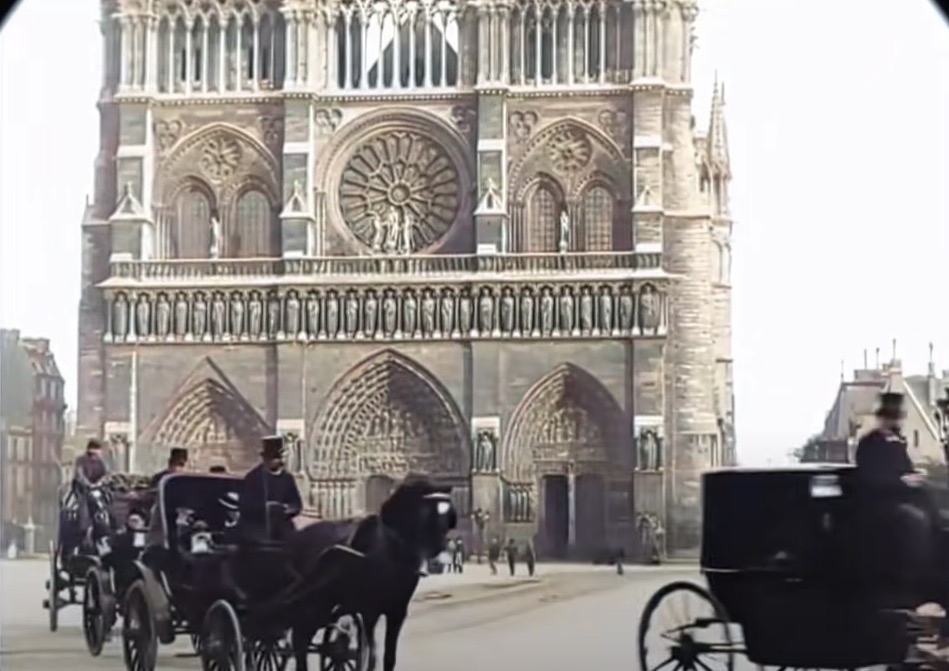


Paris, 1890. Click for the video.

Wait a minute. Did I write that Google had momentarily given up its evil ways? Ooops! Now you can interpolate your cheating spouse into that video and, whammo!, a million dollar alimony settlement. Old habits die hard, I guess.
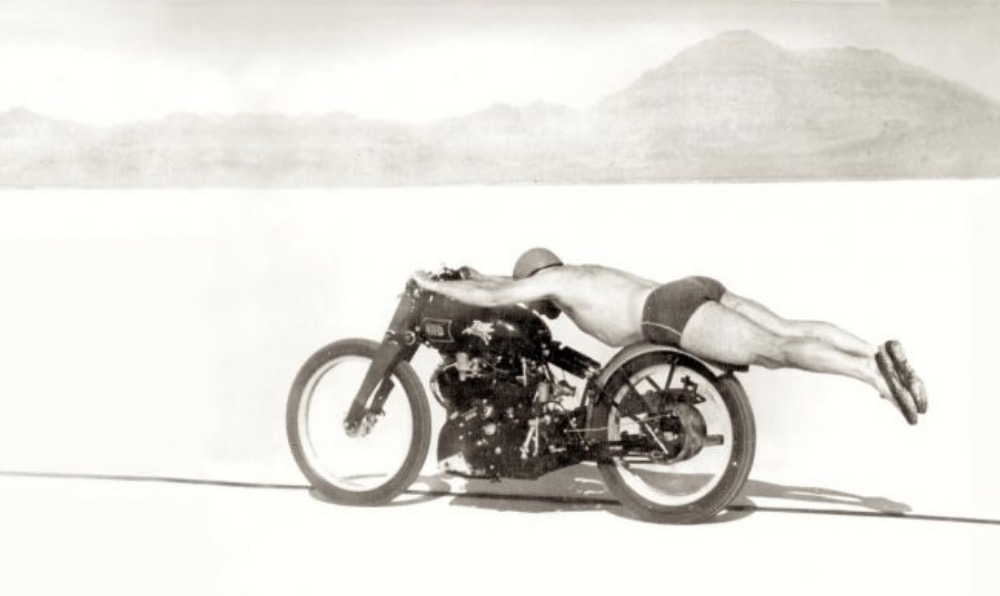
Rollie Free

Motorcyclist.

By any measure it’s the most famous motorcycling photograph ever.

Riding a lightly modified Vincent Black Lightning, a descendant of the iconic Black Shadow, putting out some 85hp from its 1000 cc V Twin motor, the wonderfully named Rollie Free (1900-1984) determined that his racing leathers were costing him speed on previous runs, where he maxed out at 147 mph. So he stripped down to bathing cap, trunks and sneakers and had at it, prone on the machine.


Bonneville, Utah, September 13, 1948. 150.313 mph. Protective gear optional.

Free’s record setting speed was on a machine which you could buy off the shelf. I would guess that the mufflers were removed and the Lightning had slightly hotter cams than the already fearsome Black Shadow.

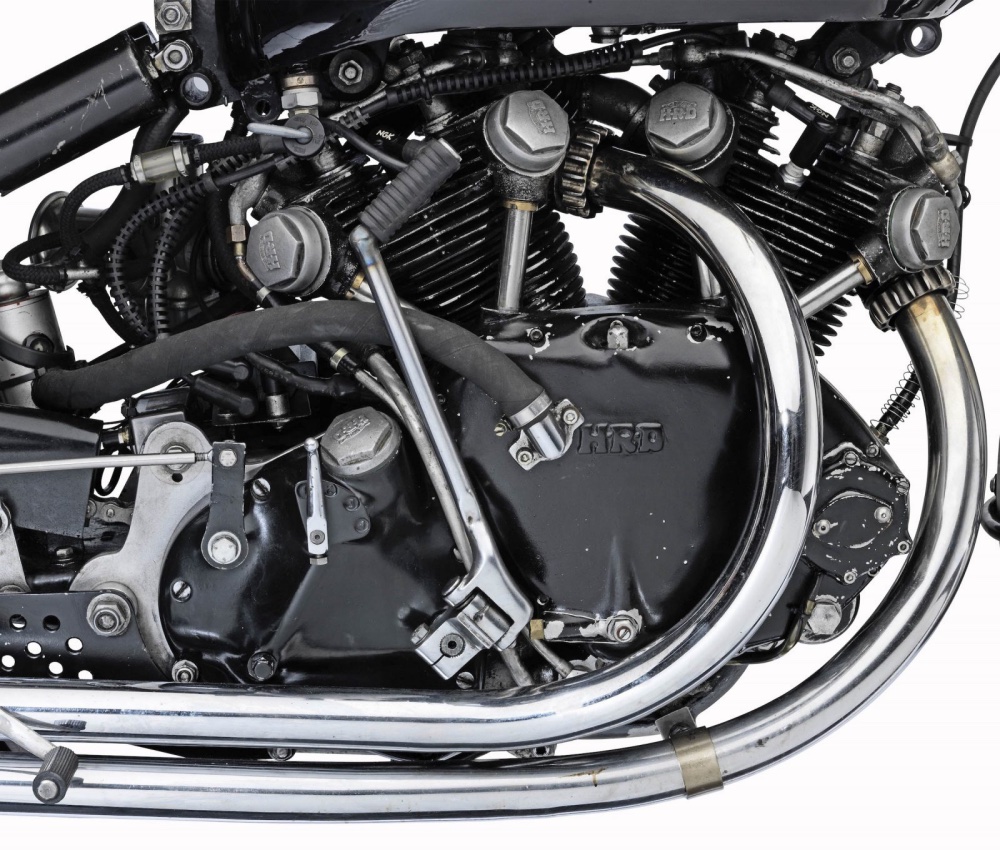
The V Twin motor was known as ‘The Plumber’s Nightmare’, and you can see why:


Plumber’s nightmare. ‘HRD’ stands for Howard R. Davies, the founder of the Vincent factory.

Reminder, if any was needed, that there are two kinds of British motorcycles. Those that leak oil and those which will. But there was only one Rollie Free.

Exakta Varex

Oh! boy.

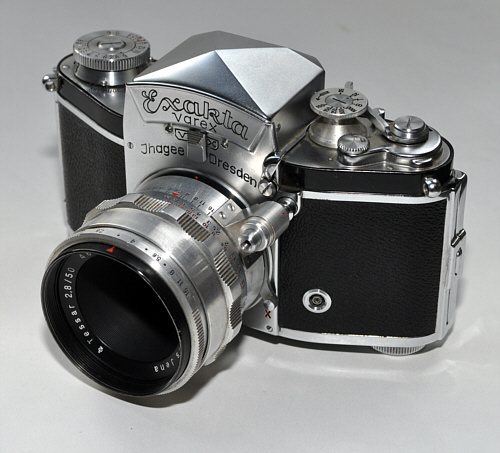
If you think the ergonomics of the iPhone as a camera are awful – and they are – you should try the 1950s Exakta Varex.


Ergonomic nightmare.

Made in East Germany, which probably says it all, this camera was uniquely bad when it came to hand-held use. The film wind was left handed, though a massive arc with a pencil thin lever which needed two or more hands to operate. Multi-stroking was a no-no. So, naturally, the shutter release was also left handed, and with auto diaphragm lenses the protrusion on front of the lens covered the shutter button on the body. First pressure stopped the lens down, further pressure tripping the shutter. The release button stuck out a mile, making use a challenge. On early lenses the diaphragm had to be manually re-tensioned with a concentric lever on the lens. There was no focusing aid in the dim pentaprism so you sort of sawed the lens back and forth until the image was at its least unsharp. True masochists opted for the waist level finder, which made things even worse.

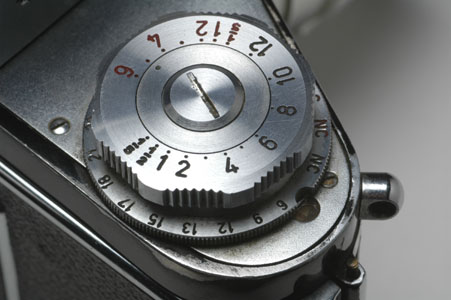
There are two shutter speed dials, but the main one atop the body can only be set in one direction, counterclockwise, so you may have to hose it around through almost a full circle to get to the next slower speed. Set it to ‘B’ and the secondary dial comes into play, with extended speeds down to 12 seconds. There is no rhyme or reason in the speed settings or progression and you have to separately wind that second dial. Well, you are beginning to get the idea by now. This thing is a disaster.


1/5th second? No prob. Choice of two.

The bayonet lens throat was very small, making design of fast and wide lenses a challenge. For reasons known only to themselves, the excellent Swiss Alpa and the no less excellent Japanese Topcon SLRs used the Exakta mount, though both had the sense to opt for a right-handed shutter button. Alpa stuck with external aperture actuation whereas Topcon at least had the sense to internalize the mechanism. Unsurprisingly, both marques failed. A real shame in the case of the Topcon which was extremely reliable and robust, much favored by the US Navy.

However, should you opt for cassette to cassette transport of film in your Varex, there’s a film cutter in the base. Pull it out and your film is sliced in half. So you have that going for you.

The chances that all this wonderful Commie engineering will actually see anything work in this body after all these years – they have a nasty habit of rusting as stainless metals were anathema to Stalin’s forces – are pretty near zero, which is in keeping with the general spirit of this disaster. I recall selling these new (they struggled on with later models through the late 1960s), during my Years in retail and they felt fragile even when brand new. The last version – the VX1000 – added an automatic return mirror, just one more thing to go wrong. Nice to display these for their funky looks, but if you want lousy ergos in a working camera, stick with your iPhone.

Panasonic Lumix S5

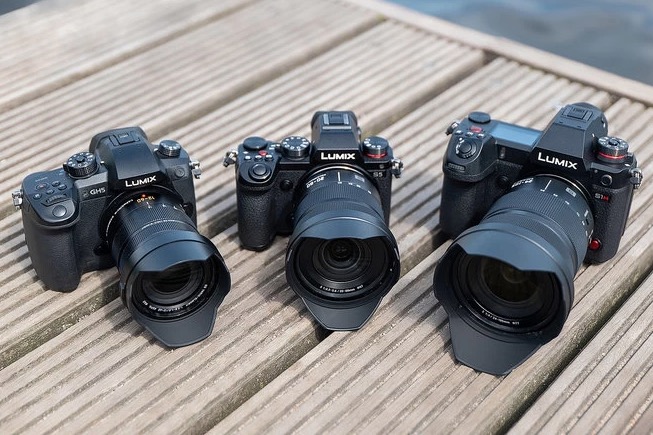
Big frame, small body.


The S5 is in the middle.

There are no certified sales statistics for higher end cameras so it’s impossible to determine whether MFT is dying, as some chat sites aver. It’s probably fair to guess that all high end camera sales are falling in the face of gains made by cell phone cameras, but the new Panasonic Lumix S5, a full frame mirrorless DSLR, is interesting nonetheless.

The image shows that the S5’s body is actually smaller than that of the MFT GH5 at left. The large ‘pro’ FF S1 is on the right. I like the fact that there are several buttons available for common adjustments, in preference to the horrors of dialing through multiple choices on the rear LED display.

Panny is making the body available with a 20-60mm f/3.5-5.6 kit zoom for a package price of some $2,300. That’s a very wide lens and small maximum apertures are no longer a concern when it comes to viewing, making for an excellent all around package for those who remain reluctant to accept the general superiority of the iPhone 11 Pro and later versions yet to come. Through the lens viewing, owing to the automatic brightness correction of the electronic finder, means that maximum aperture no longer matters. That lens and a short tele fast lens or a modest tele-zoom would make for a powerful and compact kit.

Restoring engraved lens markings

Easily done.

Back in the previous century when men were Men (and women were not Men) camera lenses were set in metal and distance, aperture and related markings were engraved and filled with contrasting paint. With age the paint either fades or falls out, making for a hard to use and unattractive tool. (Modern lenses use plastic, with awful screen printed numbers. Once these wear off you are stuck).


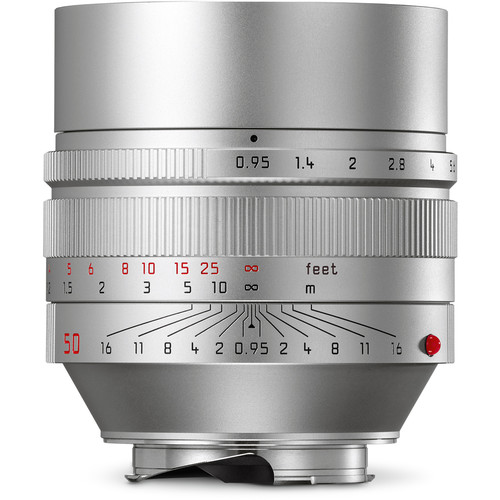
The $13,000 Leica Noctilux of today.
Yes, they still use paint in the engravings.

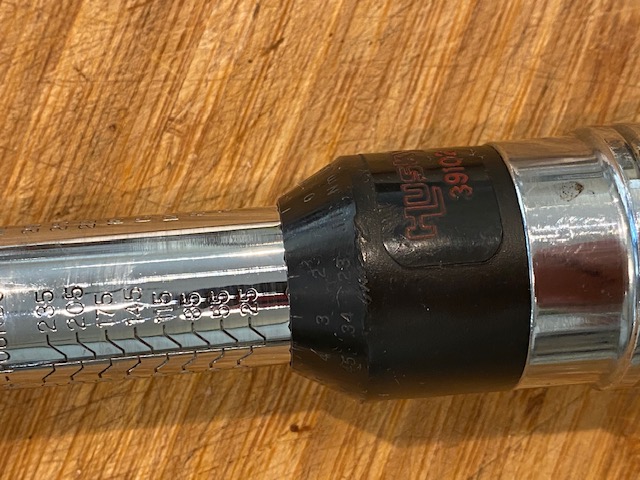
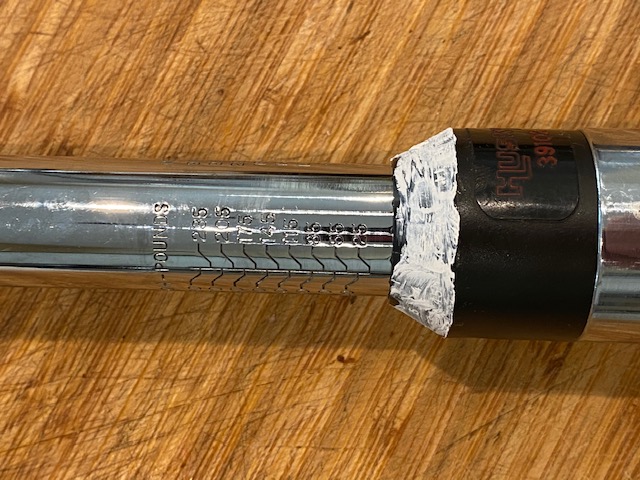
I have had this issue with Leica lenses and more recently with a tool in my garage, a low range Husky torque wrench which covers the 20-200 inch pound range (1.7 to 17 ft.lbs. or 2.3 to 23 Nm). The paint in the vernier markings on the rotating barrel had completely disappeared, testifying to years of use of this wonderful tool with low torque fasteners on those relatively soft alloy cases on BMW motorcycles. This made it very hard to set torque in the relatively low, non-directional light in the garage. Easily over-torqued, once you strip a female thread in one of these engine cases you are in a world of hurt. And that’s easily done without the proper tool. Forget doing it by ‘feel’. ‘Feel ‘ is for lovers, not mechanics.

The process of restoring those markings is simple.


The affected part is thoroughly degreased using isopropyl alcohol.


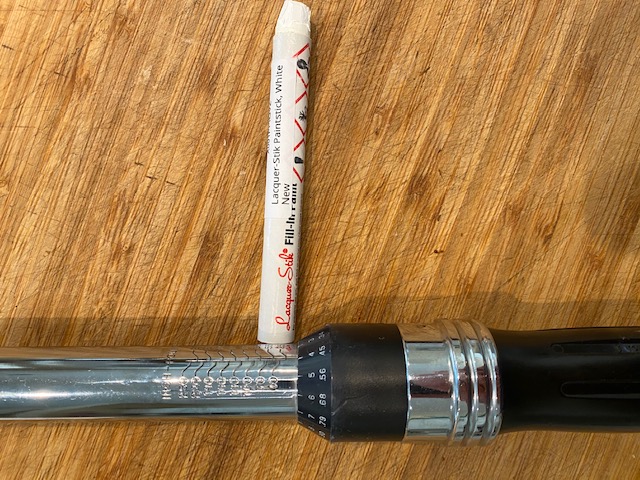
The fill in paint is generously applied in all directions.


The paint is wiped off with a rag, leaving filled in, engraved numbers.

Amazon carries the paint sticks in a variety of colors. Before use, be sure to shave the end off to reveal fresh paint, as the surface layer will have dried, and store the stick in an air-proof baggie to extend its useful life. And if torque wrenches are your thing, store them un-tensioned or prepare to deal with the consequences.