Woof!
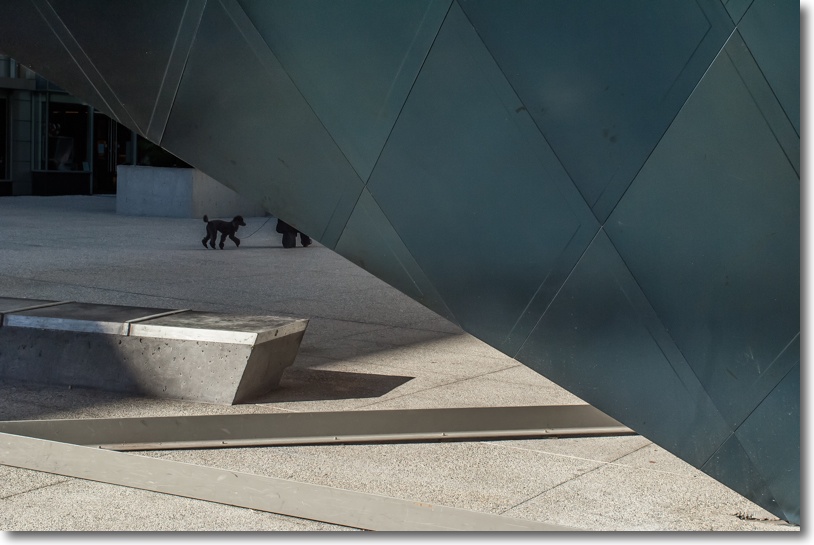
Spotted outside San Francisco’s CJM the other day.
Click the image for the map.
Snapped on the Nikon D2x with the pre-Ai 35mm f/2 Nikkor-O.

Woof!
Spotted outside San Francisco’s CJM the other day.
Snapped on the Nikon D2x with the pre-Ai 35mm f/2 Nikkor-O.
Looking back.
Continuing from part I.
Photographs:
May 1 – I’m no fan of monochrome, largely regarding it as a cop out for poor vision, but I get into the reminiscence thing in Once upon a time ….
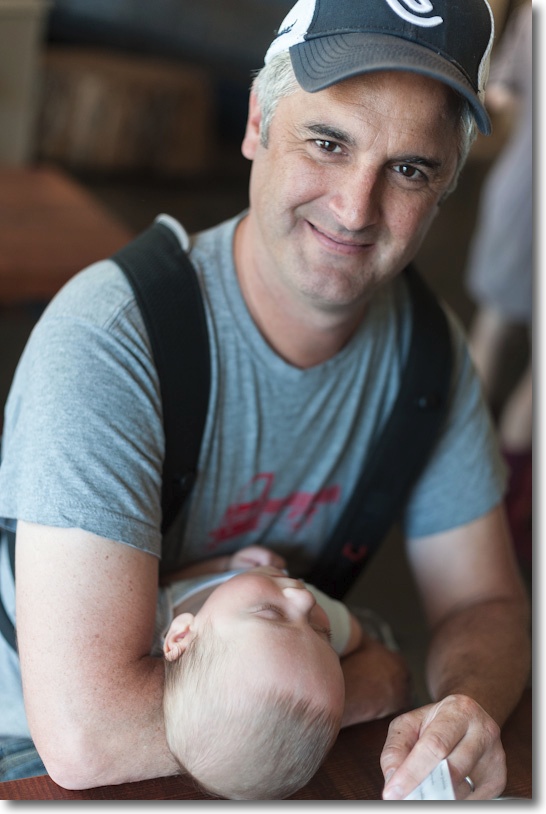
May 13 – Everyone has a magic moment now and then and mine took place with A snap over lunch at a Mission District brew pub.
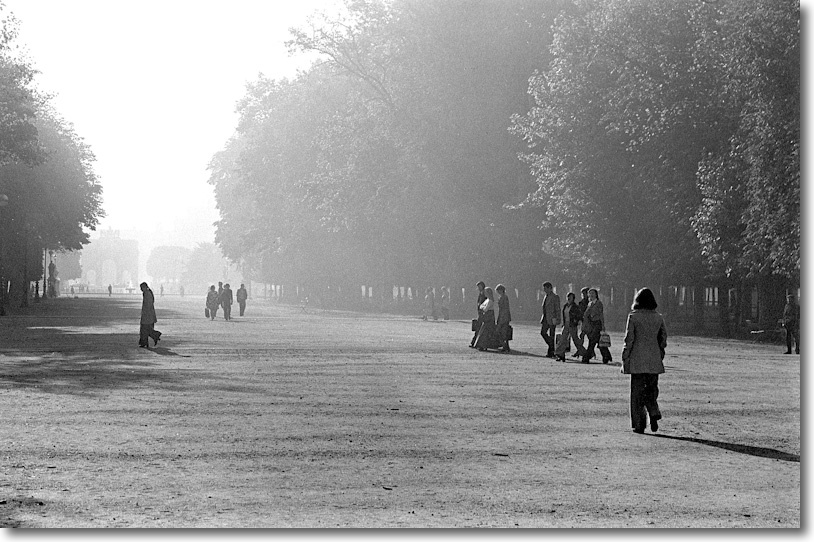
May 22 – I don’t much reminisce about my film days, but trust me, you will love Paris, 1974 because it’s all about the most beautiful city in the world.
May 28 – An earnest walk along Mission Street saw me doing a number on Papa Hemingway.
May 31 – A visit to Hayes Valley saw one of those serendipitous discoveries of a little known and utterly charming area of the City by the Bay.
June 2 – Filoli is a wonder, not least for the fact that I like to drive there on a summer’s day and imagine that, yes, I really am Blake Carrington of Dynasty fame. I even figured out what it would take to buy and privatize the place.

June 10 – Bernal Heights on the west side of San Francisco was an incredible discovery, and I started writing about it here, with a piece on the four legged world following. Given my love of dogs this was probably the most fun I had taking pictures in 2012.
Photographers:
May 17 – Paul Bock shared some of his lovely work with me and my readers.
July 5 – English photographer Martin Parr did a number on the people, ‘culture’ and food of the deep south and it’s hard to blame him, as I spent a miserable year of my life in North Carolina surrounded by people who had married their cousins. There’s every reason to believe things get even worse the further south you go.
August 20 – The 120th anniversary of Vogue brought with it some splendid photography.
August 28 – The man who took the most famous photograph in human history passed away.
Photography:
June 23 – Ever focused on being better/faster/cooler than the MacPro, my computer builder FU Steve made sure that The HP100 goes ballistic was, indeed, a reality for my Hackintosh.
June 14 – Walter Mandler was a god, and I really got into it here.
June 24 – I love musicals and what better place than to start than at the top with Lenny?
July 10 – after the usual installation hassles, I was able to confirm that Photoshop CS5 (and Lightroom 4) run at more than adequate speed on the 2012 MacBook Air, making for an excellent portable rig. The 2012 MBA delivers a great increase in speed over my previous 2010 model.
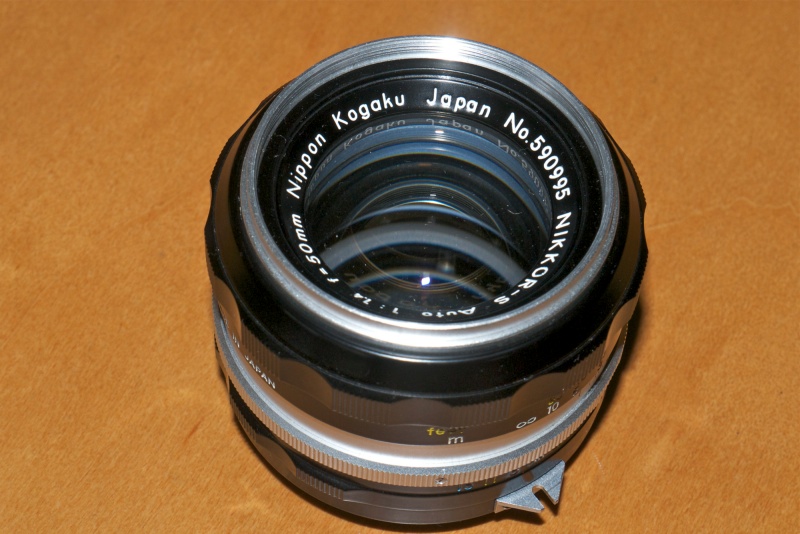
July 20 – a focus on essential hardware in the event of an all consuming fire saw me choosing the 50mm f/1.4 Nikkor-S as the lens to take with me.
July 29 – my infinitely upgradable Hackintosh saw the installation of Mountain Lion. Apple’s OS upgrades have never been cheaper – ML cost $20 – or less worthwhile, each conferring additional unnecessary frou frou, Mercifully, the OS remains robust and stable.
August 5 – America excelled again, placing a camera on Mars. It’s fashionable to write America off and tell everyone in earshot that the future is in China or some other hole passing for existence in the Far East. Utter rot. Last I checked MIT, CalTech, Stanford, Harvard, Yale, Brown, Columbia, Cornell, Dartmouth, UC Berkeley, Princeton and Penn were all in America. All are richly endowed, and the whole world continues to try to gain entry to these, the finest schools on earth.
August 13 – The exercise in serial boredom and commercial excess which is the Olympic Games was relieved by a splendidly humorous piece that only the British can do. It saw HM The Queen parachuting into the Olympic Stadium, after slipping the watchful eye of her bodyguard, none other than 007.
An interesting development.
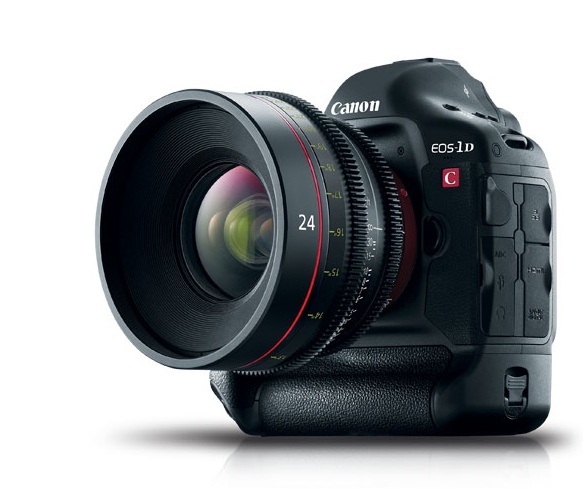
When Canon introduced the Canon 5D Mark II a few years ago no one expected it to become a leading movie camera. Delivering high quality footage from its video mode at a bargain price compared to professional movie cameras, it quickly became a favorite for aspiring movie makers on a budget.
Canon has now created a full time movie camera which will revolutionize how many professionals work, the EOS-1D C. The first applications which come to mind include fashion and wedding photography. The reason is that this movie camera makes movie images whose stills are capable of delivering high quality prints. No more ‘decisive moments’ – just let the camera run then select the best frames for printing. For the wedding snapper he gets both the movie – increasingly demanded in the business – and the ability to print high quality stills for the album.
While this body does not deliver RAW quality images you can bet that is just around the corner, likely awaiting the development of faster GPUs to process all that data in-camera while still delivering the requisite 24 frames a second. Canon really should speak with nVidia on that one.
Although the video below is a Canon promotional piece, it is very much worth watching. This will change how many stills photographers work. What’s that? You rue the passing of the skill of timing in taking a good still image? Get with the action. Now you too can be Cartier-Bresson. The Decisive Moment is so yesterday, swept away by technology.
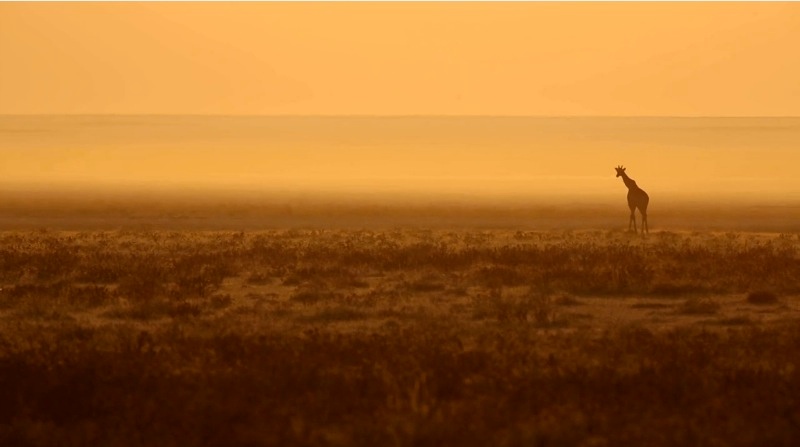
The video is HD and repays watching on a large display.
Using the lower 4K (4096 x 2160) setting you need 8.85mp of storage for each frame. That figures to 221mp a second (!). The recording format is Motion JPG though an even higher definition H264 format, using the full 18mp is available. The above video states that the camera chews through 1GB of storage a minute (I come up with a different answer, but Canon doubtless knows what it’s talking about), but with 128GB storage cards now available and affordable, that’s not a big issue. The rumored price is $12,000 which is not much for a professional grade digital movie camera in a very compact package. Add a compact stabilizer of the kind used by aerial photographer Jason Hawkes and you have a Steadicam at a fraction of the cost and bulk of the real thing.
Price? The Epic-M RED camera, with comparable specs, will set you back $24,000, twice as much.
A lightweight 28mm.
This one seems to have slipped through the review mill, so here are the details.
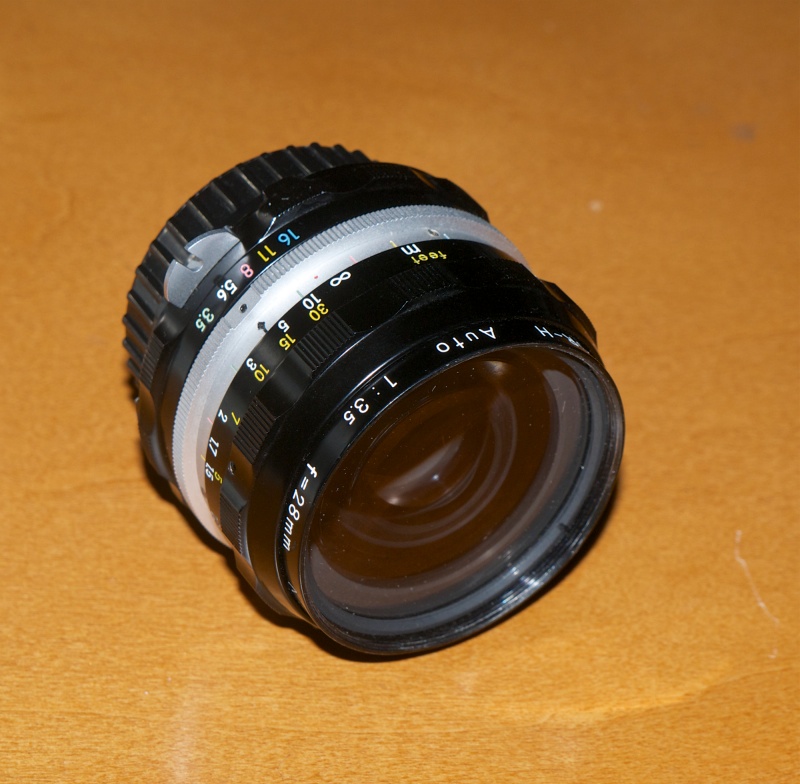
Mine is the pre-Ai version of 1971 with the metal scalloped focus collar . It’s considerably smaller and lighter than its f/2 sibling and can often be found for around $40. My mint copy ran $63 delivered. Construction and engraving quality represent the very best Nikon ever accomplished. The lens is a fine match for lighter bodies; it tends to be a bit too small for best handling on the larger bodies with battery grips.
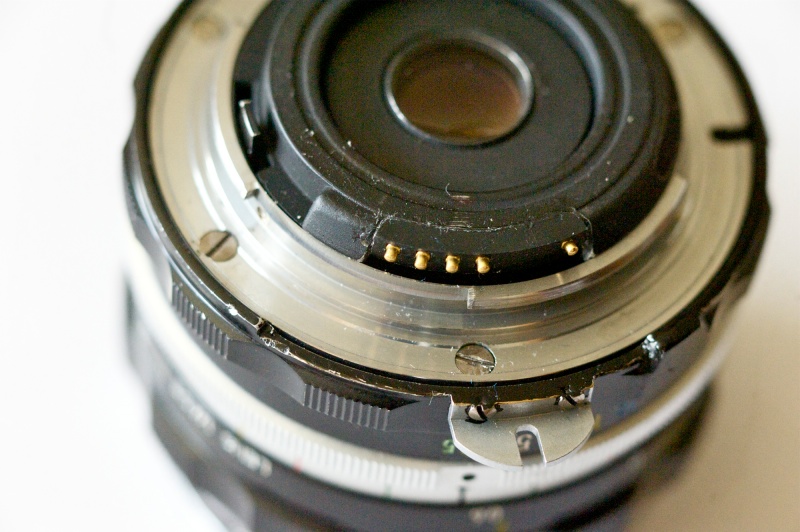
I removed the five slotted screws retaining the bayonet flange, removed the aperture ring and filed down the necessary relief to clear the aperture feeler on modern Nikons, making this into an Ai lens. You can see the relieved arc in the picture below.
CPU installation on this one is tricky as the rear baffle is sloped, for some reason. It has to be removed and cut back to create the plane perpendicular surface to which the CPU is glued.
As usual I have created a lens correction profile which you can download here.
This file includes three profiles, at f/3.5, f/5.6 and at f/8. LR and PS will use the closest match. The 28mm f/3.5 shows vignetting at f/3.5, disappearing by f/5.6 with very minor barrel distortion being corrected.
This profile is for the pre-Ai and Ai versions, which had 9 elements in 8 groups. I have not tested this profile with the later Ai-S lens, though it appears to have a similar optical design.
If you use a filter, make sure it’s a slim one. The correct hood is model HN-2. I use one with a standard slim Nikon 52mm UV filter.
As is common with pre-AiS lenses, the aperture stop down lever exhibits substantial non-linearity, as illustrated here so you really want to pass aperture control from the camera to the lens’s aperture collar to assure proper metering.
The lens is sharpest between f/5.6 and f/11 where it cedes nothing in definition to its far costlier sibling.
Quite exceptional.
The Sony designed sensor in the Nikon D2x has a couple of things going against it. The design is some 9-10 years old and the sensor is APS-C. Half the size of a full frame one. Total pixels are just over 12 mp.
I keep reading about how this sensor cannot handle ISO400 or anything faster and how limited it is when it comes to large prints, so I thought I would do a bit of pixel peeping at extreme magnification ratios.
Here’s the original image. It was taken using the 85mm f/1.8 AF-D lens in overcast light at ISO400 and 1/1000 second and f/2.8, using autofocus.

I exported the RAW original as a TIFF from LR to PS CS5 where all I did was to enlarge the image using the Image->Image Size->Bicubic Smoother telling it to shoot for a 60″ wide print. This takes out the jaggies which are just becoming visible at this huge size. Then back in LR I tweaked the sharpness sliders a bit until it looked good. The whole thing took seconds to do. I then magnified the PS processed image to an equivalent width of 80″ (that’s over 6.5 feet!) and took a screen shot which appears below:

Viewed at 2 feet from my 21″ display the image is perfect. Large areas of smooth tone are just beginning to show noise if you stick your nose in it.
Here are the PS CS5 settings:
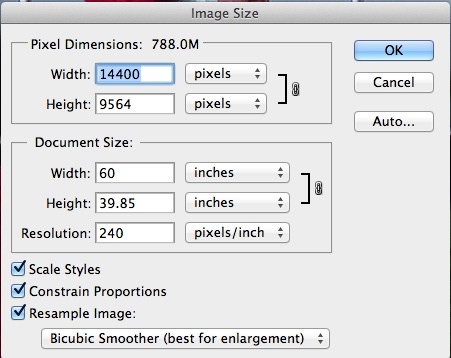
The original Nikon RAW file of 20.2MB swells to 827MB after the PS step, giving even my nuclear powered Hackintosh pause for thought, meaning a second or two to pop up the greatly enlarged display image.
The sweet spot for this sensor is reputed to be the native ISO of 100, whereas the above is at ISO 400, so there’s s good deal more performance yet to be squeezed out for the most critical results. Further, the native ISO of that old sensor is also known for outstanding color rendering, matching the best that is available today. I must give that a shot one day.
Not half bad for an obsolete sensor and body with a middle of the road lens. Sure, the latest sensors have better dynamic range and can go to unheard of ISOs, but for my purposes there’s not an awful lot wrong with the D2x, a bargain if ever there was one. Now excuse me while I get the glue out and reattach a bit of the rubber covering which is coming off the body ….