All posts by Thomas Pindelski

Posts of the Year

This has been a productive year for writing about Photographs, Photographers and Photography and I had a blast doing it. I hope you have been stimulated, inspired and, yes, angered from time to time. Without emotion there is no progress.

So, without further ado, here are my favorite posts of the year, in no particular order:

I am delighted to report that the revenue I have derived from this journal in 2009 was identical to that for 2008 and prior, meaning zero. I can assure you that will continue in 2010.

Happy New Year and thanks for dropping by.

Onward and upward:

Norman Parkinson: Sisters under the Skin

Another Parkinson for the library.

If I make mention of Norman Parkinson yet again it’s for the simple reason that a friend gave me her copy of Parkinson’s first book, Sisters under the Skin, for Christmas.

The sensationalist cover notwithstanding, the contents show Parkinson at his very best. Simply stated, Norman Parkinson is the Renoir of the camera and, mercifully, there is no recourse to black and white for its own sake. I increasingly think of black and white as an excuse sought out by photographers who are struggling with mediocre color material. When Parkinson uses monochrome it’s because it’s the right thing to do.

You see women in all their glory and infinite variety here. Iman with an impossibly long neck, a slutty/sultry Bianca Jagger, Elizabeth Taylor – never more beautiful, an equally lovely Lesley-Anne Down rendered in pastel tones, and a simply charming portrait of the Queen Mother, warm and tender. There’s Twiggy at the height of her fame, Princess Anne very much in charge of her (charging) steed, and that fabulous Van Dongen out-of-focus book cover you will see if you click the link above, from Parkinson’s book ‘Portraits in Fashion’.

This book is enhanced with short stories for most of the pictures, my favorite being the Marisa Berenson one where some crass git remarks “Goodness, your backside is collapsing like Mahtma Gandhi’s dhoti” to which the superb Marisa replies “Who’s she?”.

Wenda Rogerson (Mrs. Norman Parkinson) makes a spectacular appearance in perhaps the warmest photograph in a book suffused with warmth – you can also see her by clicking the link at the start of this piece and, yes, she hangs on my wall to this day. My, even Barbara Cartland looks half human in Parkinson’s hands, layers of make up or not. The only question which constantly comes to mind is how could an Englishman be, well, so Italian?

Very worthwhile searching out on the used market as it’s no longer available new.

Funky shutters

A neat G1 shutter experience

I confess that when I first saw this image, taken just before Christmas, I almost erased it. It’s another focusing on the theme of lone individuals in the big city – what I call my ‘Edward Hopper series’ after the great American painter.

The key element is the figure and is lost in gloom. But right before I hit the ‘Delete’ key I noticed something strange. The ‘up’ escalator is blurred whereas the ‘down’ one is sharp as can be. That’s an interesting little mystery, and it suddenly struck me that despite all it’s electronic magic, the Panasonic G1 which I used to snap this still uses a conventional focal plane shutter, with vertically traveling blinds. While it happens to default to an open state, thus permitting the sensor to receive and transmit the image to the electronic viewfinder (the camera has no prism or mirror) it’s conceptually identical to those used in some cameras a hundred years ago.

So I decided to manipulate the image and started messing with selective-this and slider-that in Lightroom, ending up with this:

Escalators and lone figure. G1, kit lens at 28mm, f/5.6, 1/30, ISO 320.

The camera’s shutter was moving with the down escalator and in the opposite direction to the up escalator, which accounts for the differential sharpness of the two.

Here’s a detail screenshot:

Perhaps the most famous example of funkiness from focal plane shutters is this picture by Jacques Henri Lartigue, where the wheel’s seeming elongation is the result of …. you guessed it, a vertically traveling focal plane shutter, the effect further magnified by the photographer’s panning with the motion:

Early focal plane shutter distortion. Taken in 1913.

Modern focal plane shutters travel too fast for this sort of extreme distortion which is a shame!

There really is little new under the sun, but the strange effect in my picture and a bit of manipulation make for an interesting snap. It seems that the 1/30th second used (excuse me, the 1/30th second the camera’s electronics chose, as I invariably use aperture priority exposure automation) was perfectly in sync with the speed of the down escalator.

Falling lives

Shorter and shorter.

I used my Leica M3 for some 35 years. It had everything I needed in a street snapper, being small, quiet, sharp and fast. Add a lens or two and you had enough to travel the world. I mostly used it with the 35mm Summaron with those ghastly viewfinder ‘spectacles’.

My M3

My Rollei 3.5F made it through 10 years. Truth be told, I seldom did it justice, never getting comfortable with the reversed waist level image (you were always looking up at people’s chins) but the large negative was nice and the camera even quieter than the Leica.

My Rollei 3.5F

It’s successor was possibly the most accomplished medium format film camera ever, the Rollei 6003 Pro. The designers obviously took pictures and the choice of shutter or aperture priority automation was better executed than anything before or since. The lenses were to die for and the controls near perfect. Too bad it weighed several tons. Five years.

My Rollei 6003 Pro

One other attempt at medium format came and went in a year. The Pentax 6×7 was so loud that there was basically no environment in which I cared to use it.

It made the sound of a gun when the button was pressed

By contrast, the diminutive Pentax ME Super with its sweet 40mm Pancake lens was a dream and served me well on the streets of a tough New York during most of the decade of the 1980s when I lived there. It started as a ‘steal me, I don’t care’ substitute for the Leica and ended up my daily snapper. I left it behind in New York when I moved to Los Angeles. Street snappers were safe there as no one walked.

ME Super with pancake in place – as good as 35mm SLRs got

But my all time favorite of the film years was my Leica M2, which I bought in very sad shape in 1993. I got a dozen very hard years out of it and it always made me regret having bought the M3 back in 1971 when I really should have got the M2. The 35/50/90mm viewfinder was just what the doctor ordered and no bespectacled bulky 35mm lenses were needed, just the wonderful 35mm and 90mm Asph Summicrons. Parting with that one really hurt when I sold it.

My Leica M2 with the 35mm Asph Summicron

My general drift here, however, is that there are no more 5, 10 or 15 year cameras. The rate of change in technology is so startlingly high right now that if you were to tell me that I would be using my Panasonic G1 as my “go to” tool of choice five years hence I would laugh myself silly.

No sooner do I write that, though, than I am given pause by the superb Canon 5D. I see no earthly reason to upgrade to the Mark II as the images seem every bit as perfect as anything from medium format film and maybe it will just enjoy a double digit anniversary here. Provided it doesn’t blow and die for lack of digispares. I have recycled a couple of the poorer lenses made by Canon for this body but the rest soldier on as sharp as the day I bought them and newer arrivals preserve backward compatibility so far.

Life’s too short for brand loyalty. I wonder what the Panasonic G2 will bring? Or the Samsung XYZ3? If it works for me you will find it around my neck or, more likely, in my pocket.

“Rich sod” I hear you thinking. Nothing could be further from the truth. My M3, bought in 1971, was the results of My years in retail. The Rollei 3.5F was a real beater which cost very little. Now, film Leicas and Rolleis are super collectible, of course. Pretty much everything else was from trading gear, and I never bought new until digital came along. The reasons are simple. ‘Used’ and ‘digital’ equals ‘obsolete’, as in parts are not available no matter how competent the camera, and repairing them makes little economic sense. Further, digital gear is so much cheaper than the machines of old that it has become very affordable. That $650 G1 would have cost some $100 in 1971 currency when I got that Leica M3. It never ceases to amuse me that the proceeds of my M2, M3 and a small handful of lenses paid for everything I use today. Like with investing, timing the exit right makes a big difference. And loyalty is for dog lovers.

iTablet/iSlate/iWhatever

Any day now.

That P. T. Barnum of the digital age, Steve Jobs, knows how to milk free publicity. Before being fired from Apple in May, 1985, he joked that Apple was a ship that leaked from the top. He had not yet learned the power of silence.

Then, upon rejoining Apple just over ten years later, he knew better. The less you said the more they wrote and speculated about the next Great Thing, and while I have no idea how much this strategy garnered in free publicity for the iPhone, you can bet the amount was huge. I doubt there was a more anticipated introduction of a consumer gadget in the history of consumer gadgets.

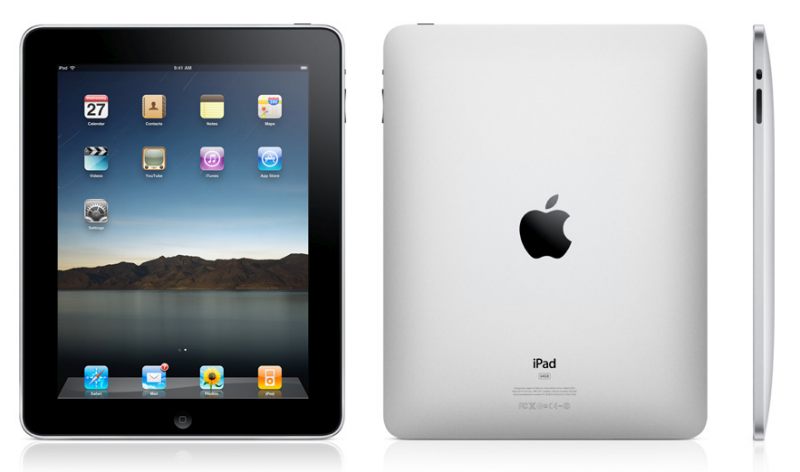
The next Great Thing, the touchscreen iTablet, will likely be introduced on January 27, 2010 and there are so many indicia of the device’s imminent arrival that it’s hardly a long shot prediction.

iSlate/iTablet – artist’s rendering.

Books, magazines and newspapers getting readied, games being redesigned for larger screen resolution, components procured, a meeting hall booked for a January Apple special, leaks from parts suppliers in Taiwan and China and, most recently, disclosure that the iSlate.com domain has been registered in Apple’s name for a couple of years. iSlate sounds pretty neat to me. A nice throwback to the days of Moses delivering the Ten Commandments.

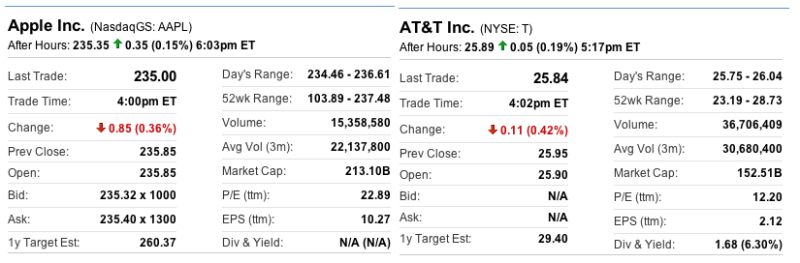
This device is unlikely to be as earth shattering as the iPhone because it will be perceived as costlier, for one. Consumers still naively believe that the iPhone costs $100-$200 when the all in 2 year contract cost is closer to $2,000. But it’s tempting to speculate what the iSlate will cost. My guess is that the $599 number bruited about is unrealistic. The iPhone, with its miniscule screen, would cost that at retail absent the telco’s subsidy.

If the iSlate really is to have a 7-10″ touchscreen in glorious color, 3G, wifi and a long life battery, $1300 is more like it, and that would dictate lower margins than Apple’s existing MacBook Pro. Still, Apple did mention at their last earnings call that they anticipate falling gross margins going forward and it’s unclear whether this reflects an attempt at increased market share (not consonant with their traditional thinking) or, maybe, a lower than usual margin on the iSlate. So I’m guessing $999. That will make it less than the blockbuster expected, the economies of the west still being in recovery from a brush with death, and the effect on the stock will not be a happy one.

This will, I believe, be a “buy the rumor, sell the news” type of investment opportunity.

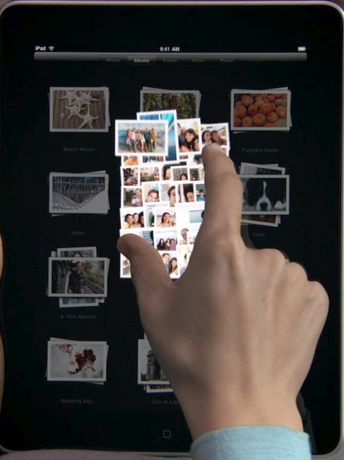
But I think the device’s relevance to educated consumers (who constitute a small minority of cell phone users, let’s face it) will be great. It will become the news delivery tool of choice for those who prefer not to waste their time on the pap passing for news on the networks or on cable – I’m reminded of the old saying that the front page of any major newspaper has more news than a 30 minute network news broadcast. It will become a powerful marketing tool for those seeking to display pictures, models, sketches, ideas on the fly. Engineers, design professionals, doctors and investment gurus will love it. You will watch movies and play games on it. And it will be a wonderful tool for the display of photographs, maybe with limited processing tools included. Imagine using such a tool in the studio as a preview device connected to your DSLR in live view mode with an art director peering at the screen over your shoulder.

And for a company which never lets form take a back seat to function, you can bet that the iSlate/iTablet/iWhatever will look absolutely fabulous. I can’t wait to see what it’s all about. The introduction date is January 27, 2010.

Disclosure: I am long AAPL call options. If you think this blog is a source of investment advice, I can get you a deal on a bridge in Brooklyn.