All posts by Thomas Pindelski

Going Big

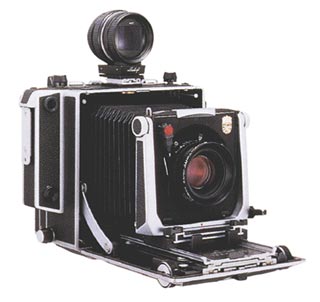
Well, I screwed out my courage and plonked down the huge sum of $300 for a 50 year old 4×5 camera, a Graflex Crown Graphic. It’s a logical migration in a life which started with 35mm, then saw 6×6 come on the scene some 15 years ago. The latter proved ideal when 16x prints were expected rather than hoped for. Yes, you can get there with a Leica but everything has to be just about dead right for a perfect print that large. On occasion I can make a Big Print where you cannot tell whether 35mm or 6×6 was used, but not always. So when detail in the details matters the Mamiya 6 or Rollei 6003 comes out – the latter somewhat reluctantly, it should be added, owing to its great weight. Anyway, the Mamiya’s lenses are better, if less varied.

I started thinking about Going Big over the past couple of years. Not wanting to spend a fortune on what is probably a dying medium, I nonetheless desired something a little better than a home made pinhole camera for my tentative entry to the world of black headcloths (OK, my old green Scottish wool pullover which is always with me, in my case) and de rigeur tripods. Further, a growing interest in abstract nature photography, spurred by Eliot Porter’s great work, meant that definition in the final image would have to be good. Really good.

I was so completely clueless about the world of large format photography, when I started research I had no idea what a film holder was, and little more than a basic appreciation of the physics of camera movements, tilts, shift and so on. The World Wide Web soon fixed that, especially the splendid site at Large Format photography where many selfless contributors offer a fine education in the basics.

So where to get this contradiction in terms, a top quality, cheap large format camera? Simple. I did what many before me have done when dipping a toe in the waters, and purchased a Graflex Crown Graphic, beloved by many press photographers in the 1940s and 1950s. My $300 got me a pristine camera, a 135mm Schneider Xenar ‘standard’ lens (like a 40mm on 35mm film) and a couple of wooden film holders, each holding two sheets of film. So now I can go on the road and take 4 pictures before ‘reloading’ in a changing bag. Not a big deal. I take few pictures in any case and filmholders can be had for $5-10 each if I need more.

The quality of the camera is a superb meeting of form and function. First, it is unbelievably light, owing to the extensive use of aluminum where it matters. The body is wood covered with leatherette. It is also amazingly compact when folded up. Believe it or not it has a coupled rangefinder with a separate, parallax corrected, viewfinder. And did I mention the night focusing device? So you thought infrared focusing aids started with digital cameras? How about an internal, battery illuminated bulb which, when switched on, projects a light beam on the subject through the rangefinder, alignment of the two beams denoting sharp focus? And, the whole thing being industrial grade, needless to say the bulb in my Crown Graphic worked first time, needing only fresh batteries. It had never been used. The manufacturer’s dummy batteries, in the form of two wooden dowels, resided in the camera on receipt!

It was a matter of two minutes to remove the rangefinder housing, adjust the rangefinder for accuracy and proper image coincidence, and a drop of blue Loctite later I had a focusing aid every bit as good as those to be found on pre-M Leicas. A gentle cleaning of the glasses and mirrors and everything is now crystal clear.

So now I have three Leicas – my M2 German original, my Texas Leica (Mamiya 6) and my Godzilla Leica. Having splashed out a further $5 on a cable release, I’m now wondering where I hid my tripod. I’m trying the whole thing out today at my Top Secret location off gorgeous Highway One. And no, I’m not telling where that is.

About One

I first drove Highway One in California in 1979, my second year in America since immigrating from England. The car was one of the worst I ever owned, a Volvo 244 GL. No matter. The occasion was a rushed vacation to discover this wonder. She. Highway One. The road of roads.

I just drove her again.

Whether at day or night, on two wheels or four, heading north or south – and I have done all of these many times now – the result is the same.

One’s jaw drops in awe.

These columns, by design, avoid religion and politics. I would like readers to remain friends.

But, for once, I have to invoke the Almighty. For He was in wondrous form when he created the central California coast. This was a seventh day event. A day when He said, hang it all, let’s do the very best We can.

One. Moonstone Beach, CA. Canon 5D, 400mm, 1/3000, f/8, ISO 400

And when you drive from Cambria to Carmel, or Carmel to Cambria if you prefer the sea view, you too will invoke Him, whatever guise your Almighty takes. And the atheist amongst us will seriously reconsider.

It’s that good.

I am blessed with the good fortune of living – by design not accident – not 25 miles inland from Cambria, in central California, so little excuse needs be found for a drive or a ride up One.

Today, the alleged reason was to scout out some new opportunities for my soon-to-be-here Crown Graphic. A 4” x 5” sheet film camera no less. Anathema to one who grew up, photographically, on the streets of London with a Leica.

And as I meandered here and there, exploring her many ways and byways, One reminded me again why we live.

It is to see not to look. To sense not to smell. To feel not to touch.

One.

Throw away your lens cap and case

How many times have I heard “I keep a lens cap on at all times to protect my precious lens” from photographers?

Sadly, for many this is more than literally true, the loyalty to the lens cap being so great that the user finds he frequently takes pictures of the inside, having forgotten to take it off!

Oh! you say, but I only keep my cap on when the camera is in its (never ready) case or camera bag. Even worse. Why on earth would your lens need protection stored in the safety of your (largely inaccessible) bag?

If you must have protection for the lens, place a clear glass filter over it. Then you can clean that with abandon using your shirt tail, handkerchief or tie, given that you will never have those precious lens cleaning tissues available when you need them. Then, after five years of hard use, throw away the filter and buy a new one. It has cost you $10/year and never gets in the way of a picture.

On a related topic, throw away the silly case your camera came with. Its sole purpose is to present one more obstacle to the taking of pictures, while simultaneously destroying the lovely feel of an unclothed camera held in bare hands. Plus, of course, film changing becomes a nightmare as you unscrew the camera from its case, nearly drop it as it is now untethered and promptly forget to properly tighten the screw when done. Another trip to the repair shop.

Liberate your thinking and your approach. Throw away your lens cap and that silly case and attach your strap of choice to the camera, where it belongs.

Publish or be damned

What do you do with all those old pictures, stuffed in boxes, lost to posterity?

Get off your duff and publish a book!

Too expensive, you say? Not with print-on-demand technology, available from the likes of Lulu. You submit your book in PDF format and what you see is what you get, whether you opt for black and white or the pricier color. A great way to memorialize family albums, your best pictures, the growth of a child. And friends love to get books as presents, especially as nothing could be more personal than your own book of photographs.

Here is the preface to my book Street Smarts, published in April, 2005:

The Swinging Sixties were over.

David Bailey was passé.

A Nikon was the required passport to photographic respectability. The pound in your pocket, the Prime Minister reminded us, had not been devalued. Princess Di and her coterie of press manipulators were nowhere in sight and the Third Estate still preferred discretion to disclosure.

That ne plus ultra of genteel camera stores, Wallace Heaton on New BondStreet, was still very much in business, replete with Royal warrants and walnut paneling. Later it was to suffer the ignominy of acquisition by amass merchandiser only to be bowdlerized into oblivion.

With my earliest visual recollections being of Degas, Sisley and Manet and their photographic successors, Cartier Bresson, Brassai and Kertesz, I wanted nothing so much in the whole world as to take street pictures. In1971 I was at college, aged 19, with my net worth invested in an already dated Leica camera with but one lens. Obsolete or not, it remains the best street photography machine yet devised.

Realizing that fewer variables made for less risk in the photographic process, I settled on Kodak TriX film processed at home in Kodak’s venerable D76 developer. The meat and potatoes of any self-respecting street photographer’s diet. Printing required that a piece of hardboard be attached to my bedroom window with three trays of smelly chemicals and an old Gamer enlarger. Plus a red bulb so as not to trip on our Scottish Terrier.

Why street photographs? It always seemed to me that the genre offered too much that was either humorless or contrived. Posed pictures trying to pass for spontaneity. Worst of all, much of the work out there was positively invasive when it came to respecting other’s privacy. Cameras cruelly stuck in the faces of the poor or destitute. Not for me. But make it spontaneous and interject a touch of humor and now you have a picture worth taking.

Life at University College, London was blissfully easy. Attendance was not monitored and class content was not especially challenging. Most of the professors preferred to work on their richly subsidized governmental contracts, caring little for their teaching. A degree could be earned by having fun for two years and nine months and then working like stink forthe final three. So fun it was.

London’s great spaces beckoned. The Courtauld Institute was across the road. The British Museum around the corner. UC’s magnificent library a few yards away. Then there were the great Victorian parks. Hyde Park, Kensington Gardens, Holland Park, Regents Park, Green Park, St. James’s Park – all a short, free, Tube ride away.

It took but a couple of rolls of film to learn that stealth and speed were the norm for the Leica, a near silent piece of engineering genius. Subjects were everywhere. Lenses were cheap. The small collapsible 50mm Elmar lens, which came with my M3, was soon supplemented with a long focus 90mm Elmar, costing all of $60 and a 35mm Summaron wide angle for $75. Thank God for scholarships….

It was the wide angle Summaron that was most frequently mounted on my Leica. You had to get close to your subject to fill the frame. “If your pictures are not good enough, you are not close enough”, Robert Capa had said. And when the opportunity finally arose to visit Paris, but one camera and lens came along – the Leica M3 with the 35mm Summaron. And six rolls of TriX film. No one had taught me that you had to take thousands of pictures to get a good one and some two rolls remained unused after a week in the world’s most beautiful city.

In the 1970s the British photographic press was mercifully more interested in pictures than in equipment. It was a fine outlet for publishing one’s photographs, and you even got paid, which is a good thing on a student’s income. Further, the occasional prize went a long way to providing film, paper and chemicals to keep the productive process going. Another great resource was the extensive photographic library at the Royal Photographic Society, which made its home in Mayfair at South Audley Street, offering a student membership for a negligible sum. It was a rare afternoon that would not find me in its warm interior, poring over the works of the Old World masters while also learning that there was a whole New World to be found across the Atlantic, in the guise of the works of Edward Weston, Imogen Cunningham and Walker Evans. Pictures and vistas we could simply not imagine in England’s subtler landscape. Then there was the public library on Hornton Street in Kensington with hundreds of books on art and photography. All free.

So there you have it. An easy life, no money, free resources and the beststreet photography opportunities life could offer. By 1977, now trying to earn a living and increasingly coming into contact with the New World, with all its energy and innovation, it was clear that the path to success lay elsewhere. While flying on a one-way ticket to the west coast of the United States in November 1977, it dawned on me that no one could take away all those warm memories which you see illustrated here.

You can buy the book by clicking here.

Where should the money go?

There used to be an old rule of thumb with hi-fi gear back in the days of the long playing record that 50% of your budget for an outfit should be for the loudspeakers, these being the weakest link in the chain. Of course, as with photographers, many disregarded this sound guideline, if you pardon the pun, and spent most of their money on the pick-up arm and turntable.

The assumption underlying what follows is that the goal is for prints which are made at a magnification of 12x or more on a consistent basis.

I think there a version of this “rule” which is equally applicable to expenditure on photographic equipment. If we break the process into two components – the front end (camera, film or digital card, lens) and back end (enlarger or scanner and printer) then I’ll bet dollars to doughnuts that most serious photographers spend 80% of their budget on the front end.

This is completely wrong, especially for film-based photography where processing is much more important than with digital. The best way I can think of solving the equation is to look at the back end first, because there is less to choose from there.

A dedicated film scanner for 35mm or medium format, I mean a good dedicated film scanner, will run some $1,000 (35mm) or $2,000 (medium format). For that you get a top quality lens backed by robust mechanicals and software to remove dust and scratches without significantly affecting image quality. In the wet darkroom, the cost is similar – you need a good lens and enlarger. A good enlarger runs $1,000 to $2,000 with a lens adding $200-300. Sure you can spend less but you get a poor screen, slow speed and modest storage. The digital back-end worker has to add a computer for another $2,000, Photoshop for $800 and a printer for $350 – $600, the latter for a wide-carriage version.

So your back-end for top quality exhibition work with a film front end runs $2,000 to $5,000, with the latter price point easily reached if you work in medium format. The worker using a digital front end saves money on the film scanner, as none is needed.

Yet how often do you read film users saying “My flat bed scanner does just fine on all film sizes”, this invariably written by someone who has never seen a good scan from a dedicated film scanner? Their mega dollar front end is being processed though mush. Quality in, garbage out.

So, with a back-end running $2,000 to $5,000 that leaves the quality oriented photographer a like sum, adopting the 50/50 Rule, for the front end. That sort of sum buys you just about anything you need.

Moral of the story? A cheap back end makes your camera into a Box Brownie, even if it says Hasselblad on the label.