An under-appreciated field.
For an index of all my book reviews click here.
While I cannot remember a time when I did not think about photography on a daily basis, an interest in architecture did not seriously take seed until the age of 29. That was the year I moved to New York City. While its inherent bias on the editorial pages sadly infects the news reporting in the New York Times, no such favoritism was evident in the writings of Paul Goldberger and Ada Louise Huxtable. Their topic was architecture.
Before I knew it I was attending lectures by prominent architects, fascinated by the melding of big business, art and massive budgets with all the related logistical complexity which is what results when you try to build in New York. I mean, look at the realities. Those seeking to do you harm include the Mob (concrete to this day costs 20% more in NYC than anywhere else), the City of New York (relatively cheap to buy, after the Mob is accounted for), Albany, Washington and just about every other government apparatchik you can think of. The only difference between the Mob and the government is that the latter wrote the laws. If you can make a tall building in Manhattan you can make one with impunity anywhere.
Absorbing Huxtable’s and Goldberger’s teaching I cemented my relationship with architecture by visiting Chicago for the first time. Simply stated, Chicago’s finest buildings are to Manhattan what Ferrari is to GM. But New York’s winters were tough enough, thank you, so it wasn’t as if I was about to move there, much as I love the people of the mid-west. And those writers’ teachings made an indelible expression. Give me those charming moments of partial consciousness that define falling asleep and, likely as not, you will find my mind straying to New York City architecture.
You can say an awful lot about a building by measuring your desire to touch it. Not metaphysically. Walk up to it and touch it. And for me there were always three which made that distinguished cadre. The Flatiron Building. Philip Johnson’s AT&T. And Seagram. Johnson again.
So bad did this habit become that I made a point of walking past the last two on the way home just to be able to brush them with my fingertips. Maybe some of the magic would rub off?
No secret that I would make special efforts to entertain clients at lunch in the Four Seasons at the plaza level of Johnson’s Seagram masterpiece. From there I could gaze at the no less wonderful Lever House, airily perched on stilts on the west side of Park Avenue. It was my privilege to watch AT&T grow from my 40th floor office in the so-high-tech Citicorp Center, sloping roof for solar panels and all. Still not installed last I checked. Like the corporation, the architecture was crass, vulgar and ethically challenged. AT&T was so beautifully made that you just had to touch it. And they had that Apollo chap in the lobby, all gilded, with massive transatlantic cables draped about him.
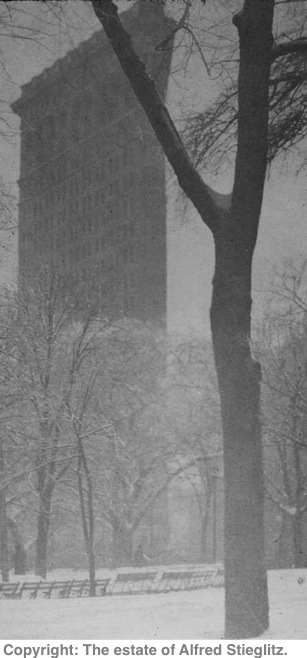
As for the Flatiron, forget about all those schoolboy statistics about it being the tallest, the first with a steel frame, the first with elevators, etc. All you had to know was that Stieglitz had photographed it in 1903.
I was lucky to be reminded of all of this by the loan of a book on architectural photography from a friend. There, on page 113, Stieglitz’s masterpiece of the Flatiron is annotated thus:
Stieglitz’s ethereal view of the Flatiron, taken with a hand-held camera, typifies the Pictorialist approach to architecture.
That got my attention. I am of that school, after all. And here is that snap:
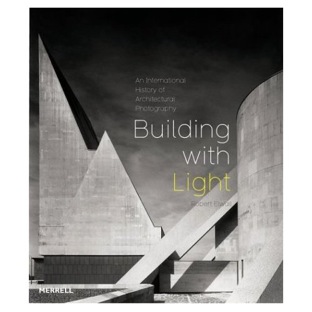
The book is Building with Light by Robert Elwall. American architecture is remarkably well represented (the author is the Curator of the British Architectural Library) with not a trace of condescension, and the whole 240 page tome is a breathtaking survey of architectural photography from the early nineteenth century through today. (Note: Architectural photography has not improved in the last 150 years).
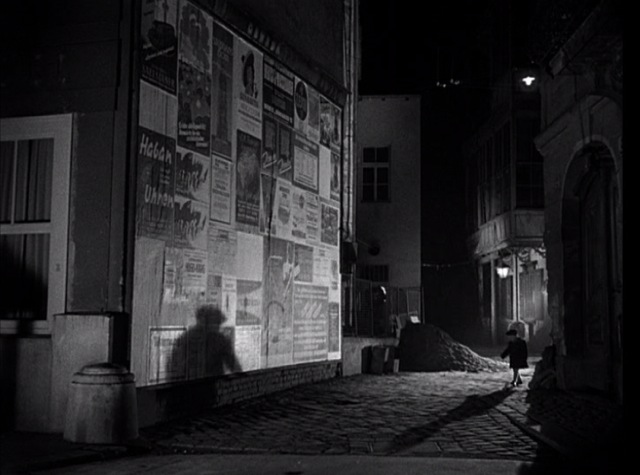
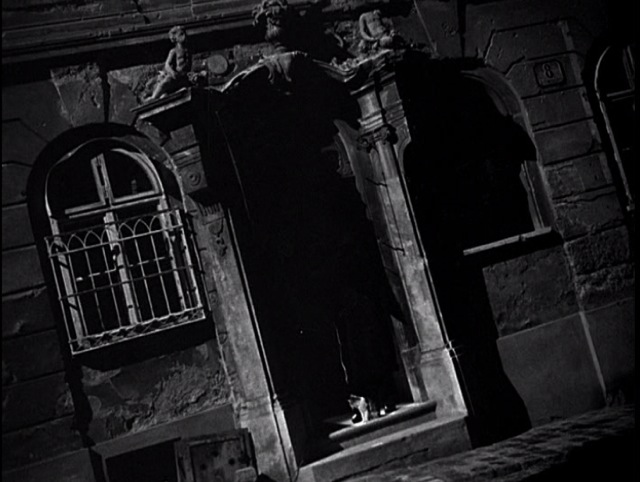
Some of my favorite images are, unsurprisingly, from California residential architecture. Shulman and Neutra are amply represented as they adapt the new international style to a smaller scale. The photography changes too. What was once formal documentation is now pure pictorialism. It’s the effect of the building, not its technical detail, that fascinates.
Sieglitz would be proud.
All of which gives me two suggestions. First, get the book if buildings speak to you. Second, stay tuned for some of my architectural pictures ….