Category Archives: Leica

All about the wonderful cameras from Wetzlar.

Withdrawal symptoms

Well, just one Leica left.

For an index of all Leica-related articles click here.

Be under no illusion. Selling off the last of my Leica equipment was emotionally wrenching. These may be mass produced machines, true, but when something has been a part of you for more than a third of a century, well, parting is not easy.

I cannot but reminisce about some of the wonderful optics that made their home on my Leica and Leicaflex bodies. And, in truth, there were more optics than one could recall without saying, in the same breath, that he was privileged indeed to have enjoyed so much that was wondrous. For whatever their future, Leica can claim, without any fear of exaggeration, to have made most of the best lenses that have graced any camera. Ever.

Some stand out not so much for their optical prowess as for the results they delivered. And if I sound a bit like Woody Allen reciting his favorite things on this earth, towards the end of the beautiful film that is Manhattan, well, so be it. Favorites in the early years were the 90mm Elmar – small, modest, unpretentious, yet always willing. The perfect match for that stroke of genius we know as the M3 viewfinder. On those trips to Paris it ceded primacy to the 35mm f/2.8 Summaron. The “eyeglasses” this needed to frame properly with the M3 were not the most chic of Leitz’s designs, but the lens was superb in every way, certainly more affordable to this impecunious student than its f/2 Summicron stablemate. Suffice it to say this optic saw more use on the M3 than anything else during my monochrome London years.

As affluence raised its head after a year or two in the world’s greatest democracy, the M3 was joined by a Leicaflex SL with the ne plus ultra 50mm Summicron-R.
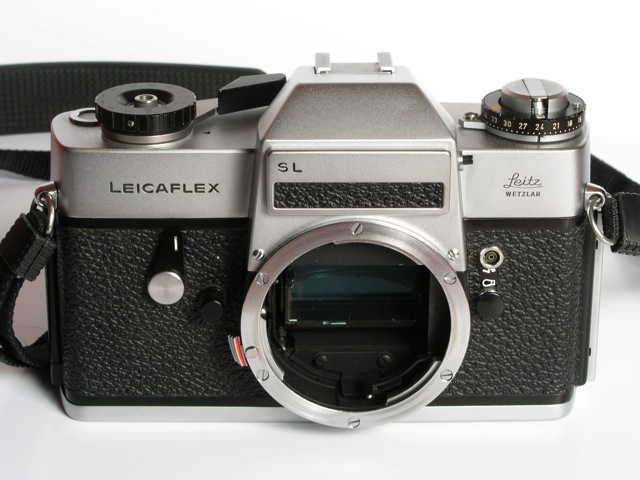
Hard to do anything wrong with that combination. Certainly, the svelte style of the M3 was missing from this bulky pair, but the camera came with the best viewfinder and focusing screen ever built into an SLR – a fact to this day – and once that body was mated to the superb 180mm f/3.4 Apo-Telyt-R, well, this photographer had found his Chateau Lafite Rothschild of landscape equipment. Throw Kodachrome into the mix and you have maybe the finest equipment the twentieth century ever made available to an aspiring photographer. With but one exception, read on below, this was the best lens I have ever owned.

After years of providing for old age, a process that common sense dictated was something you would be foolish to trust to government, the photographic ethic saw a return to the M and its street capabilities. The so-so 50mm f/2.8 Elmar gracefully gave way to a lovely v3 Summicron, the last model with the removable lens head, and the increased contrast and lovely tonal rendition of this masterpiece, now used exclusively for color, were a joy to behold.
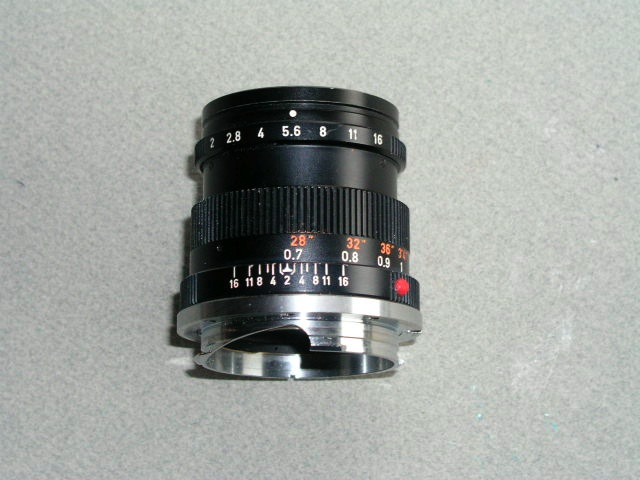
Small, fast focusing, it has moved to a good home. It served me faithfully for the best part of two decades.

The 90mm Elmar gave way to a Leicaflex design mounted in an M mount, the 90mm f/2.8 Elmarit-M. Nowhere near as compact as the old Elmar, its lens element did not rotate as you focused, so the apertures were always clearly visible on top. Almost worth the trade off in size and weight, and the jump in definition and resolving power was out of this world.

But the M3 lusted after something better still, and before you knew it the Elmarit-M was joined by a brand, spanking new 90mm Asph Apo-Summicron-M. The only new Leica lens I ever owned and there are no words in the vernacular to describe the capabilities of this optic. It is as if the M3, released in the early ’50s, had finally found a lens to do it justice some forty years later. Suffice it to say that it simply intimidated me every time I mounted it on the camera, for the knowledge was certain that there was simply no way I could do it justice. Without a doubt one of the best lenses I have ever owned.

But that was far from the end of it. Like the poor kid who grew up lusting after Ferraris but never dreamed he would own one, I chanced upon a new 400mm f/6.8 Telyt.
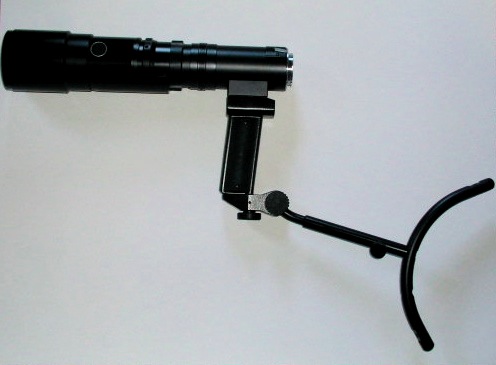
This lens had always fascinated me when I was a kid, just like those Ferraris.

The lens had been owned by a collector (Ugh! A lawyer to boot, as if that was a surprise) for twenty years and never taken out of the box. Sacrilege! The lubricants in the trombone focus action were dried up, the schmuck lawyer’s protestations notwithstanding, making focusing about as much fun as a root canal, but a quick trip for relubrication saw another example of Leitz’s genius mated, with the appropriate adapter, to the Leicaflex. The design may only have used a couple of glasses but, goodness, was it sharp. The thing was a foot and a half long, making for a discomfiting feeling in later years as everyone was now watching everyone else, but it cranked out some great pictures despite the perceived threat to life and limb of all and sundry.

Reverting to the streets, where I had pretty much grown up as a photographer, called for something really wide, so why not the best? The late ’90s market was booming, everyone was an investment genius, money was cheap and, so it seemed, was the outrageous 21mm Asph Elmarit-M.
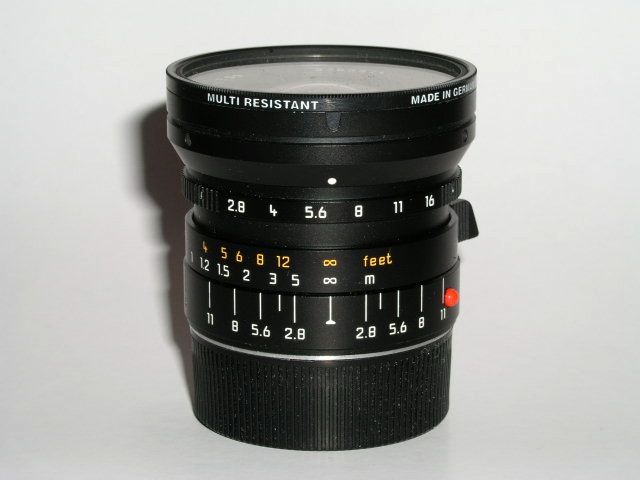
The third best lens I ever used. Sure, the clip on viewfinder was simply lousy, plastic casing and all, and the lens hood was consigned to the garbage can as soon as I looked at it, but it replaced a bizarre, if cheap, Russian 20mm Russar (a design that Comrade Stalin appropriated from Zeiss) and showed this user what a super-wide was really about. This one really became a part of me. I find it hard to believe that the coverage and micro-contrast of this very special optic will be exceeded at this focal length.

And finally, because I simply had more money than sense at the time, why not a 135mm f/3.4 Apo-Telyt-M?
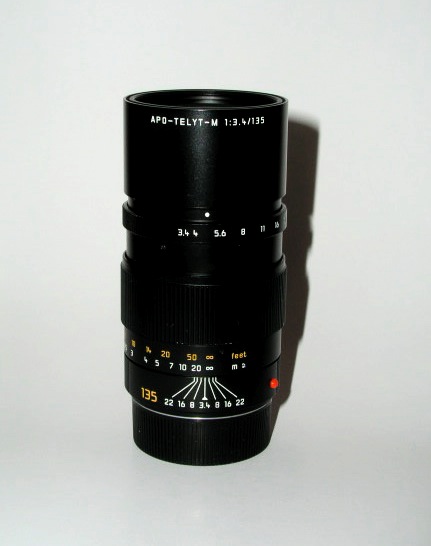
I already knew what the magical combination of apochromatic glasses and Telyt design could do, so the 135mm replaced a long string of 135s – the Hektor, the Elmar, and the Tele-Elmar. It badly embarrassed all of its predecessors.

There were many others, of course. Like old girlfriends, you never forget them. (There were, I hasten to add, more lenses than girlfriends). Each had its genius. Each had its faults. All were loved. And remain so to this day. (Lenses and girlfriends).

So now I have one Leica left. My M2, with what is perhaps the ultimate street snapper’s lens, the 35mm Asph Summicron-M. Yes, another gift courtesy of the Internet Bubble. The pairing is on extended loan to a fine English photographer, and will probably return home sometime in 2007. That Summicron replaced a very modest 35mm f/3.5 Summaron which, despite its unprepossessing looks, was as good as you could wish, at any aperture. Indeed, with the sole exception of the 50mm Elmar my M3 started life with, all those wonderful Leica lenses never much cared what aperture you selected, for they were equally good at anything the lighting conditions dictated. And the 35mm Asph is maybe the only design where Leica finally got the lens hood dead right.

So, will I sell both? Well, the M2 body must move on. I am simply not returning to the drudge of film/processing/scanning/dust removal that digital obsoleted. Further, I have little interest in cropped digital sensors, especially at the outrageous price Leica is asking for the M8, so unless the House of Leica comes out with a full frame sensor, affordable M9 (as likely as finding integrity in a politician), and stops making all those darned excuses about technology, the 35mm Asph will go also. Modern point-and-shoot digitals get better daily at prices, compared to the M8, that represent impulse buys. They also permit cost effective annual upgrades, something no M8 owner will like to contemplate after a mere twelve months of ownership. And that, by the way, is why I think Leica’s M8, after the honeymoon is over, is doomed to fail.

Complacency is easy. Change hard. Neither negates the fact that technology marches on.

Leica – Witness to a Century

A fine chronlogy, if factually flawed

I picked up my copy of this book a couple of years ago from overstock bookseller Edward R. Hamilton for a few dollars. It’s actually worth that sort of money.

This is the last place to go for factual accuracy regarding the various Leica models; I am no maven but could scarce find a page without several technical errors accompanying each of the illustrations of the many models of cameras made by Leitz over the years.

On the other hand, the book does a fine job of showcasing the work of some great photographers from Oscar Barnack, the inventor of the Leica (he was a fine photographer), down to modern times. Especially pleasant to see is the work of a couple of relatively unknown Italian photographers, probably attributable to the nationality of the Italian author, Alessandro Pasi.

And, technical errors apart, who can argue with the caption for the M3, first sold in 1954? “The turning point: Leica M3”.

Indeed.

A part of me is no more

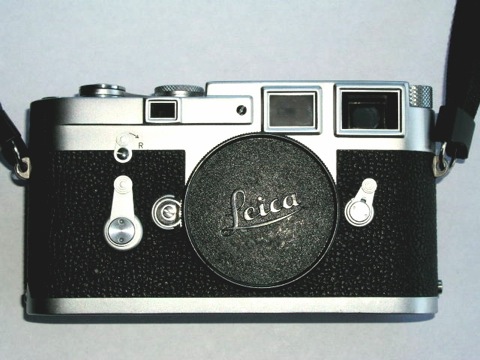
After 35 years, my Leica M3 is sold.

For an index of all Leica-related articles click here.

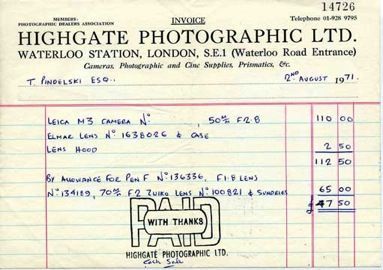
Did I really needed to sell it? After all, it was so hard to buy, back on August 2, 1971. It had won many prizes and kept me in film and paper when I was a poor kid trying to make his way.

“It could be worth a lot one day” I thought.

“No, it’s a machine for taking pictures and it needs to be used. And I will not let it lie around gathering dust.”

Trying to console myself.

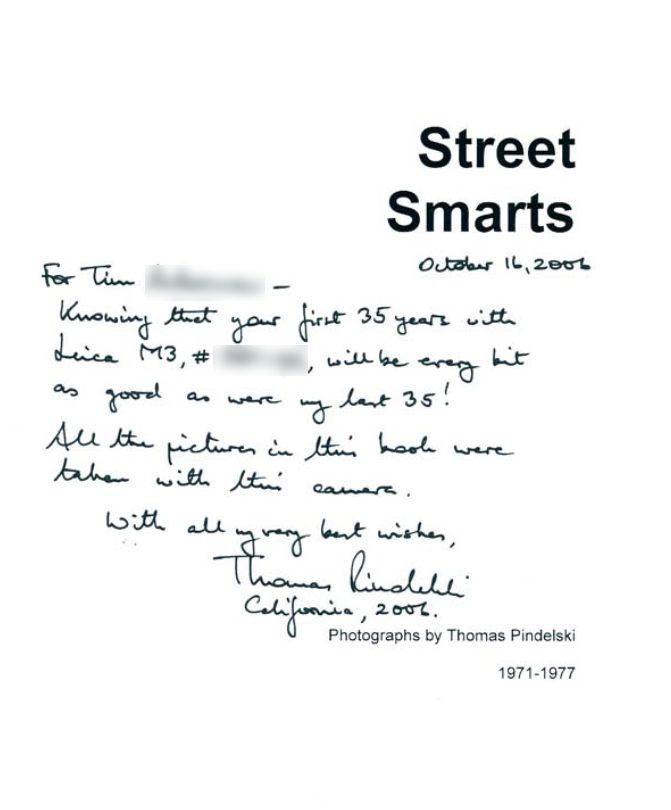
So right before packing it and including an autographed copy of my book, every picture in which had been taken with that M3, I ran through the shutter with the tape recorder on. There was that familiar second curtain bounce, common to all Ms, at 1/15th and 1/30th. The sound of the escapement on the slow speeds. The joyous sensuality of 1/60th or 1/125th. Not so much a click as a susurrus. The delayed action – so useful, I wonder they ever deleted it from later models.


A great shutter, one last time

But one thing none of the above can recreate is the feel of that Leica body and the flare free nature of the great view/rangefinder, equalled by the M2 and destroyed in later models by accountants who thought they knew better than the engineers.

And all those pleasant memories.

Pictures speak louder than words.

Roll 1, Picture 1 – a winner:

Girl on a train. My first ever Leica photograph, August 2, 1971. Roll 1, Picture 1. M3, 50mm Elmar, TriX

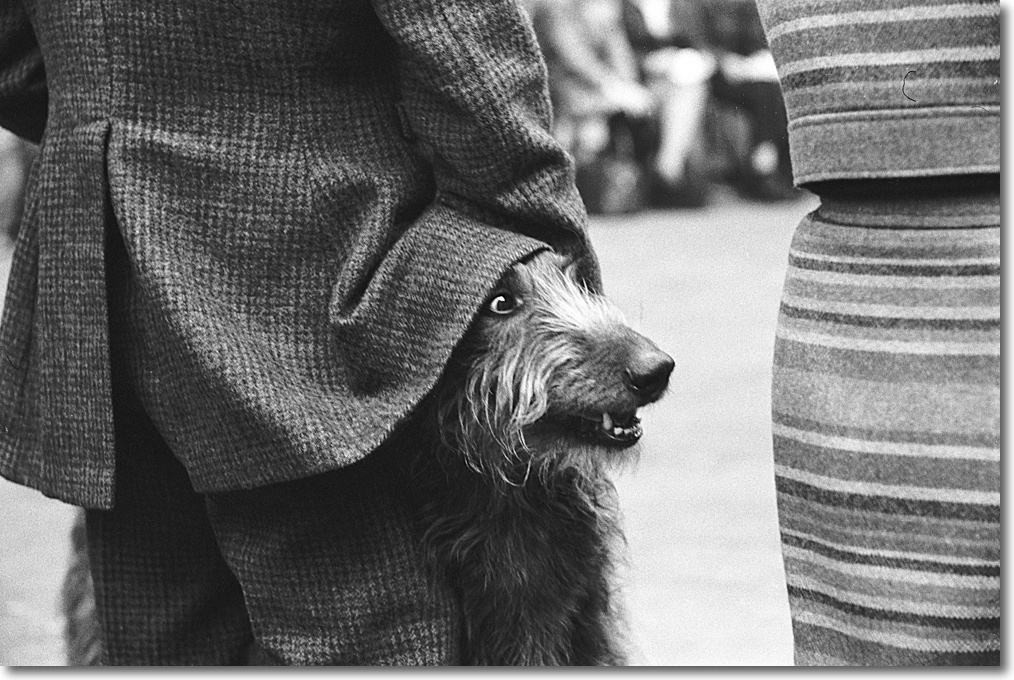
Then, but a few rolls of TriX later, that crazy wolfhound at Cruft’s Dog Show:


Crufts Dog Show, 1972. M3, 90mm Elmar, TriX at 800ASA

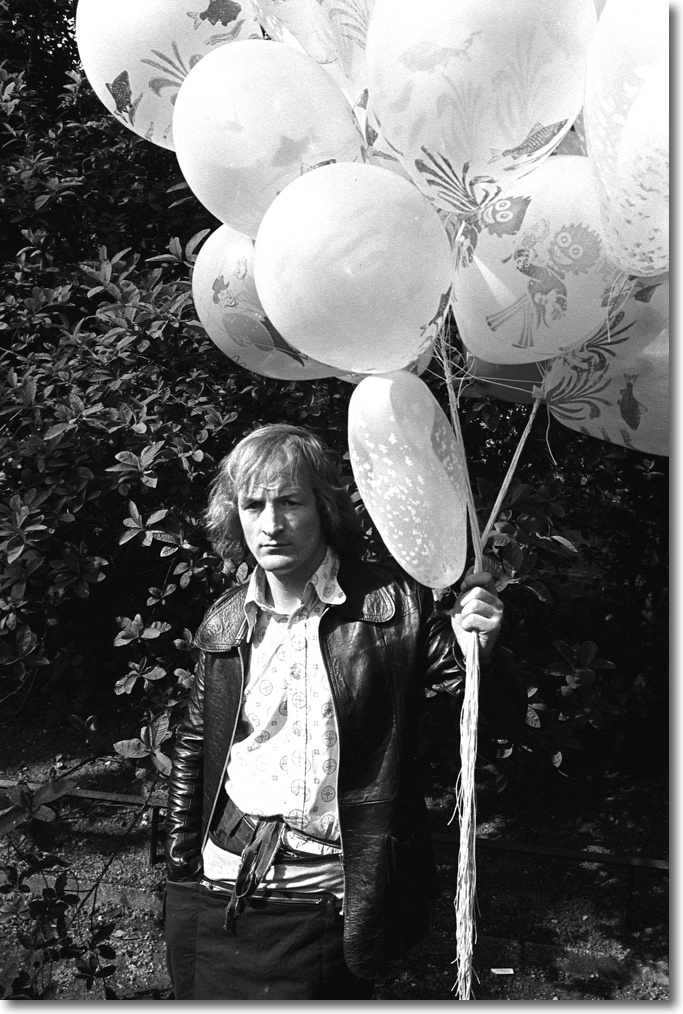
Or how about that tough guy with the balloons?


Balloon Guy, 1973. M3, 35mm Summaron, TriX

My first big prizewinner – Photographer of the Year, 1974, Photography Magazine (UK):


Comparisons, 1974. Reg Butler sculpture show, Holland Park, London. M3, 50mm DR Summicron, TriX

Or that Parisienne – I leave it to you to guess her profession:


Lady and dog, Paris, 1974. M3, 35mm Summaron, TriX

These and many more like it chronicle 1970s London and Paris in my book.

In 1977 that M3 accompanied me in the cabin of PanAm’s 747 with a one way ticket to America, leaving behind poor, socialist England, with its class distinctions, foul climate and punitive taxation.

And the magic continued, this time in color:


Late sun, Anchorage, Alaska, 1978. M3, 50mm Summicron, Kodachrome 64

Later, when the west coast beckoned, the M3 was just as much at home:


Ojai, CA, 1990. M3, 50mm Summicron, Kodachrome 64

But it would be disingenuous to preach ‘Change or Die’, as I am wont to do, and have this magnificent machine gathering dust in some never opened cupboard, a victim of digital technology.

So the Leica M3 had to move on.

May its next custodian have thirty-five great years with it.

Sob.

Cameras and loyalty

Change or die.

I mentioned a while back that a friend had asked for help in selling a couple of film cameras on eBay. Now while eBay may be a conduit for some of the least honest people on earth – the sponsor smartly gets to act as innocent broker sloughing off responsibility for combating fraud on cheated buyers – it is nonetheless one of the more effective venues for getting rid of junk. Chances are good that someone out there wants it.

I admit I was a tad shocked at the dear relative’s lack of loyalty to these fine machines. But I know her to be a wise woman so I started reflecting on her decision.

The two cameras concerned were a mass produced and totally uninteresting (to collectors, at least) Canon Rebel and a much more collectible Kodak Medalist II which, owing to its strange appearance and bulk, makes the grade as an instant display piece. One immensely capable the other, well, just immense.

Arguably you would not want to use either to take pictures. The Rebel is surpassed handily by its digital descendants whereas the Medalist is really not competent in a world of 10 megapixel sensors and fabulous lenses, if you can even find film for it.

Knowing this I realized that my task would not be an easy one; however, as I am a big believer in the old saying that has it that you have to spend money to make money, I fitted the Rebel with two sets of new batteries (one for the data back, the other for the camera) and ran a roll of film through it, the better to show prospective buyers the quality this combination could produce. You can probably say with reasonable certainty that this will be the very last roll of film I will expose in my lifetime.

The Medalist could not be accorded like treatment as I could not find 620 format film in time, but it would appeal to a display collector, I reckoned, rather than someone looking for a daily user. All I did here was to clean it up and take a nice set of display pictures showing this magnificent piece from every conceivable angle.

To cut a long story short, both cameras sold, albeit neither attracted much interest. It’s the low selling price of the Rebel – $65 including new batteries, three rolls of film and a nice Canon carryall – that prompts this journal entry. Here, after all, was a camera that was selling a handful of years ago for what? $250? $300? The one I sold for my friend had probably seen a dozen or two rolls of film through it and was as close to mint as it gets. Like the proverbial Cadillac owned by the Little Old Lady from Pasadena of days past. In other words, thanks to digital, the Canon, a camera of great flexibility and yielding fine negatives, had depreciated some 80% in the blink of an eye.

It occurs to me that this sort of thing doubtless happened in previous generations where a technological breakthrough had obsoleted or bankrupted a predecessor technology.

Old man Gutenberg and his press did a number on all those Benedictine monks who had the market in illustrated manuscripts well and truly cornered. Being a pretty smart lot, however, (and I admit to bias here, having been educated by them), they went where the money is. Meaning booze. Benedictine Dom Perignon invented the cork stopper, making transportable champagne a reality and the now unemployed Benedictine artists transitioned to making Benedictine liquer, making many happy and themselves rich. Nice transition. And say what you may about religion, there’s a lot right with a bunch of chaps that knows a good liquer or glass of champagne.


That was then, this is now. An illustrated Benedictine manuscript fragment

In medicine the local barber gave way to penicillin, the surgeon and his anesthetics. The latter, in turn, is fighting a losing battle against smart pharmaceutical chemists who are rapidly obsoleting the scalpel with their targeted drugs. Amen for that.

The Ford Model T did a number on the horse and buggy business. You now enjoy a horse as a recreational avocation, flaunting the key rule of not owning something that eats as you sleep.

The light bulb did it to candles. The latter now serve as a backstop when lightning hits the local generator and provide continuing work for the local fire brigade and insurance adjuster.

Newsprint is where film was a few years ago. Meaning scared and about to die. The computer with a properly targeted news reader application will allow a user to digest hundreds of stories daily where in the past he might read that many on a topic of choice in a week.


Hundreds of stories at a glance. The NetNewsWire news reader on an iMac.

The main street movie house is in the early throes of death, replaced by the DVD which, in turn, will soon yield to downloadable movies. No need to leave the armored compound you call home.

The iPod killed the CD.

Those are some of the big wrecking technological changes that immediately come to mind. Back to the topic of photography.

Digital changed photography more than any technological change since Kodak’s ˜You press the button, we do the rest”. Actually, that was not so much a technological change – after all Kodak was selling cameras pre-loaded with roll film which technology had been around for a time – as it was a brilliant marketing change. Place the customer first (something Kodak has long since forgotten) and the world will beat a path to your door. In like manner, the iPod made better that which already existed, made it easy to use and made it sexy. The photographer uses the latter as a temporary storage device for his digital pictures which are overflowing the storage card in the camera on that extended trip. When he’s not listening to his tunes or watching movies on the same device, that is. So now Apple has changed that old Kodak dictum and it reads “Your press the button, you do the rest”.

And with this change in photographic technology I believe a new behavioral set of circumstances has come to pass. Namely, that brand loyalty is, for the most part, a thing of the past.

In the old days a serious photographer was a Leica man or a Zeiss man or a Rolleiflex man (sadly, few women were allowed into the club). Later he became a Nikon or Minolta or Pentax or Canon man. Or woman. He swore by Kodak or Agfa or Ilford film. For his dad, it had been GM or Ford. They had not let him down in the past and were not about to do so now, having grown with him.

Look at the exquisite care Leitz, for one, took with transitioning its many happy users from the anachronistic screw mounting of lenses on bodies with simply awful viewfinders and ergonomics to match, to the fast and infinitely more capable bayonet mount and magnificent finder of the Leica M. Though the first bayonet Leica, the M3, came out in 1954, Leitz was releasing the latest in its line of screw bodied cameras as late as 1957, finally discontinuing it in 1960. Forward lens compatibility was also assured – what better way to preserve the value of that investment? – so the M body was one millimeter thinner, allowing a screw to bayonet adapter to be fitted while preserving infinity focus. And gradually those old pipe smoking fuddy duddies at the camera club came to realize that maybe a lever film advance and the world’s best integrated view/rangefinder weren’t such bad things after all.

Their modern descendants are the same folks who deny the reality that film is in its last innings. But Leica, in its clever marketing, had managed to preserve a past generation of users, making them upgrade, and attracted a whole new generation who saw the M for the superbly capable instrument that it was. Brand loyalty, in other words, was well used. Whether they get away with it again with the ridiculously overpriced and soon-to-be-obsolete Leica M8 remains to be seen. They had better watch out – those M bayonet patents are long expired.

Now fast forward to 2006. At the beginning of the year I was a Leica M loyalist of some 35 years standing. Newer Ms had come along – truth be told none were as well made as the M2 and M3 I had been using for all that time – but there was no reason for ‘upgrading’, if an upgrade it really was. I tried an M6 and found the rangefinder worthless pointed into the sun. Those on the M2 and M3 worked fine. That’s what happens when accountants take over from engineers. The lenses got better and better, true, so I upgraded those, but when something better came along it would clearly not be from the house of Leitz, or Leica as it had become. It happened to be from Canon in the guise of a (barely) affordable full frame sensor in the EOS 5D DSLR which instantly obsoleted all my medium format gear. I couldn’t sell the latter fast enough before it became worthless. Bye bye, Rollei.

And had you told me that I would make my daily user a camera which was made by a consumer appliance maker – the Panasonic LX1 – and that this would replace none other than the vaunted Leicas, well, I would probably have had serious doubts about your sanity. And that was just a few months ago. Panasonic had made a better mousetrap, Canon had made the best, near grain-free sensor in the business and brand loyalty simply made no sense. So when my friend wisely wrote to me, in response to my email agonizing about selling the Leicas, with just three words, I knew there was more than a grain of truth in what she wrote.

Ain’t Change Wonderful?

Let’s extrapolate that thinking for a moment. The other day I watched a brief Sony promotional video on YouTube where a charming Sony technologist was extolling the virtues of the new Sony Alpha A100. I have spoken highly of this camera, based on its paper specifications, in the past, not least because it is a rebadged Minolta with Sony’s capital and genius behind it. What do you think the smart Japanese engineer said on that video? Why, he took a leaf straight out of Leica’s book. “Just think”, he said, “there are six million Minolta lenses out there that will fit our camera”. Respect the past while selling the future. It was not lost on me, either, that each of those six million lenses had just got two new leases on life, courtesy of a digital sensor and a vibration reduction mechanism built into the body of the camera.

So one day soon someone comes along with a sensor as fine grained as Canon’s in a much smaller package (it does not have to be full frame if the quality is there). The camera has vibration reduction built into the body, not the lens. The viewfinder has focus confirmation for manual focus lenses just like some Pentax DSLRs. Now my tired eyes can see when things are sharp as the little light comes on. And the mount will respect the legacy of the past by being Nikon or Canon or Minolta or Pentax, or even Leica M. For all those tens of millions of lenses out there. And maybe that brilliant manufacturer somehow obsoletes the flapping mirror and pentaprism with a crisp, straight through electronic viewfinder with no ghosting and high contrast. So much cheaper and more reliable than all those mechanical parts.

And what do you think I will do? Why, dump the Canon and move on, of course.

As they say on Wall Street, “If you want loyalty, get a dog”. And I already have one of those.


Bert the Border Terrier. Loyalty personified, unless a cookie is involved, that is.

I like Leicas as much as the next man….

…but I know disinformation when I see it.

Can you believe this guy?

How many more people are going to buy into this ‘Freedom Train’ disinformation? This appalling apologia has now been around for some fifty years.

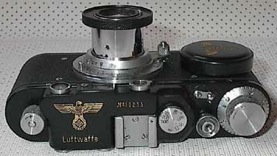
This is the same Leica company that gave us the Luftwaffe Leica, provided optics for Panzer tanks and most certainly did not depart Wetzlar for moral shores in 1939. Nor did it look to leave during the largest military build up the world has seen in the period 1933-39, being a major supplier of optics to their government. It’s not like they had no warning….

“Boy, oh boy, Ernst. Did you see the P&L this quarter? Are those Wehrmacht orders something, or what?”

I would have posted this comment in this writer’s web site but, predictably, comments are not possible. Why would they be when you write naïve nonsense like this?

Mr. ‘Conscientious’ should find his conscience and question what he reads before repeating it as fact. That’s the sort of ‘reporting’ you find in most of today’s newspapers. Until you learn to question what you read, Mr. C, please stick to photography.

But of course we know that the Leitz company did not collaborate with the Nazis, they were only following orders and they really love their country, etc., etc. As this advertisement from the November 1942 edition of Foto Beobachter confirms – a perfect match for that Luftwaffe Leica:

Look, Leicas are nice, but let’s not deny history.