Category Archives: Hardware

Stuff

The Panasonic G1 – Part II

Getting a jump on things

To read the whole series on the Panasonic G1, click here

While I eagerly await the arrival of my Panasonic G1, I took a few moments to download the instruction book from the manufacturer’s web site.

With modern cameras more and more resembling computers, it makes sense to get a jump on things – the manual is no less than 167 pages long.

Here are some things I noticed:

  • The functions of the cursor buttons on the back are completely different from those on my Panasonic LX-1
  • There’s the equivalent of a ‘film plane’ mark on the top plate. Wonder who would ever need that?
  • Panasonic does not list a wireless remote but aftermarket vendors on eBay sell them for under $40
  • The LCD monitor can be turned ‘display in’ on the back of the camera – nice for protection and no distraction
  • The charger connects to power using a cable – nice, as bulky chargers with pins on the body will often refuse to fit in tight places
  • You can use the camera connected to the mains with a power cable
  • SDHC cards up to 32gB are presently accepted
  • A Custom Menu function allows you to limit LCD display to essential functions – that’s nice, given the sheer number of choices
  • A World Time setting allows you to specify a second time zone
  • Auto Review of pictures can be set to present everything magnified 4x
  • There are seven brightness settings for the LCD monitor
  • There’s a setting to automatically brighten the LCD in sunlight
  • The swiveling LCD allows both landscape and portrait orientation of the camera at waist level
  • There’s an EVF proximity sensor – like with the iPhone – which optionally switches off the LCD when the camera is raised to eye level
  • The EVF has eyesight adjustment – hurrah!
  • The battery is good for 330 minutes of continuous LCD use
  • The digital zoom (ugh!) extends the 28-90mm lens to 55-178mm (full frame equivalents) by using 3.1 of the 12 million pixels
  • One of the EVF display options allows all display clutter to disappear – ‘film mode’ with a dedicated top plate button. One of the first things I will set!
  • There’s a small, built-in flash – useful for dynamic range enhancement (or limitation, more correctly) in bright sun
  • The self timer has a three picture option
  • The latest firmware upgrade, v. 1.2, claims to reduce noise at high ISO settings – I do not know with which version the camera ships
  • There’s an option for 3 shot bracketing – just the thing for HDR photography
  • Depressing the front dial allows switching between aperture and shutter priority auto exposure – this can be disabled
  • A preview mode allows preview of the picture – here’s the wonder of an EVF – you can preview depth-of-field without the picture darkening. Is that magic or what? There’s a dedicated button for that on the lower right rear!
  • There are three Custom Menu settings possible – hooray!
  • You can choose three aspect ratios – 4:3, 3:2 (Leica) and 16:9 (widescreen)
  • It looks like the 14-45mm kit lens has a non-rotating front element which will simplify use with a polarizing filter
  • The screen can display up to 22 items of data – now do you see why I like the idea of switching all of this off?

  • A 4gB SDHC card will hold 185 pictures in RAW format at 4:3 aspect ratio. Which means that 1gB is fine for me.
  • Panny has done a careless job of converting the manual to a PDF and several pages are missing including, most frustratingly, one of the index pages.

I prefer to use Lightroom 2 for all my processing (and simply plug the removed SDHC card into my iMac using a card reader) and have confirmed that the latest version of Adobe Camera Raw built in to LR 2.4 supports RAW files from the G1. It’s not that the software supplied by camera makers is bad – I have no idea – I simply refuse to learn yet another interface when I am so comfortable with Lightroom.

Anyway, there’s lots to look forward to and one reader has reported that the EVF is quite usable. This is the key to the whole design. Remember Panny’s first awful attempt at an EVF in the Panasonic L1? At least they made that body look more like a Leica M, but everything else was wrong. Interestingly, this time Panny has taken the conservative route of emulating the pentaprism hump common to all SLRs of the past 60 years even though none is needed – there is no glass pentaprism inside. Panny has also admitted that they could make the camera significantly smaller (here’s hoping!) but have refrained from doing so, probably for marketing reasons. Mysteriously, they are marketing this as a trade-up camera for the point-shoot-and-miss crowd whereas I regard it as possibly the first viable option for the disillusioned-Leica-rangefinder set.

Finally, I took a moment to compare the size and weight of the G1 with the long deceased Leica CL which I mentioned here. The M2 is also compared, because it is the single greatest body Leica ever made. I think you may agree this is instructive reading – all data exclude the lens and are in mm/grams:

Leica CL: 121 x 76 x 32 365 grams
Leica M2: 138 x 77 x 33.5 580 grams
Panny G1: 124 x 83.6 x 45.2 385 grams

Interesting, huh?

Now all I have to do is wait for the UPS man!

In the meanwhile, you can enjoy a really fact packed review by Matt Grayson in this video – note especially just how small that body appears in his hands:

The Panasonic G1 – Part I

To read the whole series on the Panasonic G1, click here

In a moment of insanity occasioned by despair at anyone ever introducing a small camera with a large digital sensor and with low shutter and autofocus lag, I asked a fellow photographer whether the only choice was a Leica M8, a camera I have remorselessly trashed in these pages for its dated, inept technology, ridiculous price and poor execution. And it’s not like I’m some sort of Leica-hating nut, having used M2, M3 and M6 film cameras for 35 years.

The reply gave me a well deserved spanking. I mean what was I thinking of buying that piece of antique jewelry?

“Come on, Thomas. I know that engineers love shiny, well-machined metal, but an M8? I think it was The Master who called it “nothing more than a joke”. There was a TV show a while back in which a photographer might or might not have been the father of a young woman. He gave her an M8, and in trying to solve the mystery, I wondered whether he was her father because he gave her such an expensive gift, or whether he wasn’t her father and just wanted to get rid of it.

There are so many really interesting cameras around that are worthy of your attention. The LX3 is a real improvement on your LX1. There are the 4/3rds cameras, which might be useful with the pancake lenses. I just bought the new Panasonic ZS3 (TZ7 in Europe) which will fit into your 501s better than the LX1, despite its awesome 25mm-300mm lens. I was trying it out today, and you can see the results below. I was quite far away from the subjects when I took the shots.”

Well, anyway, getting an M8 would have involved an extended diet of crow, not to mention an extended diet, period, so I dropped the idea. The Digital Pen makes the mistake of not having a proper viewfinder – sorry, but LCD screens do not cut it, nor does an arm-outstretched posture work when snapping pictures, at least not for this photographer – so that idea went the way of the dodo. By the time you add the optical viewfinder you have bulk equal to a small DSLR – and a lousy viewfinder.

I have rethought what I wrote here and have ordered a Panasonic G1 camera. Having scanned the reviews and now that the camera has been on the market for some 9 months, I concluded that it might do the trick – a fast, small and unobtrusive street snapper at modest cost. Even experienced photographers seem more than happy with the electronic viewfinder and the responsiveness. Although the camera is not pocketable, it is reminiscent of my old Pentax ME Super of bygone film days and it’s not like I am going to be heart broken if someone steals it. Try saying that about that dated antique, the Leica M8. If you ever remove it from the display case at home, that is.


The Panasonic G1. In blue. On order now!

Mine will come in blue because that looks really amateur which is important to me. I hate black, there’s no chrome version and the red is over the top – British Racing Green would have been nice. It comes with a somewhat underwhelmingly spec’d 14-45mm f/3.5-5.6 kit lens, but that optic has garnered uniformly fine reviews and the inclusion of an image stabilizer in the lens goes some way to making up for the uninspiring maximum aperture. And the 28-90mm full frame-equivalent zoom range is just what the doctor ordered. Further, the sensor dust cleaner should counter one of the biggest bugaboos of my Canon 5D – sensor dust.

The Electronic Viewfinder (EVF) has enjoyed generally positive comments except in really poor light. Those EVFs I have tried so far are, simply stated, just awful. And while I refuse to hold my camera two feet away from my face, the swiveling LCD screen suggests some intriguing waist level opportunities if the LCD screen is remotely usable in bright light. It should be fine, I’m guessing, in poor light where it takes the place of the EVF.

While you can adapt Leica M lenses to the body, the 2x focal length magnification factor makes most of these less than ideal, and users have commented on the poor performance of the 28mm and wider Leica optics at the edges of the frame, owing to the dated, non-retrofocus optical designs which place the nodal point too close to the sensor and its photosites. At least that’s what they meant! Plus you are back to fear of theft again – have you priced Leica M optics recently? I don’t mind wearing $10k on my wrist but on my shoulder ready to be snatched? I don’t think so.

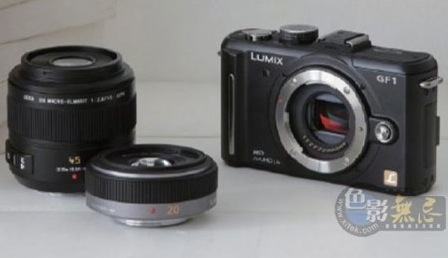
But the icing on the cake here, if the G1 works out, is the prospect of a 20mm f/1.7 pancake lens (=40mm) which will take me right back to my New York days, if not to New York, and that lovely ME Super with its superb 40mm Pancake Takumar. The 20mm lens has not been released at the time of writing.

Meanwhile, if you want mind-numbing technical analysis of the camera, you need go no further than DP Review, which sets the standard for objective analysis and measurement of modern digital cameras.

By the way, if you wonder why the Leica name is missing from the lens on the G1 (Leica has designed many lenses for recent point-and-shoot Panasonic cameras), just read this piece between the lines to see how Panasonic thinks. They use software to correct aberrations rather than making ever more expensive optics. Surely this is the way of the future?

I’m off to find some blue tape to obscure those awful manufacturer’s markings on the front.

Will this be the ‘digital M2’ I have been waiting for all these years? Time will tell, but it’s not a very costly experiment.

Actually, you can double that, consonant with my strict principle that a dollar blown on a toy dictates that a like amount be sent to my better half. That’s also a compelling reason not to get an M8!

Getting closer

Small, yes, but is it fast?

The Olympus Digital Pen is an exciting prospect for those of us interested in an affordable alternative to the ridiculously priced digital Leica M8, whose cost of entry with a lens is well north of $7,000.


The Olympus Digital Pen wit the 17mm (=34mm) non-zoom lens

At $900 for the body with the 34mm wide angle and optical viewfinder it is affordable as a street snapper but as yet there’s no indication what the shutter lag is like; auto focus with a lens this short is not important as pretty much everything will be sharp all the time, but what the world really needs is a pocketable high quality camera with a decent sized sensor without the interminable shutter lag which makes just about very point-and-shoot out here useless for street photography.

Thank goodness Olympus has had the good taste to release the body in chrome. The more amateur it looks the less visible the photographer becomes.

One other thought – the Pen is smaller than the M8 in every dimension without a lens, and much smaller with the 17mm fitted compared to, say, a 28mm lens.

Check the Comment for some preliminary feedback on shutter and focus lag.

Trying the new MacBook Pro – 2009

OK, but not a buy

I stepped by the local Apple Store yesterday to play with the 13.3″ $1200 new aluminum MacBook Pro.

Here are my reactions:

Positives:

  • Rolls Royce look and feel
  • Super sharp, bright screen – excellent for photo processing
  • Easily user upgradeable for more RAM and bigger HDD without voiding the warranty
  • Price – great value at $1200
  • Excellent Nvidia 9400 graphics card
  • Backlit keyboard
  • Fast CPU

Negatives:

  • Glossy screen with no matte option
  • Black keys – not my thing
  • I suspect the aluminum case will dent whereas a plastic case will bend and spring back
  • Store employees were unclear whether it will drive the 30″ Cinema Display (the 15″ and 17″ models will but they have an enhanced 9400/9600 card – I checked the system profile on all three models). Subsequent checking on the Apple site confirms that the 13.3″ model will drive the 30″ Cinema Display (though there may be issues with other makers’ dual DVI monitors) at full 2520 x 1600 definition
  • Still too heavy – my netbook (no DVD drive) is 2 lbs lighter at 4.8lbs, but you have to hack it to run OS X

I will wait for the ($700?) Tablet which should be out by 2010, presumably with a touchscreen like the iPhone but with a much faster CPU than used in that device. However, if your current Mac is dying or you have finally decided that your time is worth more than the time sink that is Windows, this would be a great starter machine with the ability to drive very large displays.

Elitism

Guilty as charged!

I am an unashamed elitist, a status too often mistaken for snobbery. The two are unrelated. To misquote Wilde, the snob knows the price of everything and the value of nothing. The elitist, by contrast, focuses solely on value. Scratch an elitist and you will find an engineer.

I was struck by this realization when thinking of the choices I have made in machines over the years. Before we get to cameras, let’s look at some other daily possessions and the brands involved.

In the kitchen you simply cannot beat GE appliances. Not some fancy marque name, just your basic GE (and still made by GE as their disaster passing for a CEO failed to sell the home appliance division). Bog reliable, no instruction book needed and parts easily available when they do eventually break. But let’s face it, they rarely do. The GE fridge is the very touchstone of reliability.

With the mundane behind us, let’s focus on the essential. Motorcycles. For as long as I can remember I have ridden BMW motorcycles. Air cooled twins, water cooled flat threes and fours, oil cooled twins, faired, naked (the bike, not me), carburetted, injected, with or without sidecar, fast, slow, I loved them all, but only my first – a 1975 R90/6 air cooled boxer – remains, and is much loved. It had style where the others had function. Riding that old BMW reminds me that it’s the journey, not the destination, which matters.

In watches, I would love to tell you that I have always worn a Patek, but that would require that I had done a far better job of choosing my parents. Let’s face it, Polish refugees who had the poor sense to choose England over America as the land of the future – we are talking 1947 here – for their kids aren’t going to be troubling the Nobel Committee any time soon. Econ. 101 was plainly not on my parents’ curriculum. Add a curious predisposition for keeping their wealth in a Polish bank despite six – 1933-1939 – years’ warning that maybe moving the lot to Switzerland might make sense, their belief in the League of Nations and in the power and goodness of America saw them lose the lot to the invading hordes. So, to cut a long story short, I can claim to have worn nothing but a Patek since 1996. For nigh on twenty years, every time I was about to get one, the price had risen that bit faster than my disposable income. Well, it inspired me to try harder, I suppose.

I was a long time woodworker. Relaxing like nothing else, very challenging (metalwork is child’s play by comparison) and a perennial source of dissatisfaction. You can always do better. And I say ‘was’ because the onset of tendonitis – meaning my wrists hurt like hell when stressed – dictated disposal of my tools and conversion of the woodshop to a home theater. But I did keep one or two for the odd occasion and they all say Makita or Panasonic on the body. The Japanese make lovely, well adjusted and light tools which take an incredible beating and remain in perfect order. By contrast American tools – they used to be made here – try to impress with weight and the heck with the fit and finish. De Walt and Porter Cable have a lot to answer for when you look at just how shoddily the average American home is put together. As for the cheap and cheerful Chinese imports, whether from Taiwan or PRC, well you get a kit which has to be repaired and tuned before it works. Not a great use of valuable time.

Though I’m lousy at it, I do enjoy cooking and the pots and pans have always said All Clad. You can bury me with those. Good weapons too, in the event of a burglary. The chef’s knife is a Sabattier because if you want to cut well, use what the world’s most food obsessed nation swears by. Leave the guns to the Germans.

And speaking of Germans, when it comes to cars, few would disagree that the best cars made from 1975 through 1990 came from Stuttgart. Mercedes had the market cornered in execution, quality, longevity, resale value and safety, and Americans – me included – were happy to pay a premium for the three pointed star. Sure, the budding Andrettis swore by Porsche, the gold chain set by BMWs and techies by Audis, but Mercedes was the car for the rest of us. Masochists, by the way, opted for Jaguars. Then, two momentous events changed everything in 1990. The accountants took over Mercedes Benz and dictated that cars need only last two years. Greedy, over-leveraged Americans no longer bought cars, they leased them for two years then traded in for the latest variant. So, as leases were only 2 years long, no one cared if the knobs, dials and button failed on Day 731. It was someone else’s problem. The other event, which the dumb Germans made light of, was Toyota’s entry with a new luxury brand aimed directly at Mercedes. The Lexus LS400 introduce in 1990 cost 25% less than the top of the line Mercedes and outperformed it in every regard. My last Mercedes was the 560SEL, maybe their most glorious sedan creation and my first Lexus which I drive to this day is a 2000 LS400. MPG? How about 14 vs. 27 on the freeway. Horsepower? 238/290. Comfort? Identical. Noise? Lots/none. Repairs: Constant/none. So Lexus was this elitist’s choice.

Computers? Apple. If you have to ask, you just don’t get it.

Home electronics? It really doesn’t matter. Nearly everything made is dead reliable and dirt cheap – premium prices generally add never-used features. So brand no longer matters. No one buys a Sony because it’s a Sony any more, as Sony is finally learning. This is the Era of Price.

Furniture? Unless you are into antiques, see ‘Home electronics’ above. I despair at how good cheap imported furniture is (as do the last two remaining US manufacturers in North Carolina) and how much better than even my best woodworking efforts.

Long time readers will experience no surprises when it (finally!) comes to photography.

Cameras :

Ultra small: Then nothing, now Panasonic LX1
Small: Then – Leica M, now Panasonic G1
Medium: Then Rollei, now Canon 5D
Large: Then Crown Graphic 4×5, now fughedaboutit

Printers:

Then Epson, now HP – because it does big prints using dyes, which I love and they don’t fade like the old Epson’s dyes.

Tripods:

Then Gandolfi, now Linhof

Lenses:

Then Leica and Zeiss, now Canon (how I wish Leica would fully automate their wides in a Canon DSLR mount!)

Studio light: Then Novatron, now Novatron (proudly and very well made in Dallas, Texas – at least mine was)

So, there you have one elitist’s choices. Notice how the photographic ones need no explaining, telling their own story. It’s when you get to kitchen tools that you are forced to expound at length, it seems.