Getting it right.
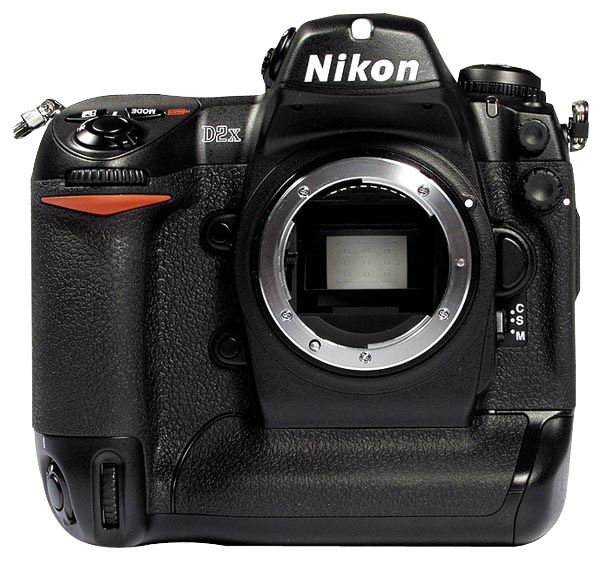
So enamored was I of the handling of my Nikon D2x that I determined to get a full frame body built along like lines. That meant a D3, D3x or D3s. The current D4 costs too much for what it offers.
I thought long and hard about the D800 but discounted it. My D700 with the add-on MB-D10 battery grip does not handle anywhere near as well as the D2x which has the integrated vertical grip. I guessed the same would apply to the D800 with add-on (and seriously overpriced) grip.
A related advantage the D3x has is that the controls and menus are almost identical to those on the D2x, so no learning curve. A non-trivial consideration with complex modern DSLRs. Finally, the D800/600 bodies appear to suffer some anomalies used with old chipped MF lenses, whereas the D3x does not. That’s a key consideration for me.

The Nikon D3x. Discontinued March, 2012.
The D3 has the same 12mp sensor as the D700 and is an outstanding bargain at $1800 lightly used. The D3x is a rarer bird, coming with the 24mp sensor which it trades for a slightly lower framing rate in continuous shooting. The D3s add a movie mode and sensor cleaning but sticks with the 12mp sensor, albeit much improved by all accounts over the one in the D3/D700. At $3,400 it is overpriced in my opinion.
I decided on the D3x, though not without some trepidation, wondering whether my collection of old – most are 30 years old or more – MF Nikkors could hold up to the demands of the sensor. I paid $2,850 and yes, could have bought a D800 for less. As a final pre-purchase reality check I downloaded RAW files from DPReview from both the D3x and the D800 and found the result a toss up when it came to resolution, pixel-peeped at an 11 foot (yes, that’s 132″) effective print size – meaning 2x in LR4 – on my displays.
On receiving the one-user camera with just 19,000 clicks on it (the shutter life is stated at 300,000 and it’s a $300 replacement if it fails) I took the easy way out and snapped a few images with my three AF lenses – the costly 16-35 VR G, the 85/1.8 AF-D (the one with the ghastly plastic barrel and resolution to die for) and the 180/2.8 AF-D, the last a lens it’s almost impossible to take a bad image with, though I have tried mightily.
The math seems to work perfectly here. The D700 image starts to break up at 1x in Lightroom 4. There’s lots of low light capability left in the sensor, but the individual pixels are large enough that they start destroying resolution at this 5.5 foot equivalent print size. By contrast, images from the D3x start to break up at 2x, an 11 foot print size.

The engine room of the tugboat Hercules. Resolution aplenty.
D3x, 35/2 pre-Ai MF Nikkor at f/8, ISO 400.
There’s a little more to it than that. When the D700 image starts breaking up the best lenses are not close to their maximum potential. By contrast, with the D3x the sensor starts to break up just as the lens resolution is giving up, a perfect match. I would guess that with the even denser 36mp sensor in the D800/800e only the very best lenses at optimum apertures can hold their own in terms of resolution.
Who needs an 11 foot print from a DSLR? Let’s be real. No one does. The pro making pictures of veggies for the sides of Safeway trucks is going to use MF digital. If nothing else he would be laughed at showing up in the studio with a hand held camera. It’s marketing, not rational thinking. The biggest appeal to me of the D3x sensor over the excellent one in the D3/D700 is that I can selectively enlarge sections of an image with less loss of resolution. As a street snapper who uses a prime lens much of the time – the sweet spot being mostly the 28, 35 and 50mm lengths – I cannot always use ‘foot zoom’ to get close enough, fast enough to my subject, so must resort to cropping in Lightroom to do my thing. The denser sensor in the D3x simply improves the number of keepers.
Use with MF lenses:
The interchangeable focusing screens in many Nikons make for easy tailoring of the screen to your preferred use. But when it comes to my mediocre eyesight you can forget about it. They simply do not make enough difference to go through all the pain of proper installation and fine tuning. So I depend on the focus confirmation LEDs in the viewfinder with MF lenses, these changing from arrows to a blob when critical focus is achieved. While there is always LCD focus with LiveView, that’s simply not a consideration for a street snapper. You don’t go around the Tenderloin or Lower East Side with a DSLR stuck two feet in front of your nose at the end of an outstretched arm trying to determine proper focus. Great for tripod use, not for the street. Good for a mugging, though. The LED confirmation light has worked perfectly for me with the D700 yet, when I took the D3x out for a spin with the 28mm f/2 MF Nikkor – a real corker that one – my first results were disappointing. Even the forgiving broad depth of field of the 28mm lens showed focus errors at f/4 at my typical 5-10 foot working distances. The dense sensor in the D3x is totally unforgiving, taking no prisoners. It shows errors lower density sensors cannot.

Prop wrench on the Eureka ferry boat. Same data as above.
So I got down to fine tuning my MF lenses for best results with the D3x body. I could see the resolution in my snaps but it was not at the point where I had focused.
Now as long time readers know – and many have emulated my approach – I have installed CPUs (‘chips’) in all my MF Nikkors. These carry a host of benefits described here, not least of which is the ability to automatically invoke the correct lens correction profile on import of files to LR or PS. My many profiles can be downloaded here. I will continue to add to these as new (old) lenses come along.
But one little used feature of these chips is the ability to fine tune the point at which the AF confirmation LED illuminates in the viewfinder. While I have found that almost all my MF lenses need no such tuning, two – the 50/1.4 and the 105/4 Micro – needed adjustment, a process I describe here. After doing this I knew that all my MF Nikkors were properly collimated for optimum manual focusing on the D700 (and my D2x).
Yet after trying several focal lengths on the D3x, all were wrong. So I went into the D3x’s menus, Setup Menu->AF fine tune, and found that regardless of focal length, every one of my chipped MF lenses is reported as ’50mm f/1.4′. By contrast, Nikon chipped AF lenses, whether AF-D or AF-S, are correctly recognised. So this means that for Nikon chipped lenses, you can fine tune each lens to perfection, and that tuning setting will be recognized automatically when the lens is mounted. (The D3/D3x/D3s bodies support up to twenty lenses; the D700 up to twelve). For home-chipped MF lenses, all will use the same setting, meaning you cannot use this feature to disparately fine tune more than one lens, as far as the camera is concerned. It sees all home-chipped MF lenses as being the same lens.
Thus the correct approach with chipped MF lenses, using the TagoTech chip from Singapore I describe, is to use the one setting which will bring as many lenses to perfect LED focus as possible. Once that is done, any outliers can be fine tuned using the programming capabilities of the chip, as described in the link above.

Bike Farm. This one was at f/4.
In my case I found that a +4 setting set all to rights and now those old MF wonders really started to sing. All my MF lenses showed a like focus shift, suggesting that the fault lies in the D3x body. The flange to sensor distance is wrong by a constant amount, (or, if you prefer, and more likely, the coincidence between AF LED illumination and the focus module is out) and it’s something that the 24mp sensor discloses ruthlessly.
So how good are those old clunkers anyway?
Having run out of excuses, it came time to photograph the proverbial bookshelf (my test target!) on a tripod. Tripod, mirror lock up, remote release, the whole thing. Bert the Border Terrier in dutiful attendance, albeit with a somewhat skeptical mien.
I did this for two favorite street snapper focal lengths, 28mm and 35mm. My MF primes, both pre-Ai with those gorgeous scalloped metal focus collars, are the 28/2 multicoated (1975) and the 35/2 (1971 vintage). These have proved to be outstanding performers on the D700 and D2x. The other lenses I own which cover these focal lengths are the costly and current 16-35 f/4 AF-S VR G and the 35-70 f/2.8 AF-D, both AF and chipped by Nikon. The bookshelf test does not tell much about color rendering and nothing about use into the sun. But it tells lots about resolving power. And the results were not especially surprising, based on my use of these lenses. (Lens correction profiles were used in all cases to remove distortion and chromatic aberration).
28mm at f/4:
- Best by a clear margin – 28 f/2 MF
- Second – 16-35 AF-S and clearly inferior
35mm at f/4:
- Best by a clear margin – 35 f/2 MF
- Second – 16-35 AF-S
- Third – 35-70, with little to choose
Simply stated, once correctly focused, the old MF Nikkors smoke the latest and greatest zooms when it comes to resolving power. Plus you get one to two more stops at the fast end when absolutely needed. Bulk and weight are far lower, naturally.

Papered over. Same data as above.
Correct focus:
None of this means that use of the older MF lenses is ‘point-and’shoot’. The LED confirmation light in the viewfinder is not binary. There’s a range of focus collar rotation where it remains illuminated – analog intrusion in a digital world. So you revert to the old technique used for focusing long MF lenses using a film SLR. You oscillate the collar about the illumination point until the center is found. Then you press the button. At anything faster than f/8 at 2x pixel-peeping in Lightroom you will see the difference with a 24mp sensor, but not with a 12mp one, based on my experience with the D3x versus the D700.
Reality check:
Take a look at my recent column with the images of the stylish lady snapped in the Mission District of San Francisco.
These were at ISO 400 so you could do even better at ISO 100 if it comes to the best resolution, though the risk of camera shake grows.
Here’s a section of a 66″ wide image:

Nikon D3x, 35mm f/2 pre-Ai MF Nikkor.
See what I mean?