The past is our present.
I simply cannot say it any better than I did a year ago.

Happy Thanksgiving.
The past is our present.
I simply cannot say it any better than I did a year ago.
Happy Thanksgiving.
Morning light
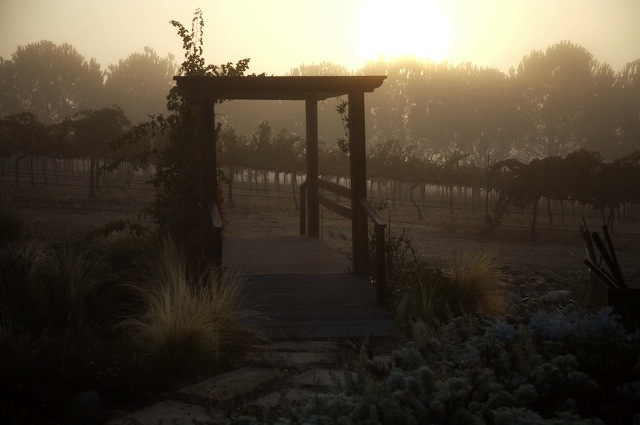
The vines prepare to hibernate after another great harvest of California’s best zinfandel.
The loveliest time of the year
The grape harvest is over. The vines are fading. The trees are calling it quits. And the garden looks wonderful.

The soul of the machine.
What is it that makes a machine a classic? For that matter, how do you define classic?
Well, it has to have class. I can’t define that but I know it when I see it.
It must be superbly functional.
Its use must be second nature.
It must have magic. Yes, that sense of fitness for purpose you get when you pick it up, use it.
It must be made well enough to survive the ravages of time and use.
It must be reliable.
For as long as I can remember, I have used a classic. No, not the Leica, that was sold a while back and yes, it was and remains a classic. The one I continue to use daily is the Bic Cristal ball pen.
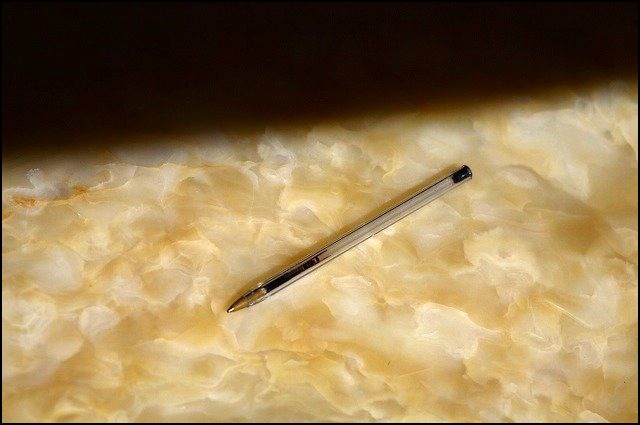
A classic if there ever was one. 5D, 85mm.
I was reminded of the sheer genius of the Bic Cristal’s design (it used to be just a ‘Bic’ until newer, poorer variations came along) when my last one, above, got dangerously low on ink. The local office supply stores no longer carry it. Clerks, when asked, return the question with a vacant stare. How can this be? Here’s a device whose hexagonal barrel fits the hand just so, cannot roll off a desk, is clear so you can see the ink level, writes for ever without leaking and comes with a push on cap that, while easily lost, cannot possibly fail. The only moving part is the tungsten carbide ball tip. Anyway, I got on the web and tracked some down in Chicago. The order will likely last me until I’m six feet under, pushing up the daisies; meanwhile, you can bet that some accountant at Bic will make sure it’s discontinued because the profit margins don’t work.
In the internal combustion world, motorcycles have given us but three classics – the Brough Superior, the Vincent and the BMW air cooled twins.
In cars, the VW Beetle and the Porsche 911. Utility and purpose combined. The Mini was chic but a passing fad. No classic.
In camera design there are as few classics as with pens, bikes and cars. Indeed, give me just about any modern camera, or pen, and I will turn right around and either sell it or give it away. Not much out there with the sheer design genius of that Bic.
But I’m lucky to have owned a few. Heck, no, not lucky. I sought them out.
The Leica M2, obviously, preferably with a 35mm lens. An instant classic whose beauty and functionality defined the 35mm film era and while the functionality died with film, the beauty remains. Many refer to the old screw thread mount Leicas as classics but they are nothing of the sort. Poorly made compared to the M2, a truly awful viewfinder, a rangefinder almost as bad and the inane two shutter speed dials. Rube Goldberg would be proud.
The waist level Rolleiflex. About as clunky and strange a design as you could conceive of, but it worked, was near silent, delivered large sharp negatives and was lovely to behold.
The Crown Graphic. Nothing too subtle here, but it worked, made enormous originals yet folded into a small box. And you could fix it with a Swiss Army knife when it went wrong, which wasn’t too often.
And then you come to digital which, after ten years on the market has not come remotely close to producing a classic. Maybe that’s because the rates of change have been so high during that decade that no one has come up with a stable, survivable design. Maybe no one ever will? But do I ever think of my two digital cameras – the LumixLX1 and the Canon 5D – as classics? Not remotely. When they fail or get materially improved, they will be discarded just like that Bic.
But the Bic will remain a classic.
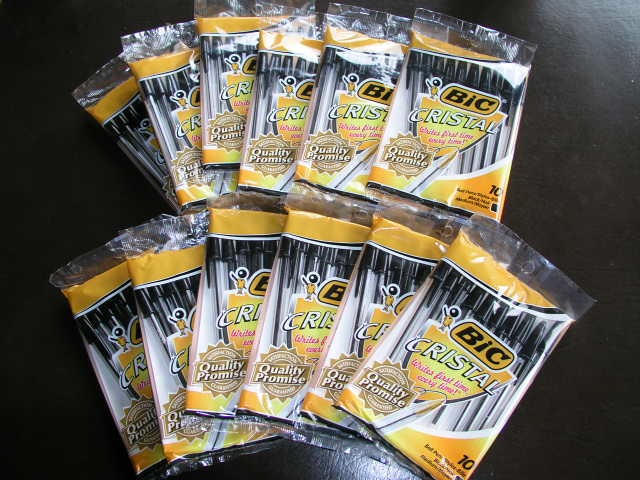
This lot should last me.
Not your father’s Nikon
Some neat pictures of the asesemly line for the Nikon D3 full frame DSLR appear here.
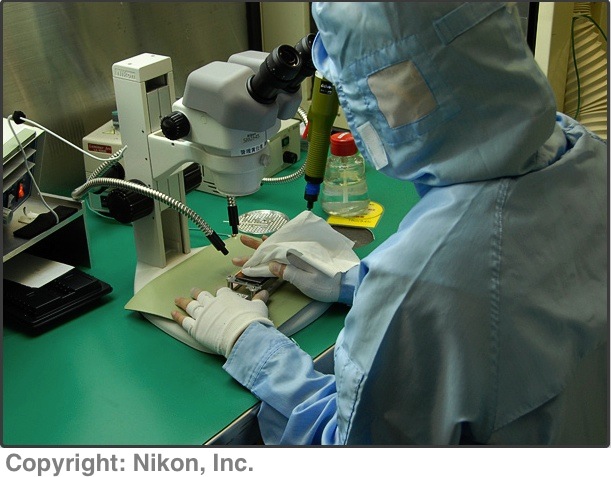
I was surprised how seemingly un-sterile the general environment appears.