Category Archives: Photography

Film is Dead

This article was written just about the time Canon announced the first ‘affordable’ full frame digital camera, the EOS 5D. Unknown to me one would feature in my future, confirming the facts set forth below.

For an index of all my Film related articles, click here.

Film is dead as sure as the LP is dead.

Wake up! Smell the coffee. Don’t fight it.

Digital is better in every way known to man. Think about it. The medium is all of ten years old. We are already debating, frequently acrimoniously, whether the latest 16 megapixel Canon beats medium format.

It started as a joke. One megapixel was a big deal and guaranteed you a crappy postcard print. But it was chic. You could see the result even before you printed it. Take that, Edwin Land! Take that, Polaroid!

The apocryphal story has it that Edwin Land invented the Polaroid process when his little daughter asked why she could not see the picture right away. It didn’t hurt that he was a world class genius constrained only by the mediocrities around him. Further, he was an American, which meant that being a world class chemist/physicist/engineer was not enough. He had to be a world class capitalist, too, and that means making money from his brilliant invention.

If you are over forty and reading this, you will remember the thrill of that first Polaroid. If you are over 50, you will recall pulling apart the monochrome negative and print, wondering about what we now know as metamerism (it had a strange bluish tint when tilted to the light), extricating that foul smelling pink sponge (it had to be pink. Pink is jolly. Ask the cast of Funny Face, made about the time Land was busy being brilliant). Carefully spreading the goo over the print you made it permanent. But Edwin was not content. He had to go the whole hog, so he made it happen in color. Now you separated negative and print, studiously avoiding the deadly caustic chemicals produced and, hey presto!, a dry color picture with no need for the chemical, carcinogenic goo.

A great American photographer made a wonderful career from Land’s genius, taking huge, I mean huge (4″x5″ was a snapshot for her) Polaroids of quirky subjects. Queer sailors, lonely city dwellers, assorted losers, bizarre low key still lifes. Marie Cosindas was the real thing. An artist who saw an outlet for a new technology and capitalized on it brilliantly.

But Edwin was not done. Or maybe that hellion of a daughter simply would not leave him alone. Why have the silly, pungent, dangerous, useless negative, he wondered? Why not, why not, have the print emerge magically from the camera, powered by a disposable motor, blank as a politician’s intellect, and then, magically, proceed to appear in broad daylight for all to see. And he did it. Without a doubt, George Eastman’s ˜You Take the Picture, We do the Rest” had been well and truly one-upped. For any photographer who has slaved in a darkroom, surrounded by smelly chemicals, stuff dripping on the carpet, this was the civilized white man’s gin-martini variation on the heretefore put-upon-minority-digging-for-diamonds-in-a-South-Africa-mine darkroom worker’s wonder at the emerging print in the developing tray.

So, for a while, those who could afford it wondered at Land’s surpassing accomplishment. They were all American, needless to say, having not only the funds to afford the film (like Gillette, Land believed in virtually giving away the cameras to secure the income annuity from the supplies) but that great thirst for immediate gratification that the Founding Fathers had ordained were the American’s birthright. Life, liberty and the pursuit of immediate gratification. And pursue it they did. Edwin Land and his Polaroid Corporation were, deservedly, King.

But Kodak had bigger fish to fry. Or, more accurately, a larger weight of fish to fry, even if the average fish was a minnow, economically speaking. So they struck back. Big Yellow saw that they could not compete on speed – Are you nuts? You want to beat 60 seconds for instant gratification? – but they could compete on price. With reasonable speed. If Mrs. Middle America, 2.4 kids and a Chevrolet, could drop off her film with Johnny on the way to school on Monday and have 36 perfectly foul, unfocused, ill exposed, prints back when dropping off same Johnny on Tuesday, why she could get over the delay when it meant 25% of the cost compared to Mr. Land’s Magic Machine. That could be reserved for the nouveau riches and the Old Money in Greenwich, Park Avenue and Atherton.

So Polaroid died. Not before winning what was then the world’s largest patent infringement fine in 1985 from, you guessed it, Kodak, who had stolen Land’s technology in a pathetic attempt to beat the master. But sunset was in sight for both businesses by then. Polaroid was just too expensive and the Greenwich Dames lost interest and reverted to riding their horses and attending society lunches. Kodak was King once more. Add the Instamatic and its many variants, which made it easy even for the average inpatient at the local loony bin to load a camera and take a well exposed picture, and you had market domination.

By 1985 Kodak, too, was in deep doo-doo. Throughout the 1960s and 1970s you could buy Kodak film just about anywhere on the planet in a dizzying array of formats: Minox, 8mm, 16mm, 35mm, 828, 127, 120, 620, 4×5, 5×7, 8×10 and larger. Nor was the choice of emulsion compromised, with such great names as Panatomic X, Verichrome, Plus X, Super XX, Tri X, Kodachrome, Ektachrome, Vericolor, all standards in their class. Add imaging products for the medical and scientific worlds and a vast selection of chemicals and papers to render the image real, and you have a stunning exercise in world domination. Competition? Well it was a fly on the proverbial elephant’s rump. Adox, Agfa, Ansco, Ilford, Orwo, Perutz and many others held, in aggregate, a share of the market that was little more than a rounding error. Kodak’s products were indecently good when the lack of real competition is considered.

Students of the American stock market will readily remind you that there were 20 stocks in the Dow in 1900. Only one survives today. General Electric. And good old GE dropped out for a while there on account of a little thing known as bankruptcy. Not conducive to a NYSE listing. But the folks at Kodak were poor historians. Why, they reckoned, our founder may have done himself in, gone the hari kari route, smoked the old gun barrel while tugging on the trigger, but we are King. We invented You Take the Picture, etc. We invented Kodachrome. Hell, Hitler was photographed on Kodachrome. Two Jewish violin players who liked to take snaps and happened to be chemistry geniuses, invented Kodachrome. National Geographic would not publish your stuff if you did not use Kodak film. Not for nothing was the producer of film in Rochester, New York, the Company Town, know as the Yellow God. And, ironically, it was a Kodak engineer who invented digital imaging – Steven Sasson – but the heck with him, the Kodak Board decided. People will always use filom.

What the folks at Kodak refused to recognize is that Everything Changes. A disastrous string of CEOs, guys who committed grand larceny every payday, did a superb imitation of the ostrich, disregarding the world around. First, they missed Fuji which, as is the Japanese habit, started making gold after an extended period of dross. Then they missed digital. By a whole decade. Just think. In 100 years, there will be no Microsoft. A consummation devoutly to be wished. No GM or Ford (OK, 30 years in their case). No Democratic Party (everyone will be rich). And no film. But Kodak did not see the world’s biggest technological revolution coming. There would always be a Kodak. A yellow box assuring quality, consistency, availability.

History will judge whether Kodak awoke in time. They only missed the first ten years, after all. But something tells me the film makers of tomorrow will hail from points east of Madison Avenue and will be named Sony, Hitachi and China Somethingorother. Because film, dear photographer, dear consumer, dear searcher for instant gratification, is about as dead as the dodo.

Don’t fight it. It has had a good run. One hundred years and counting. The first records lasted forty years. The LP 30 years. The CD must be about done at 20 years. So film did OK. But it is dead.

Sure, some poorer economies will struggle on with film for a while, but don’t reckon on opening any new processing plants in China. Having gone from no telephones to cell phones in one generation, why think that the world’s fastest growing consumer society will not do the same with photography? And where do you think all those digital cameras and storage media are made, anyway?

Digital has achieved 60, 70, 80%, go figure, of the definition/sharpness/dynamic range of film in ten years. Ten years! And the consumer gets 1,000 or more shots on a ˜roll”. And they are free after the camera is purchased (assuming he values his time at zero, which is reasonable in most cases). And it is irrelevant, dear advanced photographer, what you think as you are not the market. The consumer is the market and he wants things now. Plus he gets to take 3 pictures a second of revolting Aunt Minnie, the one with killer halitosis who doesn’t give a monkey’s how the snaps come out but only that she can see them before she finally kicks the bucket and gives the funeral parlor some well deserved business.

Too bad Kodak didn’t retain her as an adviser.

Crop it Good

You hear this sort of thing a lot from academics and pseudo-intellectuals. The Alfred Rosenbergs of the photography world. Sadly, unlike Rosenberg, they remain alive to propound their mealy mouthed tripe in an earnest attempt to earn what modest living their lack of intellect affords them. It goes something like this:

“No great photographic artist every crops his originals when printing, knowing that true greatness in a photograph can only be attained when the original visualization is rendered truly and uncompromisingly on photographic paper. To crop is to destroy the integrity of the creative process.”

Often this codswallop will be followed by a reference to Cartier-Bresson whose prints are so intellectually honest that they often include the surrounding frame of unexposed film. What art. What genius.

What utter rubbish.

Given that the sole purpose of an art photograph, as opposed to a commercial one, is to provide aesthetic satisfaction for the viewer, it is irrelevant whether the spectator sees all of the frame or just a slice. The only thing that matters is that the photograph works.

Look at any picture. Crop it with your hands or your mind’s eye this way and that.

Now pretend that you never saw the full frame original. Who is to say that any of the crops is better or worse? The reality, of course, is that the photographer should crop for effect and choose the best possible crop to display his art work.

The academic rule is even dumber when you think that the same effect can be largely accomplished by simply placing a longer lens on the camera. I print it full frame using a 90mm lens on the camera versus cropping from the original taken with a 50mm lens. No difference, maybe except for definition and grain. But the first picture is sacred as it is uncropped, whereas the latter is garbage as I broke a cardinal rule of academia.

All of which goes to confirm that Those Who Can, Do whereas Those Who Cannot, Teach.

Crop away. Keep cropping until it looks good or move onto the next original. And if you really want to fool them, why not can add a frame depicting the unexposed film, with film manufacturer of choice, in Photoshop. How intellectually dishonest of you.

Degas – Photographer

One of the earliest recollections I have of a painting as a child is of Degas’s Bellelli Family.

Looking at the painting over the years it is clear that what attracted me to it is the photographic nature of the composition. Painted in 1860, in the early days of photography (Daguerrotypes first hit the market in 1839), the canvas is remarkable for several things. The informal pose of the paterfamilias on the right contrasts sharply with the stiff formality of the mother and her two daughters, the younger of whom appears to be an amputee! (She was, in reality, sitting on her tucked leg, the way kids do). Degas simply painted it as he saw it.

Now no one had done anything like this before, and Degas was lucky the Bellellis were affluent relatives (the mother in the portrait, Laura, was his aunt) for no one would have commissioned a portrait as strange, by contemporary tastes, as this. David Hockney would imitate his style a hundred years later by which time people were prepared to pay goodly sums to have their portraits painted in like manner.

Degas lived a long life, dying in 1917 at the age of 83, and the realism seen in his oil paintings taught me a great deal about photographic composition and seeing. No single painting does it better than “L’Absinthe”.

Painted sixteen years after The Bellelli Family, his powers of observation and composition are at their greatest in this superb painting. The effect is even greater if you can get to the Musee d’Orsay in Paris where it hangs for all to see – a modest sized canvas some 36″ x 24″in size. Absinthe is distilled from anise (similar to licorice) and wormwood. Poor distillation left behind toxic levels of chemicals, which could cause all sorts of harmful side effects ranging from vomiting to blindness. But none of that troubled the consumer who focused on the alcohol buzz (absinthe is some 60% alcohol) and the hallucinogenic high from the other chemicals present in abundance. Now you get the picture and the painting!

And what a remarkable painting it is. If you think Caravaggio’s ˜Conversion of St. Paul” is the greatest ˜wide-angle™ painting ever, well, “L’Absinthe” runs it a close second. The strong foreground with the knife cheekily signed by Degas leads the viewer, courtesy of those zig zagging diagonals, to the bombed pair in the rear. Except that they are almost out of the picture as if the painter himself had had a couple of shots during the process. The man’s pipe is cut off and he gazes out of the frame. The young woman is nothing less than a portrait of despair itself. The pair cast strong shadows on the wall behind. And you think Brassai invented this kind of thing?

Now I have no facts and figures to back this up, but I would bet that the average photographer rarely looks at a painting, even less thinks about painted art. What a shame for there is so much there to excite the eye and stir the imagination and those are two of the reasons we look at art. The third is to enjoy that sense of aesthetic satisfaction which good art provides. Not a bad definition, come to think of it, as to what exactly constitutes ˜art”. It is that which arouses the aesthetic senses.

Degas took up photography at the tender age of 61 and immediately set to recording that which he wanted to paint, except he did it with the compositional eye of a master.

Enhance your vision and imagination. Add a book of Degas’s paintings to your library.

Take fewer pictures

How many times have I read exhortations by ‘teachers’ of photography that the aspiring photographer should take more pictures, use more film, carry more digital storage?

I always flash back to my mother telling how she once met George Bernard Shaw (1856-1950). In 1938 she had been passing a few idle weeks at the Dorchester opposite London’s magnificent Hyde Park (the park remains magnificent but, alas, the hotel is now owned by Arabs whose kin are the only ones affluent enough to stay there) and on one occasion had the good fortune to meet the humorist and playwright. She described him as tall, gaunt and very distinguished looking. In addition to being a great writer he was also an enthusiastic photographer. Their meeting always reminds me of his light hearted remark to the early British photographer Alvin Langdon Coburn that “Technically good negatives are more often the result of the survival of the fittest than of special creation: the photographer is like the cod, which lays a million eggs in order that one may reach maturity.” That was in 1906. The year my father was born.

Since that time, the typical number of pictures available to a photographer has grown from one (plate cameras), to twelve (the Rolleiflex), to thirty-six (the Leica) to, who knows, several hundred or thousand with a high capacity digital card. So in a hundred years, the camera’s capacity has grown by three orders of magnitude. Sadly, the quality of the average picture has not.

Why is this? Take a look at your old family albums. They probably contain pictures taken 50, 70 or maybe even one hundred years ago. Note that the earlier the picture the better the composition and execution. Chances are those were taken in a studio setting. Your great great grandparents had donned their finest clothing and the whole sense of occasion, of having your picture taken, of making an effort to get it right, enhanced the results immeasurably.


My parents in 1937. Studio photograph.

The view was the same from the other side of the lens. The professional taking the picture knew he only had one chance. He studied his technique, made it a constant (not mindlessly changing between this lens and that, film A, B or C, developer X or Y) and delivered every time. He put considered effort into every picture.

I believe we would all do far better, wasting less time and materials in the process, were we to follow suit. Less equipment and less film correlate inversely with the quality of the results.

So I challenge you. Get to an area you know and have photographed a few times, armed solely with one roll of film or one low capacity digital card. That might mean as many as 50 pictures for those used to a thousand or twelve or fewer to those used to carrying sufficient supplies for a couple of hundred. My version of this is a Rolleiflex with a fixed lens and just one roll of film – 120 in my case, meaning twelve pictures, as the camera will not even take 220. Thank goodness.

A more extreme variation, in my case dictated by the fact that so far I have only 2 film holders, is to take your field or view camera armed for just a handful of shots. Heck, the sheer bulk of the thing pretty much dictates this sort of economy. My two film holders allow me a scant four shots.

Now take your pictures. Think hard again when setting up the picture. Think harder before pressing the button. Take some time over each photograph.

Take a look at the results.

See how not only are most of them good, note also that the absolute number of successes far outweighs your machine-gun days?

Take fewer pictures and they will be better pictures.

Does equipment matter?

This is a tough question.

When I was a kid my pictures were lousy.

The composition was poor.

The exposure was wrong.

The processing was worse.

And the subjects were uninspired.

Though I had a deep appreciation of the arts and many years of studying the masters of photography in my psyche, my pictures reflected little of this acquired knowledge.

I also used poor equipment because that is all a kid can afford.

Then I worked and saved mightily and my first Leica came along. This is the first picture ever taken on that Leica, on the day of purchase, August 2, 1971:

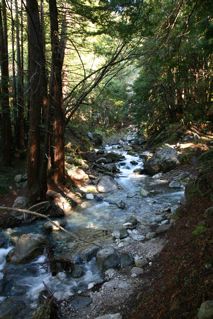
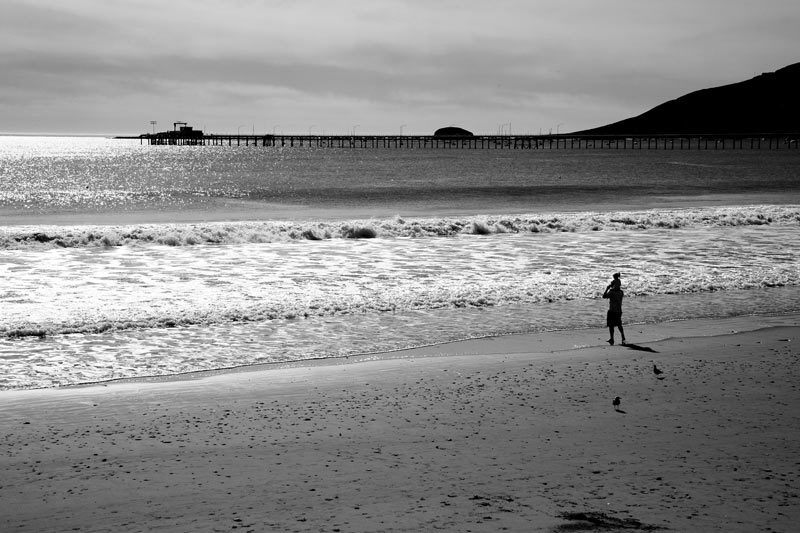
The light is just so, the exposure fine, the moment captured.

So what happened? Did I suddenly become a much better photographer because I used a Leica?

The answer is an unequivocal and resounding Yes.

You see, what happened here was that the very fact that I had inherited a duty of care, of quality and of accomplishment in the ownership of this magnificent instrument made me rise to the occasion. Every driver is a better driver in a Ferrari. Every rider rides better on a Ducati. And every photographer is a better photographer with a Leica.

So the conclusion of this short parable is simply this: Get the best camera you can afford. Stop making excuses about great pictures being taken on lousy equipment. They never were. The reality of that costly purchase will force you to become a better photographer too.