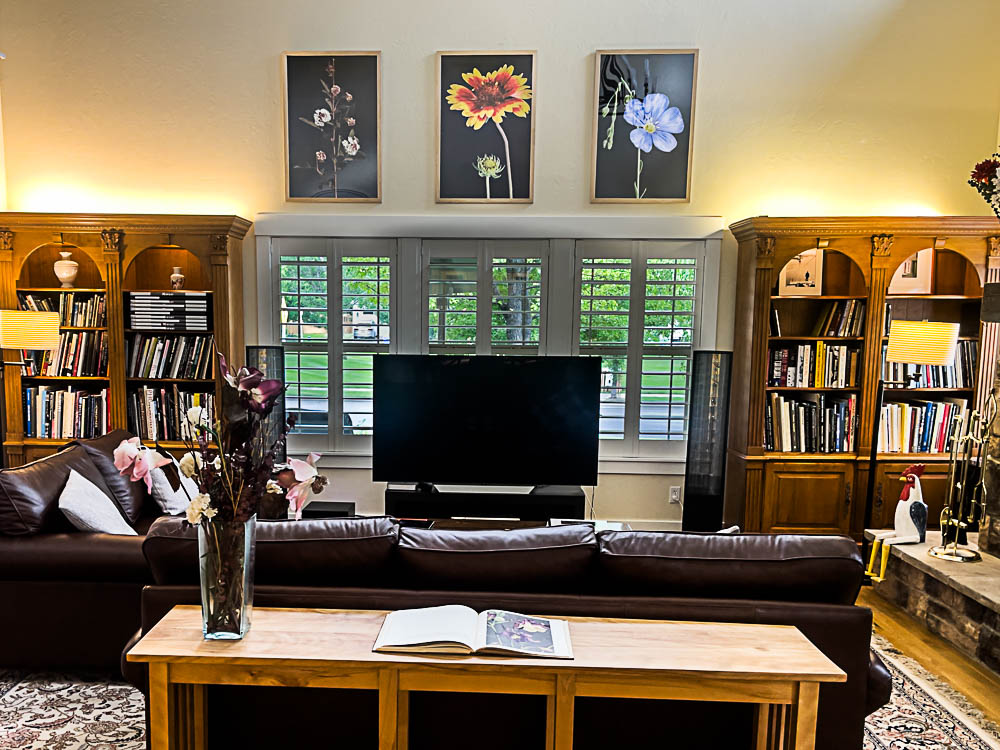
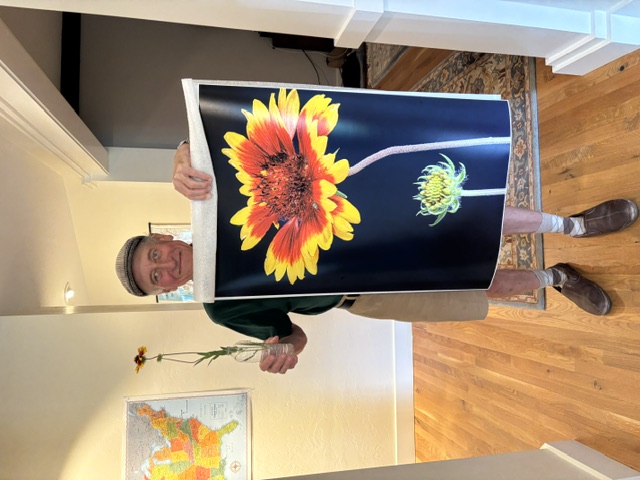
It’s a little easier now.
Over a decade ago I wrote about making a 36″ x 48″ print for wall display. You can read about that here. Now that was a bit of a cheat, really, as I had to assemble the final result from four tiled 18″ x 24″ prints, the largest my HP DJ90 could output. Still the result worked pretty well.
Today the largest my Epson ET8550 printer can manage is 13″ x 19″, and while that’s fine for most purposes, not to mention easy to mount, mat and frame, I recently got a hankering for something larger, and luckily have wall space to accommodate it.
The Postal Annex nearby recently installed two very large printers, a 44″ Canon and a 64″ Hewlett Packard, selling their services to those requiring large banners and posters. The HP, according to the proprietor, can print on vinyl paper for waterproof outdoor displays, but is limited to eight inks, whereas the Canon boasts no fewer than a dozen. Given that making very large prints is a once-a-decade exercise for me ownership of either of these monsters makes no sense (the HP costs a stunning $38,000), so when it came time to make three 24″ x 36″ prints I duly delegated the task and emailed the TIF files – each some 60mb in size – to Postal Annex. Four hours later saw the job completed and I was on my merry way home to attend to mounting and framing tasks, poorer for the modest sum of 3 x $45. Not at all bad, and the print quality, on Canon’s satin photographic paper, is everything one could wish for. Too bad they do not offer a glossy option.
Until mounted these prints are very fragile so the quicker this task is completed the better. I use 24.5″ wide mounting tissue and my Seal Jumbo 160M heated dry mounting press requires six ‘bites’ (90 seconds each @ 170F) to do the task after first tacking the print, tissue, and mount together using a heated tacking iron. The prices for a new press and iron are ridiculous, and given that’s there’s little to go wrong I recommend a search on eBay where the press can be found for $500 and the iron for under $50. Much of the cost of the press is for shipping as this whopper weighs a stout 60lbs. Repair parts for the press, should anything fail, are available. The press is now marketed under the D&K name, though it’s otherwise unchanged,
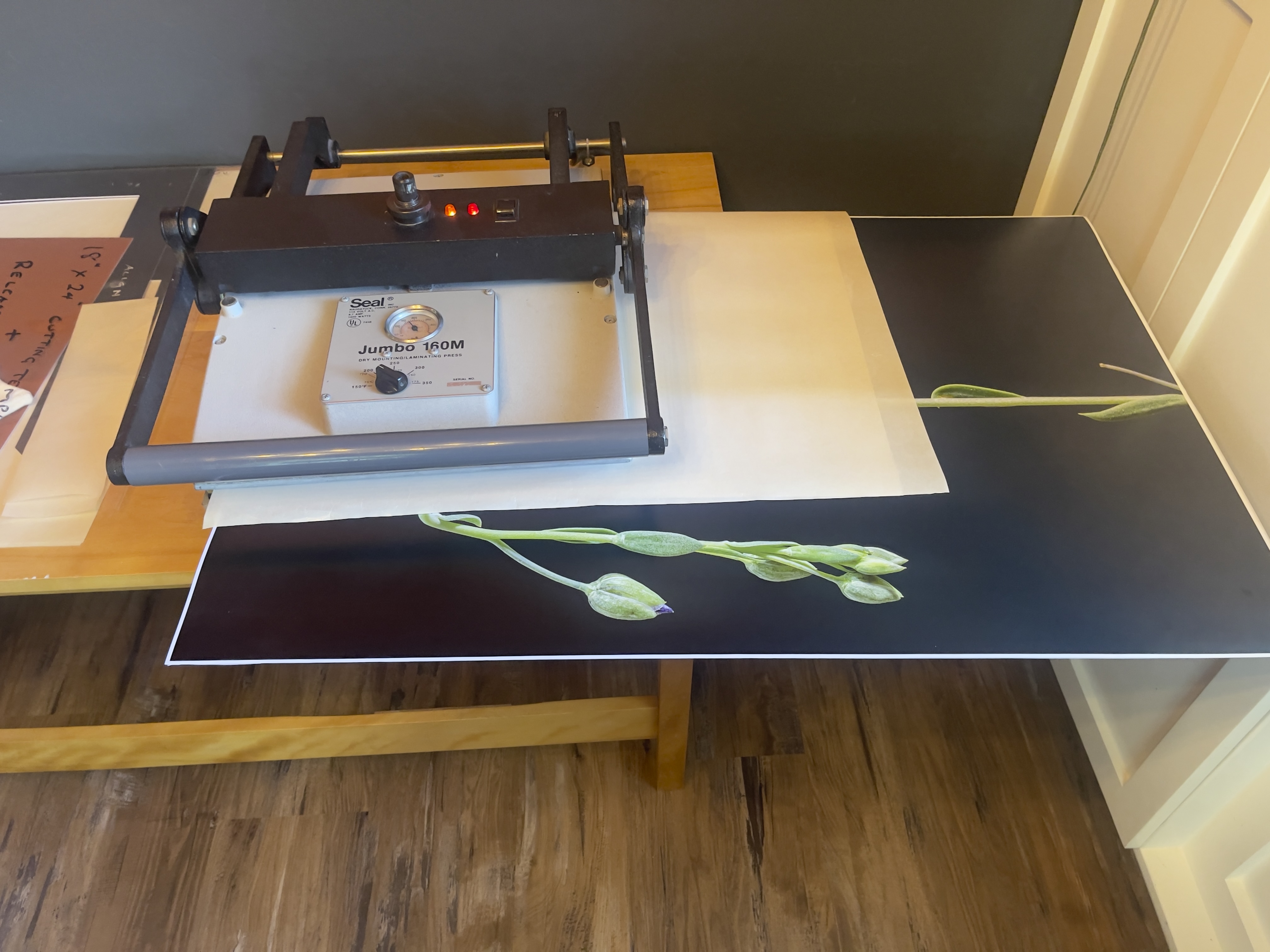
Six passes needed for a 24″ x 36″ print.
Release paper protects the print’s surface.
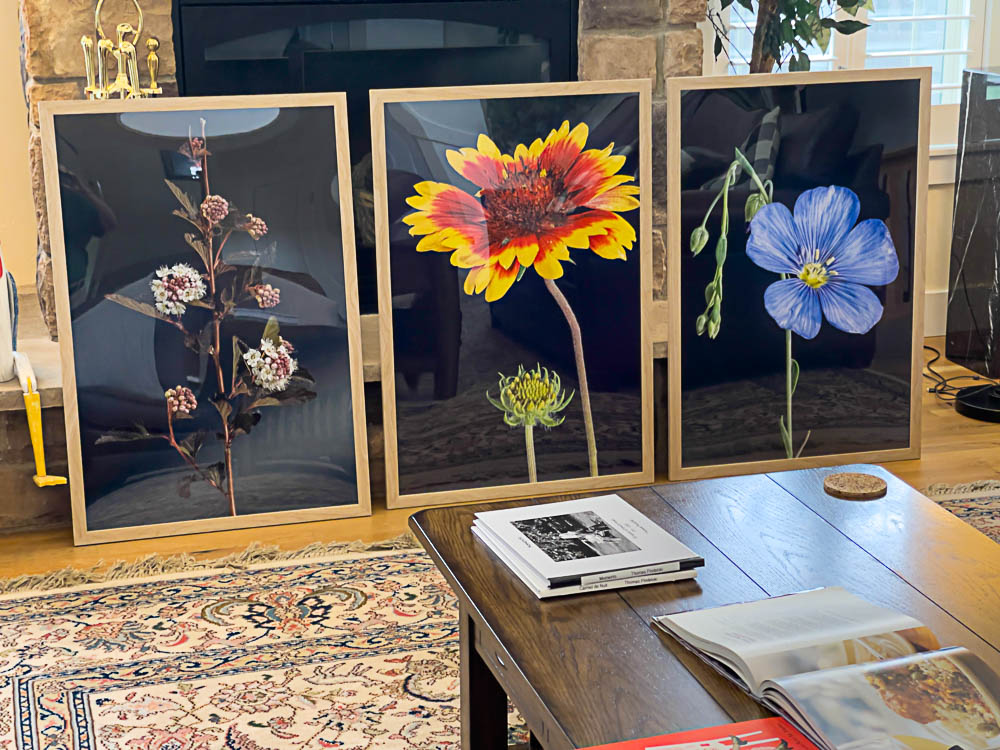
I opted for plain wooden frames with plexiglass – cheaper than glass and, more importantly, much lighter. Given that hanging the framed prints involves my least favorite pursuit – ladder time – light weight is an issue. The unstained pale wood contrasts nicely with the black backgrounds in my wildflower images. The plexiglass has a protective clear film on both sides and it does well to remember to remove this as it robs definition. Here’s the first of the three framed prints ready for hanging:
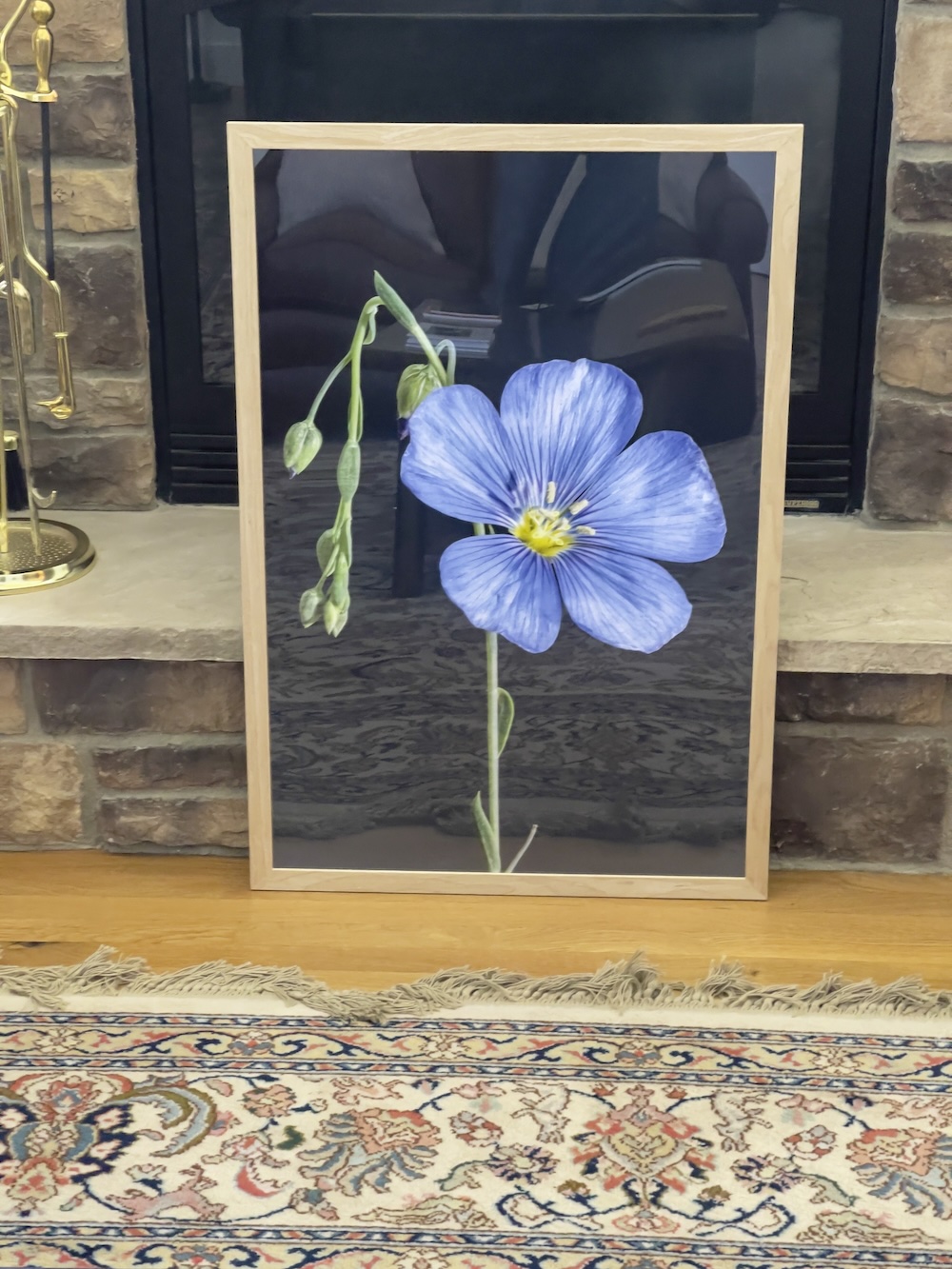
Ready for hanging.
After removing the pressed wood backing board I retain the print in the frame using a framing points driver tool. Owing to the thickness of the mounting board the backing board can no longer be installed, so a couple of hanging hooks is attached to the frame for the hanging wire.
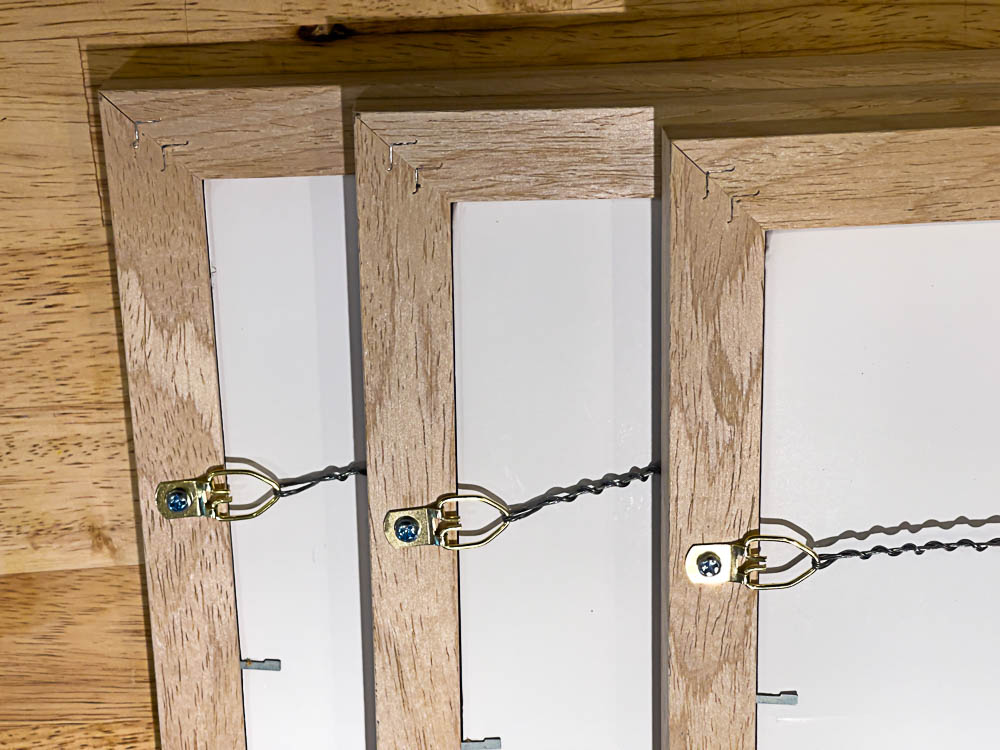
Framing points replace the backing board, which no longer fits.
The hooks and wire came in this kit.
The all in cost of each framed print including printing and all framing materials is a reasonable $102, each.
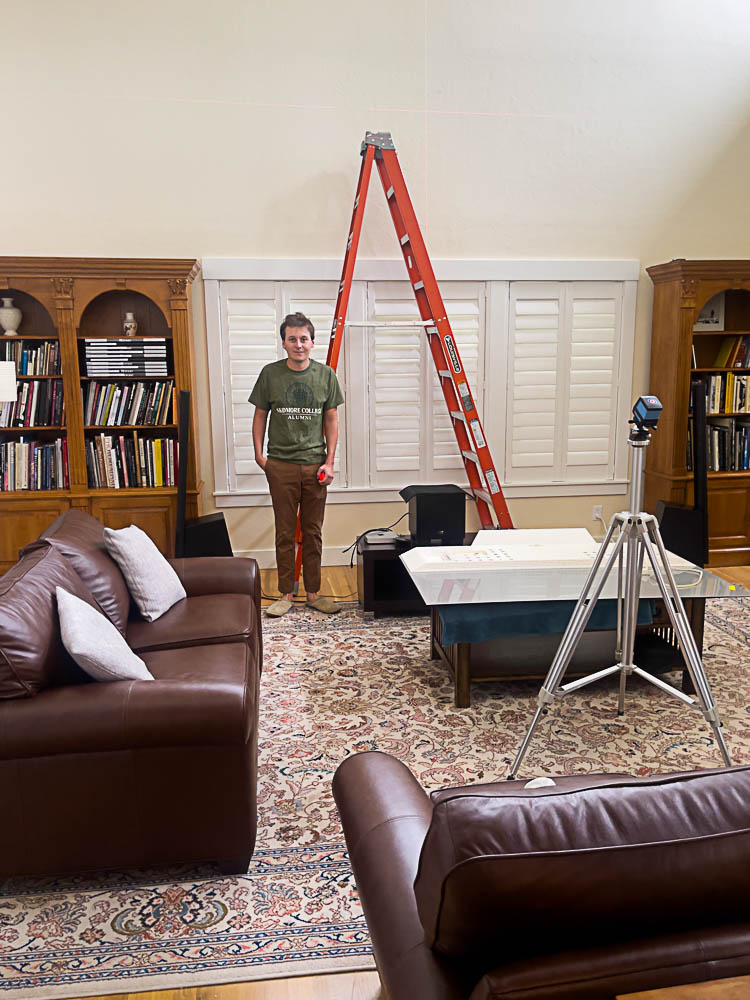
Now it’s ladder time. Ugh!