Cataloging movies and books

An important source of inspiration.

I believe it’s important for any photographer to manage his sources of inspiration, be they books, magazines or movies. As is clear from yesterday’s journal entry, movies are an important source of ideas for my photographs so it’s important that all those DVDs are properly cataloged for easy retrieval.

In my case each DVD is labelled on the spine with a sequential number and that number is recorded as the location in the database. Movies are filed in numerical order – to arrange by title is futile in a growing library, as you will be constantly rearranging things.

For the past few years I have been using Delicious Library to do the database work but have become increasingly disappointed with its poor export capabilities and general slowness. When the new iPhone software was announced the other day it was immediately obvious that DL’s creators had dropped the ball and failed to deliver a capable iPhone export. Add the fact that you cannot network your DL data unless all networked computers use OS Leopard and I was ready for a change. Networking is important in my setup as the database is maintained on the office MacBook and then shared with the old iMac in the bar, where movies are looked up. The old iMac, no speed demon with a 1 gHz G4 CPU, is perfect for this sort of thing.

Along comes DVDpedia which not only offers a host of export formats, it also permits dynamic syncing with your iPhone once you download the related application to your phone. And, best of all, it’s very fast, far easier to use than DL (it’s as fast as OS X’s Finder) and has an import function to bring in all your Delicious Library movies. The import works well. You really do not want to have to reenter everything manually if you have as many movies as I do – some 500 and counting.


‘Location’ refers to the movie’s number for easy retrieval


Apple’s superb Coverflow view is a built-in option if you use OS Leopard

You can see my library online in one of the many export formats by clicking the Link at the bottom of the page. Download is very fast.

A related product from the same vendor – Bookpedia – does the same thing for your book collection. In aggregate, the cost of these two applications is less than DL which integrates the movie and book cataloging functions. Click on my book Link below and you will see a Bookpedia version of the photography books in my library.

Here is my Bookpedia library Syncd to the iPhone:


Touch any thumbnail for a full screen view of the cover

Learning monochrome

Everything I ever needed was in the movies.

I ceased taking monochrome pictures in 1977, though every now and then you still can catch me hitting the monochrome button in Lightroom.

But that’s not monochrome photography.

While the simplicity of seeing imposed by a monochrome palette makes anyone a better color photographer, I no longer take pictures thinking in black and white. My black may be red, my white blue, but I simply do not take black and white pictures.

Color is more challenging and, done right, more satisfying. Black and white, in a way, is cheating. Take out enough variables and anyone can do it. Not that all modern color is good. Anyone can paint a late Rothko or Motherwell. Fine work, true, but the genius of seeing and the skill to convert the vision to canvas are hardly abundantly on display here.

But when it was all I did, I loved black and white. No serious work in color was being shown by anyone in 1960 and that changed little through 1977. The pioneers, as ever, were the great fashion magazines, but the establishment critics saw to it that their art was disregarded. Shame. You could miss an awful lot of Parkinson, Clarke or Penn that way.

While my love of black and white was doubtless furthered by all those great books in the Kensington Public Library on Hornton Street, what really flipped the switch for me happened a good deal earlier when I first saw Carol Reed’s ‘The Third Man’ (1949) on our home TV which, of course, was black and white, like the movie. I was already familiar with those expressionist masterpieces ‘Metropolis’ and ‘M’ by Fritz Lang, but this was on a far more approachable plane. It did not need much imagination to grasp Graham Greene’s plot or to be awed by the acting of Orson Welles and Joseph Cotten. But what really gripped you was Robert Krasker’s photography, and rather than go on about it, I’m attaching nine favorite images from the movie. Krasker’s use of tilted perspective to convey an unwordly, wide angle look, is tremendous.

It’s not really clear on the small screen, but the next image shows the dying Harry Lime (Welles) poking his fingers up though the sewer grating as he tries to escape the good guys:

The camera cuts to his face. Sheer genius.

See what I mean? Krasker got the Oscar that year. There was no competition.

On a trip to Vienna in June, 2024, my son WInston searched out the original location and his photograph even replicates Krasker’s crazy tilt. Mercifully the ugly gratings have gone, but little else has changed 75 years later:

Reassuring myself

It just (mostly) works.

Much as I detest his products and will go out of my way to avoid them, I have tremendous admiration for Bill Gates and Microsoft. He is the greatest capitalist of our time and has created millions of jobs and thousands of millionaires.

What Gates realized was that it’s not a good product which sells well. Rather, it has to be a cheap product, no matter how poor. A related dictate in this marketing strategy is that first you have to wipe out the competition, much as Carnegie did with rival steel makers or Rockefeller accomplished with crude oil mining. All three were skilled monopolists. Carnegie and Rockefeller, though, made high quality products. Microsoft does not.

So astute was Gates in realizing where the path to riches lay that he didn’t even write the original DOS – it was purchased from a small company named Seatlle Computer for $50,000. The deal of the century. Why do it yourself when buying it is cheaper?

The mass consumer has, for decades, preferred cheap and execrable to good at a higher price. But he’s learning that lifetime ownership costs are far more important than the entry price. He twigged Detroit twenty years ago and started buying Japanese. He twigged Windows two years ago and started buying Macs. Why save a dollar or two when your most precious commodity – time – is wasted on the Microsoft product?

But, ironically, Gates has left behind the very seeds of Microsoft’s destruction. It’s called Vista and is so resounding a failure that Microsoft has felt it necessary to reneg on its promise to obsolete Windows XP and is now once more offering it as an option with PCs. Meanwhile Mac sales are up 39% year-on-year versus 12% for the industry as a whole. Apple can thank Vista for that.

It is still a mystery to me why any self-respecting photographer who values his time uses Microsoft computers. Given that the art of picture processing depends on uninterrupted focus on the image, not the technology, why would you use something perennially on the verge of failure?

With last week’s announcement that Beastmaster Bill has moved on, I reassure myself that I never got one of these when running my QC-challenged Apple hardware this past year:

Here it is updated for Vista:

And here is the Blue Screen Of Death in Coverflow – Apple makes it possible to scroll though your various BSODs:

So the greatest monopolist since J D Rockefeller has now moved on to fixing world hunger and disease. Now given that poverty is primarily a function of one thing – an absence of democratic institutions – you would think Bill Gates’s fortune would be better spent on overthrowing various and sundry African and Middle Eastern dictators, an effort which would cost a few $billion at most. But no. What does he do but try and fix world disease by buying medicines for the oppressed, when all they need is a vote? The fact that you were the best businessman of the last few decades does not confer intelligence in unrelated fields of endeavor.

On sad occasions I must admit to being a Windows XP user – on my MacBook with Parallels. I use XP – the least bad Microsoft operating system – which is required for certain investment management applications not available in native Mac form. Maybe one day Apple will realize there are many users of their Macs who actually have money to manage? Meanwhile, Parallels makes sure all those BSODs and nasty viruses remain locked up in their own little prison on my MacBook, never to pollute the happy world of my photographs. Like so, on my machine:

If you like Coverflow in Leopard, be assured it works great with 5D RAW originals too (it reads the JPG sidecar file so it is very fast). The CR2 files are from my Canon 5D:

Meanwhile, any photographer looking to shake the BSOD once and for all need only blow $1,100 on a bottom of the line MacBook, install his foul Windows garbage thereon, and gradually wean himself from a life of misery and dread.

What, you say, Vista is BSOD-proof? Watch and learn – appropriately this demo is on a Mac – it’s a remake of Gates’s rollout of Windows 95 years ago, right down to the words:

Meanwhile Microsoft pathetically tries to overpay for a broken Yahoo, seemingly forgetting the first rule of investment banking. “If you tie two rocks together, they still sink”. Too funny. Remain assured, Ballmer will cock-it up.

Microsoft – you are the prime and founding member of the Hall of Shame.

Disclosure: In Mac-land the BSOD is known as a kernel panic. Number of kernel panics suffered by this OS X user in the past five years: One. Four years ago. Also, variously long and short AAPL and MSFT over the years.

Bargain of the year

The Canon 5D, that is.

The Canon 5D has now been on the market some three years. Mine, bought a few months after the introduction, cost $3,000 in 2006 money. Here’s B&H’s web site today:

Assuming 5% annual inflation (OK it’s really 15% but our government lies about it) I make that 40+% price drop, as the 5D Mk II replacement nears.

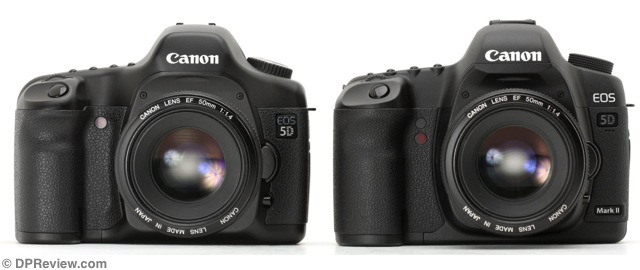
Given that, for this user, the difference between the Mark I and Mark II is a $10 sensor cleaning brush, given Mark I’s love of dust, that’s hardly a compelling reason to upgrade. After all, in the film days I made do with a 1960 Leica M3 for 30+ years, easily resisting the temptations of the M4/5/6/7 ‘upgrades’ which were less well made and cost a bundle. Sure, Mark II will have more pixels, but if I can get perfect large prints with Mark I why would I want one of these? The real enhancement digital sensors need is better dynamic range control and proper solution of that issue appears to be some way off yet. A smaller body like a Pentax DSLR would be nice, too, but I’m not holding my breath on that one. Recall that the small Olympus and Pentax film bodies – smaller than even cropped frame DSLRs today, were full frame snappers. I can only think that Macho Big outsells Chic Petite, hence the dearth of small DSLRs.

And for those looking to get into full frame digital at the lowest price, give Canon a short while to announce Mark II (likely identically priced as the new Nikon D700 competitor at $3,000) and you will be able to snap up a near mint used 5D for, what, $1,400 in the ensuing glut on the used market?

Just add $10 for that brush and you have the camera bargain of the year and large, sharp, grain-free prints to your heart’s content.


Bert the Border Terrier guards the latest batch of large prints from the 5D

Mark I shows every sign of being a decade-long keeper which, when you think about it, is an amazing statement given the rates of change in digital photography. It’s really that good.