A touch of the surreal

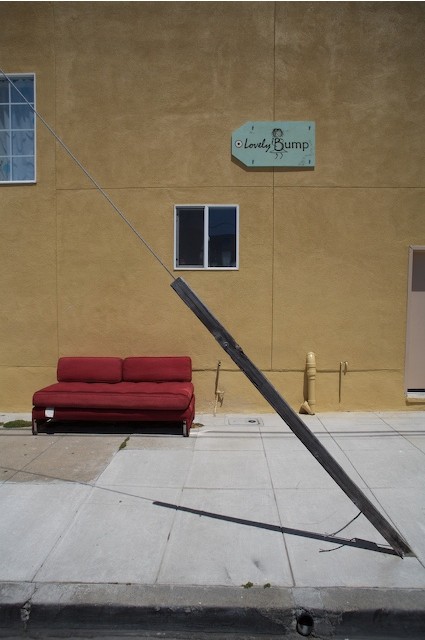
The Canon 20mm is just the thing in situations like this

Seen this weekend in …. well, it wasn’t Beverly Hills:


SF sofa. 5D, 20mm, ISO 250, 1/4000, f/5.6, -1.0ev

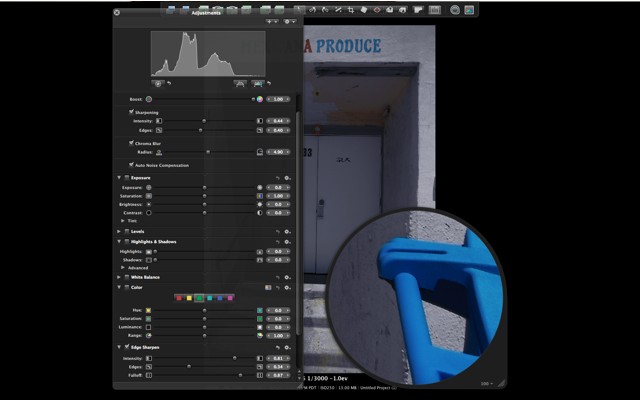
Here are the Aperture settings for processing – only Chroma Blur and the Edge Sharpen sliders have been varied (albeit considerably) from the defaults selected by the application. Chroma Blur corrects for the lens’s chromatic aberration (color fringing) whereas the high level of sharpening fixes the modest resolving power as best as possible.


SF sofa. 5D, 20mm, ISO 250, 1/4000, f/5.6, -1.0ev

The woeful state of consumer digital cameras

There is, in reality, very little choice when it comes to effective tools

A friend in England, a fine landscape photographer who has had work published by the BBC, asked for upgrade advice relating to her 4 mp digital point-and shoot. Here’s what I wrote:

“I am, believe it or not, the worst possible person to ask about the right digital camera. I used film for the past 45 years and only went digital when Canon announced the large sensor-equipped 5D. It’s outrageously expensive, overpriced, and bulky, so I would not recommend it. However, as big prints are my ‘thing’, it was the only choice.

However, one site which I do read (it’s written by an Englishman, by the way) is DPreview. Though they take advertising dollars, they are very objective and never kow-tow to manufacturers, not hesitating to trash bad gear. Unusual for commercial sites.

They have a half decent ‘camera picker’ – click on ‘Buying Guide’.

What little I know is:

1 – Don’t get caught up in the ‘more megapixels’ craze. With the very small sensors in most digitals, once you have 6 or 7 mp, quality thereafter does not improve. You cannot get a quart out of a pint pot.
2 – Most digitals have zooms – only look for optical zooms. ‘Digital zooms’ merely electronically magnify the image resulting in simply horribly poor definition.
3 – Don’t buy small just for the smallness – it usually translates into cameras that are difficult to hold steadily.
4 – Look for an optical viewfinder. The LCD screen-only cameras (sadly, the majority) have screens that are very hard to see in daylight and, as you are holding the camera at arm’s length, will rob you of a steady hold afforded by a traditional v/f camera braced against the forehead. All digitals have LCD screens – few have an optical v/f.
5 – If you have ambitions to make larger prints (my standard is 18″ x 24″ but I would hardly advocate that) look for Optical Image Stabilization – motion sensors in the camera reduce the visible effects of camera shake which so take away from definition with bigger prints.
6 – Consider buying a small tripod and use the self-timer for vibration free pictures. With landscapes you are rarely in a hurry.
7 – Avoid ‘electronic’ viewfinders (a small, blurry, LCD screen you look at through the prism) found in many of the lower priced, fixed lens, SLRs. They are simply horrors to use.
8 – Forget about super telephoto zoom lenses. You don’t need them and they are of poor optical quality. Rather, with your subject matter, a really wide lens is far more important.

I ran the following parameters in the DPreview.com screen for you:

Wide lens at the short end of the zoom lens (28mm)
Image stabilization – Yes
Viewfinder – optical
Current model – yes
All other parameters – Don’t Mind

Only one camera came up!


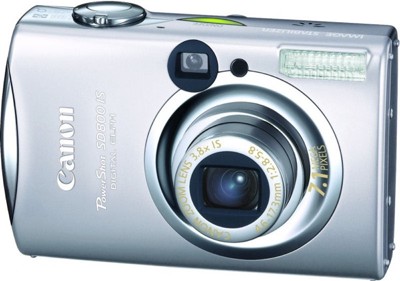
Canon SD800IS. 28mm wide lens and a proper viewfinder, not to mention IS

This is what I would call ‘medium priced’ – $320 or so here.”

So with just a few rational parameters the choice comes down to one. How sad. When will digital camera makers start taking pictures with their mostly execrable creations and realize that what they make is not what the consumer wants? Or do they all reside in Detroit? Sure, the consumer does not know what he wants, but it’s hardly difficult to explain. Just use the came4ra you produce, and you will see just how bad it is.

Canon 5D sensor dust

Could this be the reason?

I was Googling the subject of sensor dust, which so seems to bedevil the 5D, and came across a very funny criticism by one user who may well come from eastern Europe, given the grammar. What it misses in terms of the Queen’s English it gains in clarity.

“Is vacuum pump, not camera”.

So it got me to thinking. Could the lens design have something to do with it? After all, per square inch of sensor, the 5D should gather no more or less dust than its siblings, cropped or full frame, yet the 5D seems to be a problem more often than the other models.

Part of it may be that users of the full frame sensor in the 5D are either consistently making big enlargements or pixel peeping in Photoshop just to appreciate the gorgeous definition of which this sensor is capable. Bottom line, they enlarge more, because they can, and more magnification means more dust becomes visible. On the other hand, a like-sized print from a cropped sensor camera requires a 60% greater enlargement ratio, so maybe this is not a good explanation.

Yet why is it that I can put away my 5D with 24-105mm in place – my ‘standard’ lens – only to find that sensor dust has reappeared even though the lens has not been removed?

So I took the 24-105mm off the camera and, holding the rear to my cheek, worked the manual zoom ring. Sure enough, a ‘whoosh’ of air could be felt when the ring was activated vigorously. You can gauge the stroke here with the lens set at 24mm and 105mm, respectively:
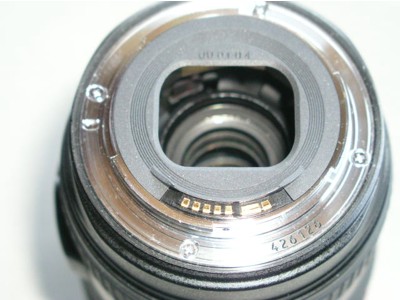
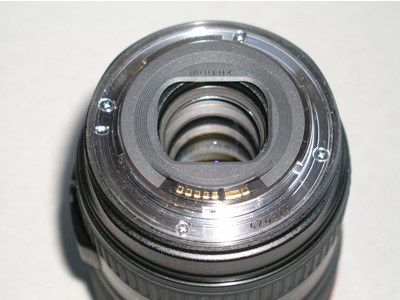
Focusing seems to generate no air rush, probably because the lens uses internal focusing. Likewise for my 85mm f/1.8 and 200mm f/2.8 lenses. By contrast, the 15mm Fisheye and the 50mm f/1.4 use traditional focusing, but the throw is so short that no detectable rush of air could be felt using the ‘cheek test’.

So let’s assume that cropped sensor Canon users for the most part avoid the 24-105 (the effective range of 38-168mm being far less useful to them than the 24-105mm on a full frame sensor). So 5D users, many of whom favor this lens, do indeed have a ‘vacuum cleaner’, or more correctly, an air pump, attached to their cameras. The only thing I cannot figure out is why 1D and 1Ds/Mark II full frame users rarely complain of this malady. Maybe they opt for the 17-40mm, 16-35mm and 70-200mm L lenses, all of which seem to have a superior reputation for dust sealing? In this regard, the 24-105mm is anything but ‘pro’ quality, though there’s no arguing with the superb optical performance.

For me the cure is probably to avoid using the 24-105mm in dusty, dry conditions, opting for fixed focal length lenses in lieu. Not very satisfactory.

Maybe someone out there has done some comparative testing of the issues and causes?

All this said, the net throughput even when sensor dust intrudes, is still exceptional, especially if a ‘roll’ needs the use of the stamp & clone feature in Aperture, which allows simultaneous removal of dust motes in the image from multiple pictures at the same time.
Ilse Bing

Book review

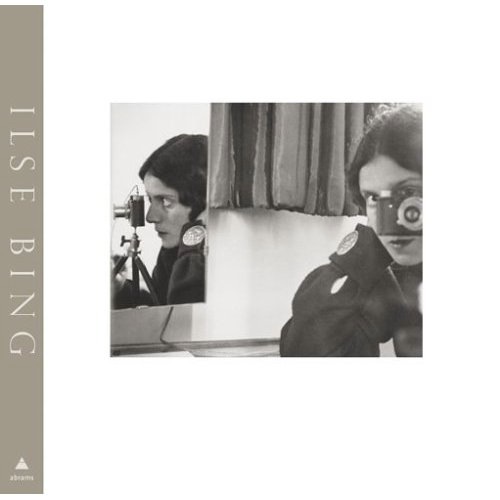
A photographer whose vision matches that of the best, but with none of their technical limitations, Ilse Bing deserves the renaissance her work is currently enjoying. Like Cartier-Bresson she did her best work in the thirties and, like him, insisted on using the small negative Leica, even using it exclusively in her studio advertising work.

From the cover photo to the colophon, this is one splendid display of the work of a great pioneering photographer. Like Kertesz and Cartier-Bresson, there is the wonder at all things new, the joy of discovering the sheer liberating qualities of a portable, small and fast snapshot camera. Just check the picture of Greta Garbo – I’m not telling the story here! You need this book.

Everything about this book, available from Amazon, is special. Whether the great photography, the impeccable reproductions, the erudite and well written essay by Larisa Dryansky – well, the whole production exudes quality, style and perfection. The quality Bing managed to extract from the poor monochrome films of the time has to be seen to be believed. I have not encountered so exciting a book of photography in ages, and it has replaced my well worn copy of Cartier-Bressons’s ‘The Man, the Image and the World’ as the ‘book on display’ in the ancestral home.

Canon’s 20mm f/2.8 lens

It’s nice to have a 20mm again


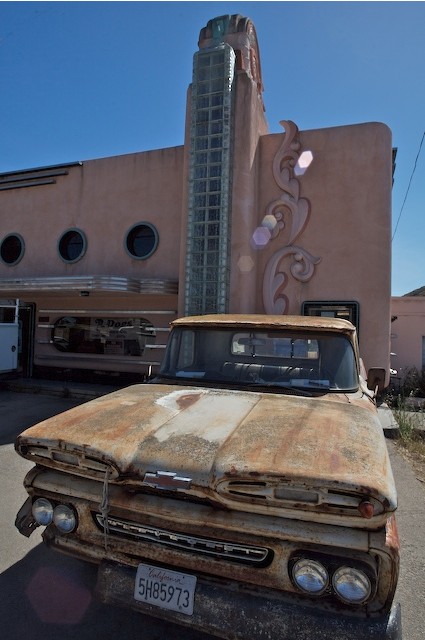
Chevy. 5d, 20mm, ISO 250, 1/500, f/11, 1 stop underexposed, processed in Aperture

No question about it, I miss my 21mm Leica Asph Elmarit, though who can afford one at $3k+ today beats me. The Canon 24-105mm L zoom is wonderful, if a tad bulky and heavy, and the 15mm Fisheye + ImageAlign works out to something like 12mm! So there’s a big hole between 12 and 24mm and the inexpensive 20mm Canon lens fills it nicely.

Anyway, that’s my excuse, and I’m an ultra-wide guy by nature. The Elmarit does that to you. Now this lens, at one tenth the price, is no Elmarit, but it’s more than serviceable. Plus you don’t have to deal with the crappy (sorry, no other word to describe it) plastic Leica viewfinder which, for all its cost, gives only a very rough approximation of what you will get on film. Sorry, film only for the Leica lens if you want all of its 21mm wide on the image. That disables it for me ay any price. If you want to get flare free snaps with biting corner definition at full aperture, and you are unaware that film is dead, the price of entry to the Elmarit world is justifiable. For me, this Canon 20mm f/2.8 does fine. By f/5.6 vignetting becomes very low and the corners sharpen up nicely; frankly, they’re not so great at f/2.8. At f/5.6 an 18x print will not embarass you, provided your original is sharp and well exposed.

Yes, it has some flare spots into the sun – see above – but the image retains high contrast across the frame. All I did was bring up the shadows in this snap, using Aperture. Exposure was for the highlight on the hood. Contrast is as recorded by the camera otherwise. Works for me.

A nice lens, not all that compact, and fully automatic – lightning quick auto focus (though hardly vital with a lens this wide) and easy manual override. I bought mine from B&H in New York along with an inexpensive Canon 72mm UV filter to protect that bulging front element.

Update: After some more experience I ended up exchanging the lens for another – read here.