Jacques-Henri Lartigue

Book review

This slim volume has been on my bookshelf for some ten years now, a gift when it was first published. Amazingly, it remains in print, which says something for the appeal of these light-as-air sunny snaps from a great French amateur photographer who did his best work in the 1930s.

This collection makes for a pleasant way to spend an hour or so on a sun filled Sunday afternoon. Nothing deep here, just pure confection, and worth it for that fact alone.

About the Snap: Hewitts

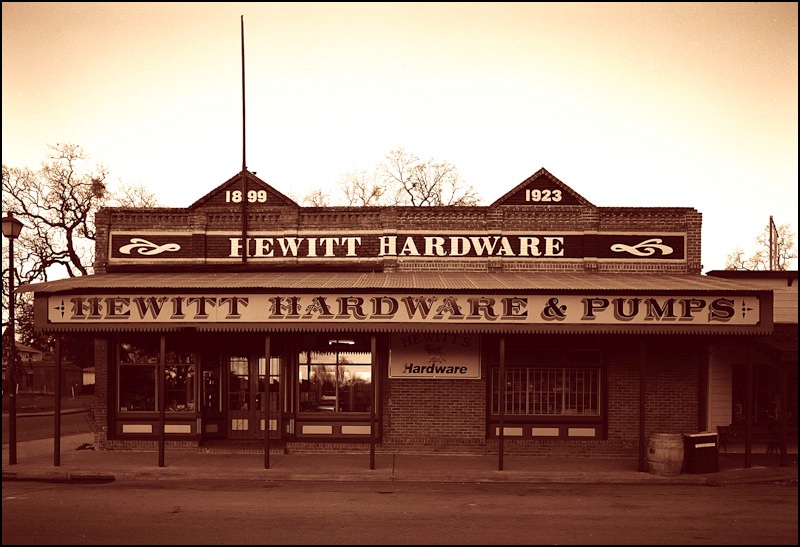
Hewitt’s


Date: January 1, 2005
Place: Main Street, Templeton, CA
Modus operandi: Tripod, warm coat, hat, gloves, scarf, the whole megillah
Weather: Freezing cold at a time when the streets are deserted
Time: 7:00 am
Gear: Rollei 6003, 40mm Distagon
Medium: Kodak Portra NC160, scanned on a Nikon Coolscan 8000 and processed in Aperture
Me: A pleasant memory of a great place
My age: 53

There’s a class of apologists in the US which thinks that freedom brings with it entitlements. They would have it that great American corporations like WalMart and Home Depot are driving the “….poor small local businessman out of business”. How many times have you heard that tripe? The reality is that you can choose lowest price with useless service, or service at a decent, if not the lowest, price. The latter attributes are found in the local hardware store.

In my case the store is Hewitts, and it’s on the Main Street of the small town of Templeton where I live, in central California. Hewitts employs half a dozen people and has premises some 10,000 square feet in size. WalMart is 2 miles distant to the north, Home Depot three to the south. Hewitts has been around since 1899 and remains vital and prosperous to this day. Far from glitzy inside, Hewitts boasts no superannuated greeters who failed to save for their retirement, no asinine ‘Hi! I’m Joe’ lapel badges. Yet there’s nothing there that you cannot find to fix problems in the home or garden. Why? Because the best thing that Hewitts has to sell is the knowledge base in the heads of the three owners, all in late middle age.

Hewitts, and thousands of businesses like it, make no apologies or excuses for the WalMarts and Home Depots of the world. Rather, they thrive because of them. Why? Simple. It’s called an informed sales force that just happens to own the store. No contest.

Case in point. The other day I was stumped by a plumbing issue – a dripping tap. The clearance to remove the body of the tap was so narrow that even a thin-walled plumber’s socket would not work. So I did the natural thing. I dropped in on Rory at Hewitts and described the issue. “Why not bring in a 5/8 inch hex socket and let me turn the wall thickness down on my lathe?”, Rory suggested. “That should get you in there.” I dropped off the socket and a few hours later got a call asking for the exact machining dimensions I thought might work. A day later, I had the socket and the tap was dismantled for replacement of the faulty O ring which was the cause of the leak.
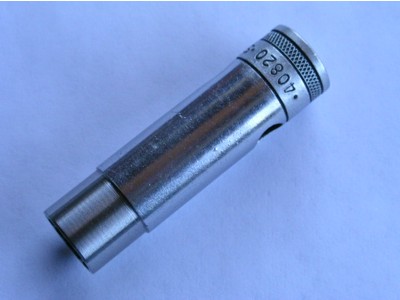

The fruits of Rory’s labor. Price? My return business.

While at Hewitt’s I bumped into another of the owners, Leonard, and had a nice chat about Churchill and William Manchester’s splendid biographies. (Winston Leonard Spencer Chuchill – his folks liked WSC as much as I do). Leonard graduated as a chemical engineer, is an authority on military history and, like his colleagues, has superb analytical skills he can bring to bear on any home hardware problem. Now let me assure you, you will not find the likes of Leonard or Rory at the big stores. So you make your choice – price or brains.

This snap, taken in brutal cold early on New Year’s Day (that’s 28F/-2C in California-speak for those of you in the mid-west), with no traffic (my tripod was in the middle of the road and I needed the ultrawide lens to make the background recede), is a tribute to small retail businesses everywhere. Long may you prosper.

And yes, a big print of this snap is hanging in Hewitt’s for all to see.

Mirror slap in the 5D revisited

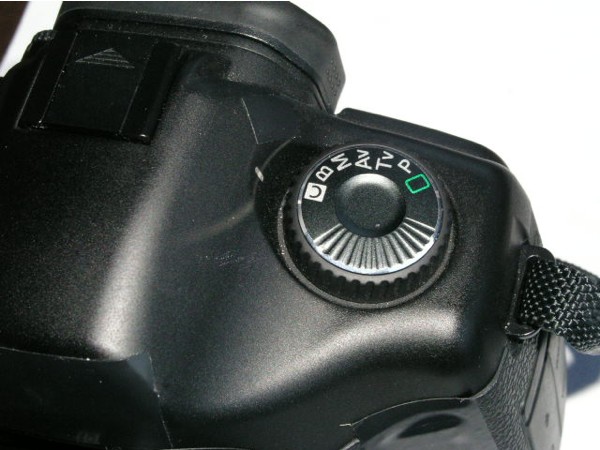
The Custom setting on the mode dial fixes things

In my little experiment to determine the seriousness of mirror slap-induced blur, I concluded that locking up the mirror before taking long exposures on a tripod made sense. Sharpness was improved – not something that would make any diffference for regular prints or web images, but clearly an improvement with big prints.

At the same time I grumbled about the difficulty of finding the right setting on the LCD panel on the rear of the 5D when it came to actually locking up the mirror, a problem compounded by the poor visibility of the LCD screen outdoors. Well, until someone comes up with a neat software fix to reprogram the little used ‘Print’ button on the back of the camera to lock up the mirror, here’s the next best thing.

Set up your camera for your preferred mode of use, go the the LCD screen and set the mirror to lock-up on the first pressure on the shutter release, using Custom Function 12. Now set the mode dial to ‘C’ (the dial to the left of the prism atop the body), go back to the LCD screen and click on ‘Register Camera Settings’. In this way, anytime you set the mode dial to ‘C’ you will have mirror lock-up available.

In my case, the preferred settings are Aperture Priority (meaning I set the camera up with the Mode Dial at ‘Av’), ISO at 250, center area average metering and the RAW file format.

So next time the camera goes on a tripod I will simply move the mode dial to ‘C’ and off we go.


The 5D’s Mode Dial set to ‘C’

André Kertesz

Book Review

For an index of all my book reviews click here.


Click the image to go to Amazon.

With a Hungarian expatriate about to win the French elections – not hard when you are running against an idiot who never read Economics 101, meaning an opponent whose cure for unemployment is to create half a million new government jobs – it seems appropriate to focus today’s journal entry on a Parisian expatriate photographer who also happened to be Hungarian, none other than the great André Kertesz. Kertesz at least had the good sense to leave Paris before the forces of evil took over, a similar sitiuation to that prevailing today in the world’s most gorgeous city. The difference this time is that a more insular America is not about to bail out a country cursed with the muddle headed socialism of fifty years of the Fifth Republic. Like the worthless doorman in my New York apartment of days yore, the only thing most French workers seem good at is walking around, hand outstretched, palm upwards.

The Paris of Kertész’s day was a better place.

This large format 302 page book, available from Amazon, is not cheap but as, to my amazement, I had no definitive Kertesz monograph in my library, I paid up the not inconsiderable price of entry and have to say it was worth every penny.

The book has its frustrations – the difficulty of finding the right illustrations to match the text, the sheer pig headed idiocy of reproducing miniscule prints of his early work sorrounded by acres of white – are the two worst. However, the narrative, broken into the three main periods of Kertesz’s life, is priceless, something you will rarely encounter in any art book. Special note has to be made of Sarah Greenough’s writing in her two essays which address his formative years in Hungary (1894-1925), and the key years in Paris (1925-1936). Erudite, deeply researched and incredibly informative yet never condescending, it’s art writing at its very best.

Anyone growing up with black and white photography – which means largely people my age and older – cannot have but been affected by Kertesz’s work. His unusual compositions, original points of view and tightness of framing all make for compelling imagery.

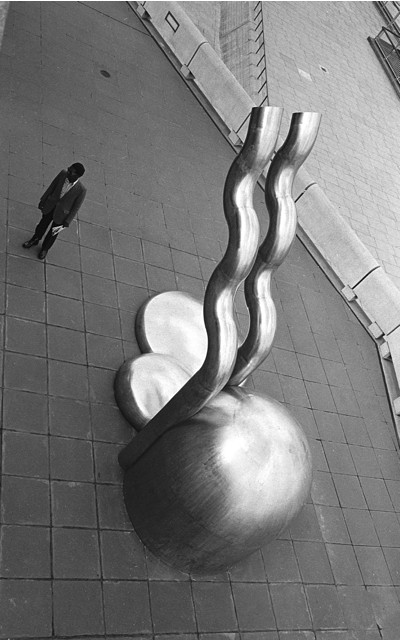
Kertész by Pindelski, South Bank, London, 1973. Leica M3, 50mm Elmar, TriX

I cannot count the number of my early images I made by looking up or down at severe angles – Kertész’s influence at work.

A key book for any photographer’s collection.