Hurry. It’s almost over.

Don’t emulate the Poles in 1939

I can claim some authority in writing about the ostrich-like behavior of my noble Polish ancestors in 1939. You see, my ancestry goes back for more centuries than I care to admit in that most conquered, yet most proud, of nations. When I was growing up, I looked around, and once old enough to appreciate these things, I realized we were poor. Why so?

That was in London. Back in 1939 when the Stukas threatened and the Panzers loomed and the Polish army prepared to charge on horseback, my parents placed all their valuables in a safe in Warsaw. You might well question this asset diversification strategy when the most powerful, aggressive nation known to man was massing on Poland’s borders. I hold no rancor for my parents’ behavior. Hindsight tends to be perfect and if I could only get the Wall Street Journal a day or two early, place just a couple of hot trades, I would be writing this from my Gulfstream private jet. It happened. Get over it.

My parents, of course, were in deep denial. After all, how do you move 15,000 acres of some of the most beautiful land man has seen? Deep denial. Like modern users of film.

To get in the mood for this piece, I thought I would turn on an LP, for old times’ sake. They do sound good, we all know that. If you can disregard the scratches, the click and pops, the cleaning ritual and on and on. So I pulled an old Louis Armstrong number out and it’s playing as I write. There on the inner sleeve, forgotten, was a lovely note from my dear departed mother to herself. She wrote ‘od Tomeczka’, meaning it was from me. I had given her this LP on December 7, 1985.

So what has all this to do with photography?

Well, that little note on the inner sleeve of the 20 year old LP speaks to obsolescence every bit as much as film speaks to the sea change in photography. Like Proust’s madeleine dipped in tea, it brought thoughts of the need for change flooding back to my brain.

Like most of us, I have been forced to change. LPs gave way to CDs. CDs eventually moved to the iPod, 300 discs in the space of a shirt pocket, fidelity uncompromised. The cathode ray tube gave way to the flat screen. VHS tapes moved on as DVDs came in. They must be due for obsolescence any time soon. How else are the electronics manufacturers going to stay alive?

And, like the aggressive German masses congregated on the border of my parents’ estate in September, 1939, that change is now rolling over the serious photographic world faster than we can begin to realize.

It started with the mass consumer. Easy prey for innovation, digital cameras were sprung on him seemingly overnight and, even if he still struggles to get the picture while squinting at the barely visible screen in broad daylight, the digital camera has become as de rigeur as the SUV. A staple of American life, meaning the rest of the world will follow in short order.

The professional press photographer got the idea three or four years ago when up-market SLRs started sporting acceptable definition and the city desk editor wanted to beat the competition with the latest picture of the celebrity of the day behaving badly. The studio and wedding professionals followed suit and Apple recently jumped on the bandwagon with software aimed solely at enhancing digital workflow with RAW files. It’s called Aperture. Some one third of the content in the leading Macintosh monthly, Macworld, is now dedicated to digital capture. Capture. That’s hip talk, I have learned, for snapping pictures.

The Art Photography set, however, held out, clutching their platinum prints to their troubled chests. Nothing can equal the quality of a darkroom print. Deep denial.

One second – I have to attend to my 80 year old technology and flip the LP after all of 20 minutes of playing time.

Well, I think the Art Photography set, while not wanting to admit it, is getting the idea. The last ball to fall.

I subscribe to a couple of top quality photo magazines. Strictly minority material. LensWork and View Camera. They showcase fine work and offer a good reading of the pulse of the market.

LensWork has a very high opinion of itself, right down to its small size masquerading as Art. The magazine has very high production values. Printing is fabulous (as it should be for so small a format), writing is excellent, the whole thing reeks of quality. Until a couple of issues ago they refused to accept ink jet prints for publication! Suddenly, seemingly 50% of their content is all digital – camera and print – and the equipment, which they invariably mention, is pretty much at the consumer end of the spectrum, meaning mid-range SLRs and the like. Nothing like market forces. Needless to add, content is strictly monochrome. They say it’s for aesthetic reasons, which means they cannot afford color with their miniscule print run. No matter. It’s a fine magazine whose content always makes you think. It’s going digital fast.

View Camera, on the other hand must have either some of the most dyslexic, or most stoned, proof readers in the world. It reminds me of that old leftie standby of English newspapers, The Guardian, known to one and all as The Grauniad. Beloved reading of faded academics in tired tweeds who think fondly of Stalin as a great liberator. An issue of either VC or TG without typos is like a US Congress without crooks. But once you get past this slovenliness, you find a fine magazine with a balanced mix of the photographic and the technical. I just received the current issue and what do I find? Articles on digital backs for 4”x5” cameras! Reminiscent , it is true, of Lord Chesterfield’s thoughts on sex – “The pleasure, momentary. One’s position, ridiculous. And the cost …. damnable.” Now you not only have to lug the camera, lenses and tripod, you need a laptop computer, back-up hard disks, cables and a very, very costly digital back. We are talking the cost of a new car here. Of course you save the weight of all those film holders. Great. And if you use a scanning back every picture takes many minutes to expose. Go on line to one of the advertisers selling scanning digital backs and you find a comparison of full frame 35mm digital (meaning Canon) with scanning 4”x5” backs. Now is that defensive or what?

Another article in Veer Pamela, sorry, View Camera, speaks to ULF. That’s Ultra Large Format to the ignorant, meaning people silly or strong enough to lug around 8”x10” cameras so they can make contact prints from the negatives, allowing them to be printed smaller than actual size in photography magazines. No, I’m not kidding. These poor photographers pool their meagre resources (all that’s left after their chiropractors’ fees) to convince Kodak, Ilford et al to make just one more batch of 8”x10” or 16”x20” film. Please. Humor us. Just one more time. The fact that Kodak and Ilford even bother confirms that they both deserve to go out of business. You want to own stock in a company engaging in this sort of trivial pursuit?

Denial. My parents were graduates of the art. These fellows are post-grads. The only difference is they are not risking their lives.

Aargh! The needle on that LP is stuck again, right in the middle of Basin Street Blues.

Stumbling about

Visit twenty new photography sites daily

One of the great frustrations of finding new photography on the internet is not knowing where to look.

You read about a site here, a friend recommends one there, in other words pure serendipity.

Now the StumbleUpon tool may not remove the random chance aspect of the search, but it does at least make finding new work easy …. and enthralling. The tool plugs into the Firefox browser and appears in a menu bar like so:

If you don’t use Firefox you can download it free from the web. Mine runs on an Apple and it may even run on a Windows PC, though candidly I couldn’t care less whether it does or not as I do not care to use the deeply flawed Microsoft operating system. I prefer something that does not constantly lock up.

The picture above is a screenshot of Firefox from my iMac. Download the tool (http://www.stumbleupon.com/), tell it you are interested in Photography and then click on the ‘Stumble!’ icon. You are taken to a random photography oriented web site. Click again and another site pops up. The rate of repetition is very low, so if you see something you like be sure to bookmark it.

Sites vary but the ratio seems to be about 80% photography: 20% technical instruction.

Every time I have Firefox on the screen I find myself heading for the Stumble! icon and discover wonderful images on many talented photographers’ web sites.

Cameras and aesthetic design

Why are so few beautiful?

A friend kindly emailed me to alert me that a web chat board was offering a camera as a prize for the best picture taken in the style of Henri Cartier-Bresson. A worthy goal which will doubtless see some great work submitted.

Then I got to looking at the prize and was struck by how inexcusably ugly it was. Going by the name of the Zeiss Ikon ZM, there is no other way to describe this brick than in one simple word whose meaning needs no explanation: Ugly. I was going to preface the U word with a vulgarity describing part of the anatomy, the bit you sit on, but good taste prevailed. You get the idea.

Equipment, it seems to me, is merely a tool to do the job, so dwelling on it to excess is not productive. But this kind gesture on my friend’s part, who suggested I should submit some of my street snaps to the contest, got me thinking about the aesthetics of equipment, or more specifically, why so little in the way of camera gear is remotely attractive to look at.

So, like most photographers, I thought about the equipment I have owned, have borrowed and have lusted after. And in the interests of keeping this piece upbeat, I will concentrate on the cameras my eye remembers as beautiful, a work of art to hold and use, rather than all the others. And that is important to me. The old saw that has it that a poor worker blames his tools has it all wrong. It should be that a good worker uses beautiful tools. You think Michelangelo and his buddies didn’t discuss paints, brushes and canvases? Sure they did.

So I won’t refer to the brutish ugliness of the Nikon F, nor the brick like facade of the Mamiya RB67, nor even the Leicaflex SL – a face only a parent could love – in this brief Statement of Preferences. And I will most certainly not refer to the Kodak Ektra.

The post-WWII list is, sadly, a short one.

Headed, of course, by the chrome Leica M2. The most perfect blend of form and function ever designed. Color it black and you have nouveau riche – the young up-and-comer’s Porsche 911. Make it chrome and….aaahhh! Yes, this one is mine. With the wonderful 35mm Asph Summicron, no less.

But before that exemplar of taste and execution came along there was something equally fine to be had in the Zeiss Ikon Contax II and IIa. Forget the metered version with the ugly bump for the selenium cell meter. The un-metered camera was simply beautiful and aeons ahead of the cheesy looking screw thread Leicas of the time with their miserable viewfinders. A top hat compared to a cloth cap. Note the beautiful symmetry of the finder windows and the knobs, the gorgeous proportions of the body. You just must pick it up.

No Rolleiflex twin lens reflex can be left out of this reckoning with, perhaps the metered 3.5F at the pinnacle, the lens being just the right size for the body, something lost in the 2.8 variant. This one was mine until I gave it to a friend.

Whether it was because so many of the greats used it – Avedon, Penn, Beaton – or whether it had that secret something, call it balance, proportion, despite the rectangular shape, the Rollei is a beautiful camera.

Some miniature format cameras had that something called beauty too. Two of the best were the Tessina and the Minox. Regardless of their clandestine Cold War role in life, these two, especially the watch like Minox, had the secret ingredient. Have you ever opened a Minox for action? Try it. Sensuality redefined.


At the other end of the size spectrum, Linhof had what no American manufacturer could approach. A divine aesthetic sense. I won’t say anything about the Crown Graphic (heck! I own one) but just feast your eyes on this Super Technika.

Aaah!

Now that is a camera.

Now there’s a lot of German equipment permeating this piece. A nation that makes fine cameras and killing machines. But its eastern emulator, Japan, has had some pretty fine things to contribute to camera aesthetics too.

Take the fine line of early Canon SLRs. This is an FT. Note the finely sculpted controls and the general balance of the machine.

Olympus made a fine effort with the Pen F and even the bold gothic letter “F” seems to work well for this courageous, innovative design. A camera with a sweet, feminine grace, with a bold escutcheon. I loved mine. Wish I had never sold it.

They tried later to recapture the spirit of the Pen F with the OM1 but the magic spark was, alas, gone.

Then two really great Japanese designs come to mind. One very good – the Pentax MV/ME. Another camera with jeweled precision and an absolute joy to use. My ME Super fell apart but not before we had had the most wonderful relationship.

But their earlier Pentax Spotmatic was, after all, an impossible act to follow. Here was a camera that was a joy to behold. To hold. To use. Forget all that nonsense you read about the Japanese being imitators. Just take a glance at the raw sensuality of the advance lever. The most beautiful thing to ever grace a mass produced object. And note those angled “Zeiss” corners. The sincerest form of flattery is imitation. This was something that you would think should have set an example for the designers of the miserable looking Zeiss Ikon ZM, that execrable excresence passing for a camera. An example of which, sadly, they seem damnable unaware. As unaware as they are of their company’s glorious history of design.

2005 – taking stock.

So what was accomplished, photographically speaking?

I was hanging some of my Really Large Prints the other day in the new home theater I had built – it’s actually a converted garage – which gave me pause to ask “What did you accomplish last year”?

As a matter of course I make it a practice to write down what I did right and wrong in managing money during the year for, while the lawyers keep reminding us that ‘Past performance is no guarantee of future results’ I tend to hew to Churchill’s variant which has it that ‘Those who deny history are doomed to repeat it’. In re-reading these self critical pieces over the years, recurring patterns of erroneous behavior are identified and, hopefully, remedied.

So to take a like approach to photography seems to make better sense as my driving goal is to take better pictures.

But what does ‘better’ mean? Those which get exhibited? Sold? Hung? Probably a mixture of all three. If you don’t show it you will never know how good you are. If you don’t sell it you are a commercial failure which may be good or bad. If you don’t hang it why on earth are you taking pictures in the first place? And while ‘exhibit’ takes increasingly new guises – books, cell phones, computers, the internet, a well framed picture hanging on the wall remains the touchstone of photographic display.

Well, what about the successes? Listing these first makes it easier to enumerate the failures.

I published my book Street Smarts, containing 100 monochrome pictures taken in London and Paris in the seventies. It taught me how hard it is to get all the material together, how difficult it is to get it all submitted and looking just so, and how impossible it is to sell a book of pictures. This is the ultimate vanity project – you may feel good about doing it but don’t expect to make money. Best of all, this allowed me to get all that monochrome content well and truly out of my system and free me up from the legacy overhang of being a ‘street’ photographer. That genre is done, for me at least.

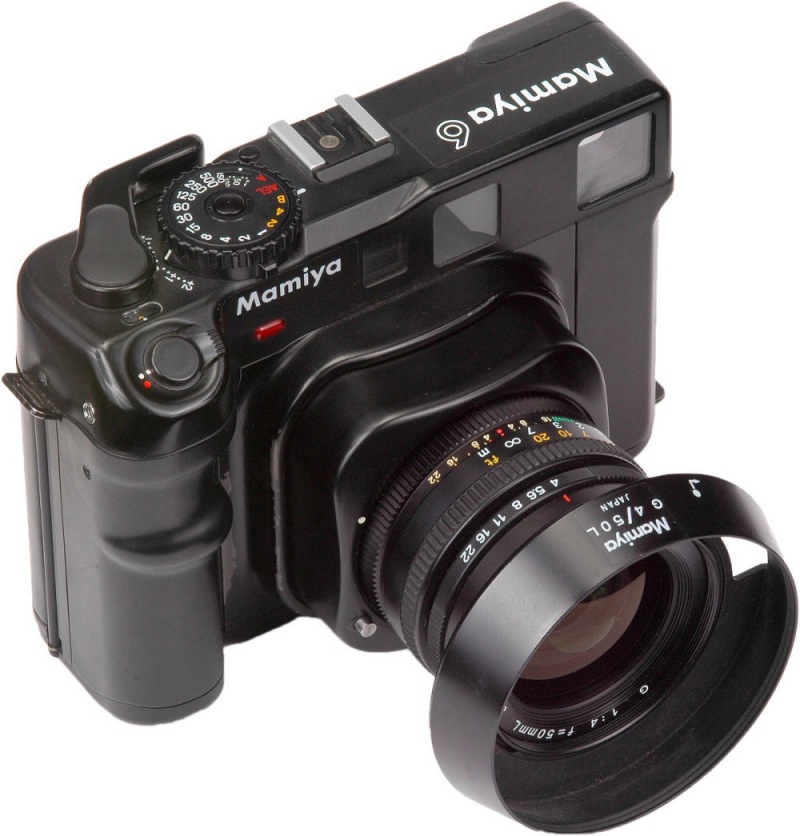
I got rid of a bunch of excess gear that was just collecting dust, and I’m not a gear collector. Now I’m down to one 35mm system (Leica M), two 6×6 systems (Rollei 6003 and Mamiya 6) and one 4×5 system (Crown Graphic). I fancy the clunky Rollei 6003 will hit the block in 2006. Too much gear still!

I learned lots about 4×5 when I picked up my 50 year old Crown Graphic and a couple of extra lenses for a song. What a blast to use and negative quality that remains unsurpassed to this day.

I started this blog which forces me to put down in writing what I am thinking about the world of photography. Write it down, the old rule has it, and it’s serious. Talk or think about it and it’s noise.

I got selected for a one man show – due in 2007 – at a local gallery after showing the director my prints. That felt really good as it confirmed that I have the drudgery of printing/mounting/framing down to where it no longer intrudes in the creative process. It felt even better to know that someone else liked my work. And no, she did not ask me what camera I use. And, best of all, all the pictures were New Work, not recycled old stuff.

I started a Photoblog and came away with mixed feelings. The positive is that there’s lots of great work out there. The negative is that most of what’s out there is sheer, unmitigated garbage. I also learned that my dated use of film as a recording medium is incompatible with the ‘picture a day’ pressure in the Photoblog world, so I stepped back and now post one a month, if that. Feels better until digital matures and all that film equipment can go to a collector at some ridiculous premium to what I paid for it. Thank God for the Japanese – where would the used Leica market be without them?

I built my home theater which comes with one huge photographic advantage. Lots of display space.

I confirmed, if ever confirmation was needed, that the products of the Microsoft Corporation are one of the biggest frauds ever pulled on the consuming public and remain blissfully happy with my iMac three years after making the switch. No downtime, just speed to get the drudgery part of the photographic process done. Bottom feeding tort lawyers continue to sue cigarette and hamburger vendors. Wrong place to fish. When will they realize that Microsoft has killed more people than these twin evils combined? Just think of all those coronaries at the keyboard of a Windows PC….

I learned, as age encroaches, that many tasks are best delegated to those better skilled to do them. Processing, framing and so on. I add no value here.

I re-immersed myself in books about art and photography and tried hard to sharpen my vision.

Hmmm. Not a bad list. Feeling pretty good. OK then, what about the not so good bits?

My vision still lack clarity. Thematic approaches to photography make sense. The ‘always carry a camera’ thing is meaningless. Carry it with a mission and you get somewhere. I tried to apply this last year by focusing on three themes – The Fading Past (old wall signs), The Beach Creatures (driftwood at the beach) and The California Forests (I’m quite useless at these but keep trying).

I would like to become technically better with the 4×5 format for it has so much to offer. Maybe it’s just in the nature of things, I tell myself, that the equipment is clunky and a mess to use.

I would like to delegate all printing of Really Big Prints as it’s simply a waste of time when others can do it better and you are messing about with the yet again clogged ink jet printer at home. And I’ll bet the cost is comparable. Got to find a good printer for 2006.

I cannot consistently take good pictures. Maybe that’s because I do not do it enough or maybe it’s the unexplainable nature of the creative process. Sometimes you can do it, mostly you cannot. I do know that machine gunning for pictures is anathema to me and only results in a drop in quality so some other mechanism is needed. One thing I have found that works is to scout out a location without a camera, pre-visualize it – then come back later with the equipment. That seems consonant with my working style.

And, finally, I am still very keen to go all digital, but have yet to find a camera which does it for me.

Delegate the drudge of routine printing

American ingenuity never ceases to amaze.

Every year about this time our family – my wife, our son, the dog, the cat and I – engage in a nerve trying ritual.

The annual Christmas postcard picture.

For years now we have been taking this picture on the nearest point and shoot digital camera which falls to hand as the probability of catching all five cast members with bright smiles, good expressions and open eyes is …. well about as likely as that of finding a politician with integrity. Not impossible, but difficult, to say the least. So we place the camera on a tripod, gather together and bang away. Twenty tries usually does it. This year it was twenty one. Digital, of course, with its instant feedback, ensures we get something useable without having to wait for the film to come back from processing and going through the whole ordeal again.

Now, the picture taking part of the process, I must admit, is far from the most trying. The tough work begins when it comes to printing forty or fifty hard copies to mail to all and sundry. As I ordinarily use my wide carriage Epson printer for large prints which end up mounted and framed, making 4” x 6” postcard-sized ones is sheer agony. You can bet that the print nozzles will be clogged, rendering all and sundry in shades of purest magenta on the first pass. Then, after wasting much time and ink using the self-cleaning cycle (only a marketer could have thought up that misnomer), I try to recover that template I made for Photoshop years ago which places four prints on one sheet. Well, of course, it’s either missing in action or the annual software upgrade has rendered it useless again. Then when I get that bit sorted, I invariably run out of ink.

But then what would you expect? Take one of the very worst designed applications, a study in user torture named Photoshop, and pair it with the least friendly consumer gadget since the VCR – the home printer – and you have a recipe for frustration and failure.

So, this year, I said No More. I had come across an advertisement by one of the large drug stores in the West, Walgreens, which said you could upload your snaps and then elect to have them printed and ready in sixty minutes at a store of your choice. So we uploaded the annual snap (number 21 of 21!) to the local Walgreens, after first downloading their software which, believe it or not, even came in a version that works with computers preferred by human beings rather than geeks. I mean, of course, Apples. And not sixty minutes later, an email arrived asking that we drop by to pick up the prints. No, they don’t deliver. Not yet, anyway.

So we took the boy and the dog for a stroll down the road and there they were. Fifty beautiful 4” x 6” prints, perfectly exposed with those wonderful skin tones the home printer only dreams about, processed in a Fuji Frontier machine right there in the store. Total cost? $8. Yes, 16 cents apiece. Now had they been using a Kodak machine I would have gone elsewhere, as the second worst run American corporation (the prize goes to GM by a considerable margin) is not even capable of making a reliable machine or supporting after market service in a timely manner. So unreliable are the Kodak machines, and so poorly supported, that even the Wall Street Journal noticed after the large Target store chain threatened to return all its machines and going with Fuji if service did not improve. At my local Target, the Kodak machine is typically down 40% of the time.

The point of this piece is that while film may indeed be dead, the commercially made print is alive and kicking.

When I originally wrote the Film is Dead piece, I posted it on Photo.net to gauge reactions. Some fifty emails later, many laced with obscenities and personal attacks, I had in fact confirmed that Film must be Dead, otherwise why would so many deny the facts in ghetto language? It is troubling, though, that these purported aesthetes never graduated from grammar school.

Since that time, America’s second worst run corporation has restated earnings (they don’t even know how much they are losing), laid off thousands more employees (if all else fails, blame the worker – right out of the GM play book), has discontinued monochrome printing paper (excuse me, silver gelatin to those who still use it for cheap effect or is that marketing again?) and obsoleted (‘rationalized’ in MBA speak) most of its color film offerings. And that was just in one fiscal quarter.

So while film, which I still use for serious work, is on the way out, shortly joining the wax cylinder and the LP record as an avocation of the lunatic fringe, the genius of American capitalism, that prime mover of this great nation of hustlers, remains alive and kicking by making easy printing from digital originals a trivial matter.

I for one, while Walgreens and Fuji did their thing, got on with other more fun things this year rather than wasting time with the execrable Photoshop interface and the ink jet printer.

So go ahead and send your casual digital snaps to the local drug store – just make sure it does not use a Kodak machine if you want your prints back any time soon.