A sense of purpose

I emigrated from the United Kingdom to the United States in 1977 so now more than half of my life has been spent in America, some of that in New York but mostly in California. What so attracted me to the New World was my experience working with Americans in London. The singularly distinguishing attributes of the “Yanks”, as xenophobic Englishmen still thought of them back then (now we have the equally unappealing sobriquet “Brits” for my former countrymen), were that they had a lot of fun in doing whatever they did and their driving sense of purpose. They were goal oriented.

What has all that to do with photography? Well, I am convinced that without a sense of purpose your chances of taking good photographs are poor to non-existent. As for profits in business, opportunities for good photography rarely just happen. If you are going to go swanning about, camera in hand, blithely hoping that something good will come alone, well, keep hoping. You have to make it happen.

I believe this to be true regardless of whether your subject is the serendipitous one of street photography or the much more planned variant of the landscape. I happen to enjoy both. Maybe a couple of illustrations will do the trick.

As the proverbial impoverished student in 1977, my last year in London, I mustered what little cash I had and boarded the ferry to Calais, then the chemin de fer to Gare du Nord in the heart of Paris.

I had two very focused goals in mind.

One was to visit the Louvre, the Orangerie and the Jeu de Paume museums and art galleries in the Jardin de Tuileries in the heart of the First Arrondissement. My sole purpose was to gorge on nineteenth century French painting. Corot and Boudin. Cezanne and Manet. Renoir and Monet. Degas and Seurat. Painters modestly represented in the great British museums, but very much on their home ground in the Tuileries Gardens. Fulfilling that goal, with the three galleries a stone’s throw apart, involved nothing so much as a stout pair of shoes and the entrance fee.

The other was to see and photograph the light of Paris, that light which I had studied for so many years and dreamt about experiencing first hand. Paris has the twin distinction of being the most beautiful city of the Western Hemisphere and well as having the most gorgeous light. Or maybe it is so beautiful because of the light? Lacking the lugubrious architecture that typifies much of London and, mercifully, lacking that city’s foul weather, Paris is a city of joy and romance where London is one of industry and commerce. Artists created one, burghers the other. And for all the bad things we, as Americans, may think of the Parisians, casting off those veils of prejudice reveals a magnificent place for the ages. Truly you have not lived until you have been in Paris.

So to finally have the opportunity of taking photographs in Paris was not only immensely exciting, visual and sensory overload threatening at every corner, it was a goal I had long strived for. And Paris did not disappoint.
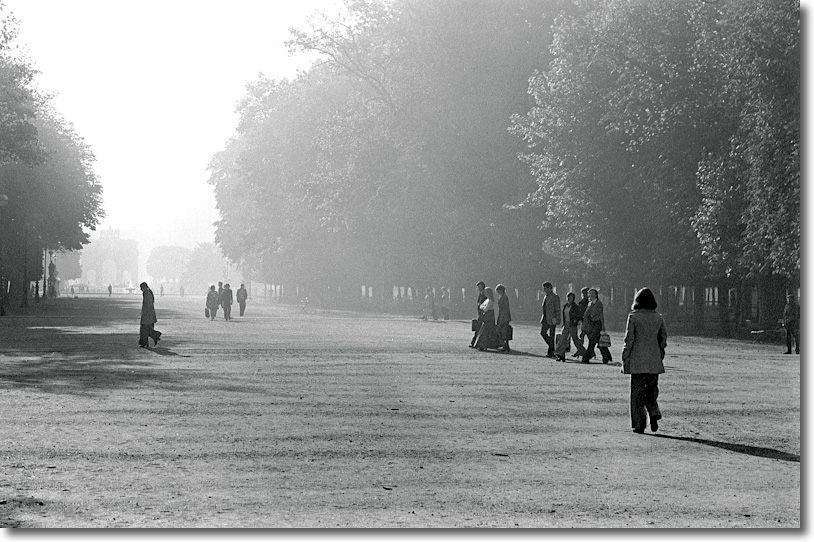
Jardin de Tuileries, sunrise
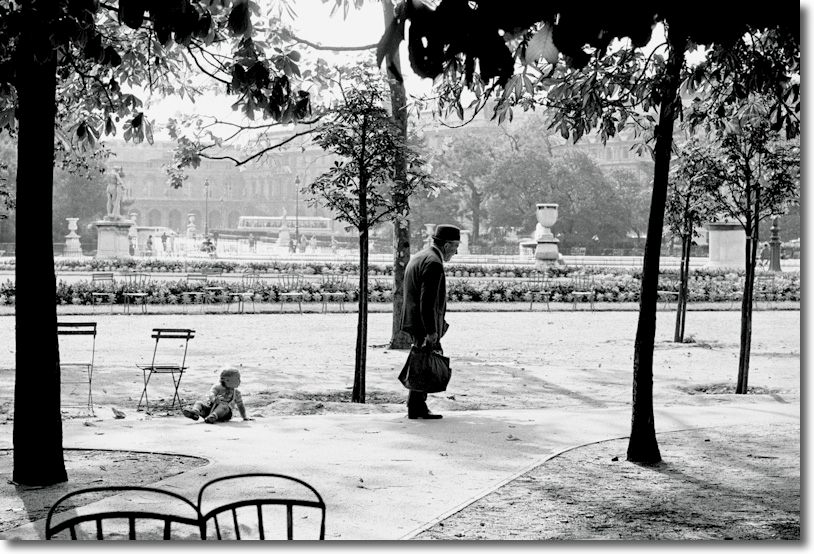
Jardin de Tuileries, noon.
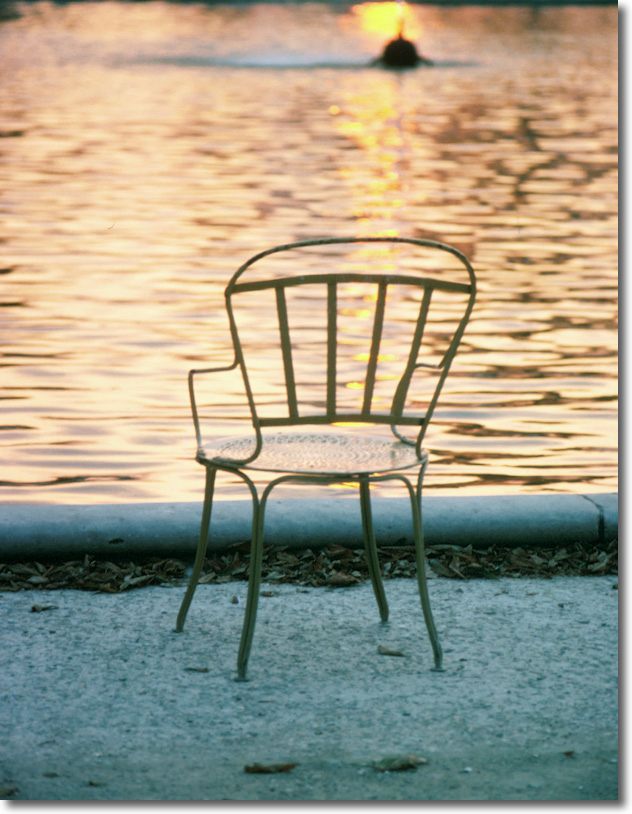
Jardin de Tuileries, evening.

And even when you come across something very special, a picture that you will always remember the journey by, luck has nothing to do with it. I waited for two hours at the Holocaust Memorial, that monument to French Guilt, for the juxtaposition of the players to be just so:
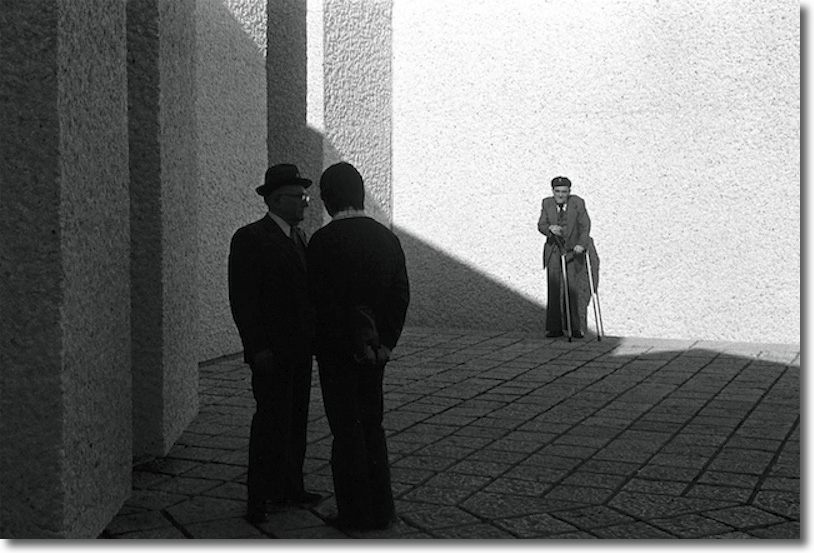
Holocaust Museum, Paris.

There are very few lucky accidents in life or in photography. A goal, a sense of purpose, makes luck happen.

Set that goal and only then pick up your camera.
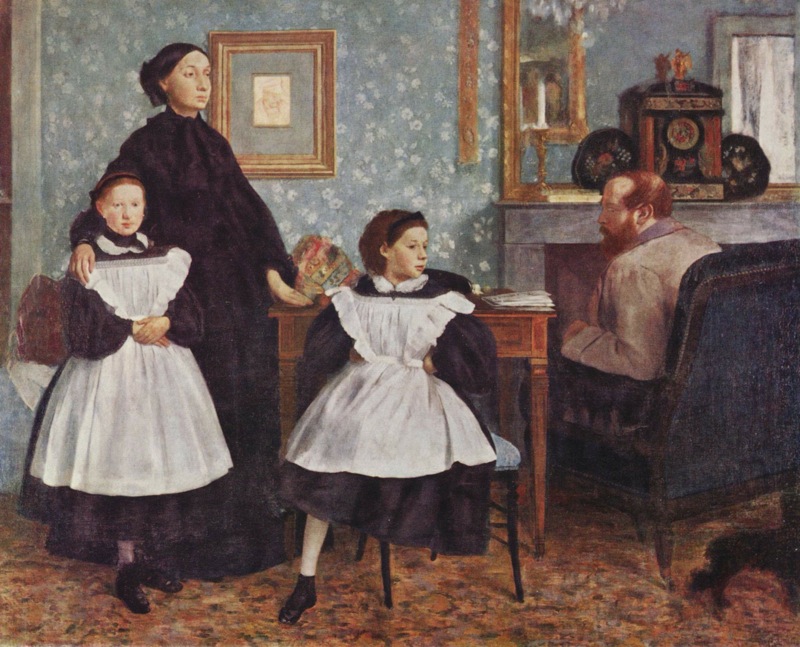
Degas – Photographer

One of the earliest recollections I have of a painting as a child is of Degas’s Bellelli Family.

Looking at the painting over the years it is clear that what attracted me to it is the photographic nature of the composition. Painted in 1860, in the early days of photography (Daguerrotypes first hit the market in 1839), the canvas is remarkable for several things. The informal pose of the paterfamilias on the right contrasts sharply with the stiff formality of the mother and her two daughters, the younger of whom appears to be an amputee! (She was, in reality, sitting on her tucked leg, the way kids do). Degas simply painted it as he saw it.

Now no one had done anything like this before, and Degas was lucky the Bellellis were affluent relatives (the mother in the portrait, Laura, was his aunt) for no one would have commissioned a portrait as strange, by contemporary tastes, as this. David Hockney would imitate his style a hundred years later by which time people were prepared to pay goodly sums to have their portraits painted in like manner.

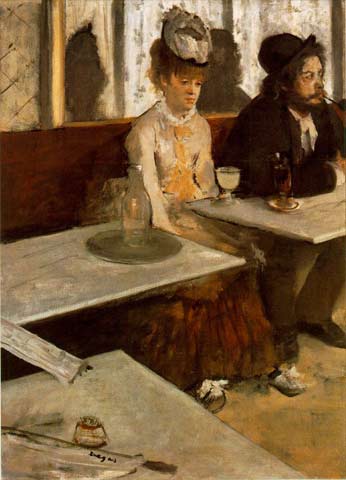
Degas lived a long life, dying in 1917 at the age of 83, and the realism seen in his oil paintings taught me a great deal about photographic composition and seeing. No single painting does it better than “L’Absinthe”.

Painted sixteen years after The Bellelli Family, his powers of observation and composition are at their greatest in this superb painting. The effect is even greater if you can get to the Musee d’Orsay in Paris where it hangs for all to see – a modest sized canvas some 36″ x 24″in size. Absinthe is distilled from anise (similar to licorice) and wormwood. Poor distillation left behind toxic levels of chemicals, which could cause all sorts of harmful side effects ranging from vomiting to blindness. But none of that troubled the consumer who focused on the alcohol buzz (absinthe is some 60% alcohol) and the hallucinogenic high from the other chemicals present in abundance. Now you get the picture and the painting!

And what a remarkable painting it is. If you think Caravaggio’s ˜Conversion of St. Paul” is the greatest ˜wide-angle™ painting ever, well, “L’Absinthe” runs it a close second. The strong foreground with the knife cheekily signed by Degas leads the viewer, courtesy of those zig zagging diagonals, to the bombed pair in the rear. Except that they are almost out of the picture as if the painter himself had had a couple of shots during the process. The man’s pipe is cut off and he gazes out of the frame. The young woman is nothing less than a portrait of despair itself. The pair cast strong shadows on the wall behind. And you think Brassai invented this kind of thing?

Now I have no facts and figures to back this up, but I would bet that the average photographer rarely looks at a painting, even less thinks about painted art. What a shame for there is so much there to excite the eye and stir the imagination and those are two of the reasons we look at art. The third is to enjoy that sense of aesthetic satisfaction which good art provides. Not a bad definition, come to think of it, as to what exactly constitutes ˜art”. It is that which arouses the aesthetic senses.

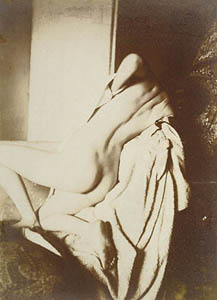
Degas took up photography at the tender age of 61 and immediately set to recording that which he wanted to paint, except he did it with the compositional eye of a master.

Enhance your vision and imagination. Add a book of Degas’s paintings to your library.

Books by the foot

You think of yourself as a decent photographer. Your work gets better and you expose it regularly to peer groups for constructive criticism.

Now and then fortune smiles upon you and you find yourself with some spare cash. Money to blow. Like photographers through the ages, your thoughts turn to that new body, lens, gadget, whatever.

Stop.

None of those will make your pictures better.

Instead, buy some books showing others’ work. They will teach you more in a pleasurable hour or two than that new camera/lens/gadget ever will. Plus, as X. Trapnel famously remarks, somewhat the worse for a couple of glasses of wine, in Anthony Powell’s ˜A Dance to the Music of Time”, ‘Books do furnish a room’. So if you are a real philistine, at least you end up with nice decorations even if you don’t read the book. Do remember to take the plastic cover off, though.

Ridiculous, you say. Have you seen the price of picture books recently?

Well, if you are a Wall Street investment banker then, yes, by all means go to Rizzoli’s on Fifth Avenue in New York and pay retail. I, however, will be buying the same book remaindered some 6-12 months later at 25 cents on the dollar. Suddenly, that $100 tome is the price of four visits to Starbucks.

Here’s where I get mine:

1 – Strand Books in NYC. Its eight miles of books qualifies it as the eight wonder of the world. Next time you are in New York, forget the obligatory visit to the excess that is B&H and go here instead. Sales tax to the poor residents of NY only, and any walk-in. For philistines, Strand will even sell you ˜Books by the Foot™ (no kidding) so you can impress your friends while watching sports on your large screen television.

2 – Powell’s Books in Oregon. No sales tax to anywhere. And you thought the Left Coast was full of Fruits and Nuts, eh?

3 – Edward R Hamilton. OK, so they are still in the nineteenth century and accept mail orders only, but at 20 cents on the dollar you can wait a couple of weeks no?

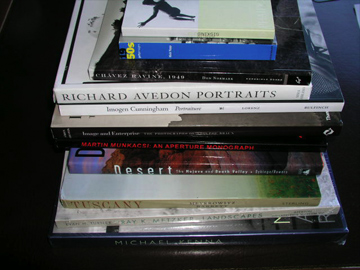
Here are this week’s deliveries – these averaged under $25 each:

Take fewer pictures

How many times have I read exhortations by ‘teachers’ of photography that the aspiring photographer should take more pictures, use more film, carry more digital storage?

I always flash back to my mother telling how she once met George Bernard Shaw (1856-1950). In 1938 she had been passing a few idle weeks at the Dorchester opposite London’s magnificent Hyde Park (the park remains magnificent but, alas, the hotel is now owned by Arabs whose kin are the only ones affluent enough to stay there) and on one occasion had the good fortune to meet the humorist and playwright. She described him as tall, gaunt and very distinguished looking. In addition to being a great writer he was also an enthusiastic photographer. Their meeting always reminds me of his light hearted remark to the early British photographer Alvin Langdon Coburn that “Technically good negatives are more often the result of the survival of the fittest than of special creation: the photographer is like the cod, which lays a million eggs in order that one may reach maturity.” That was in 1906. The year my father was born.

Since that time, the typical number of pictures available to a photographer has grown from one (plate cameras), to twelve (the Rolleiflex), to thirty-six (the Leica) to, who knows, several hundred or thousand with a high capacity digital card. So in a hundred years, the camera’s capacity has grown by three orders of magnitude. Sadly, the quality of the average picture has not.

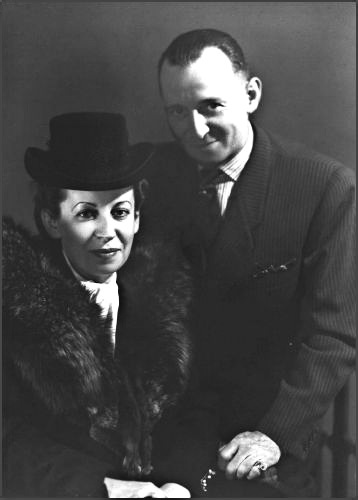
Why is this? Take a look at your old family albums. They probably contain pictures taken 50, 70 or maybe even one hundred years ago. Note that the earlier the picture the better the composition and execution. Chances are those were taken in a studio setting. Your great great grandparents had donned their finest clothing and the whole sense of occasion, of having your picture taken, of making an effort to get it right, enhanced the results immeasurably.


My parents in 1937. Studio photograph.

The view was the same from the other side of the lens. The professional taking the picture knew he only had one chance. He studied his technique, made it a constant (not mindlessly changing between this lens and that, film A, B or C, developer X or Y) and delivered every time. He put considered effort into every picture.

I believe we would all do far better, wasting less time and materials in the process, were we to follow suit. Less equipment and less film correlate inversely with the quality of the results.

So I challenge you. Get to an area you know and have photographed a few times, armed solely with one roll of film or one low capacity digital card. That might mean as many as 50 pictures for those used to a thousand or twelve or fewer to those used to carrying sufficient supplies for a couple of hundred. My version of this is a Rolleiflex with a fixed lens and just one roll of film – 120 in my case, meaning twelve pictures, as the camera will not even take 220. Thank goodness.

A more extreme variation, in my case dictated by the fact that so far I have only 2 film holders, is to take your field or view camera armed for just a handful of shots. Heck, the sheer bulk of the thing pretty much dictates this sort of economy. My two film holders allow me a scant four shots.

Now take your pictures. Think hard again when setting up the picture. Think harder before pressing the button. Take some time over each photograph.

Take a look at the results.

See how not only are most of them good, note also that the absolute number of successes far outweighs your machine-gun days?

Take fewer pictures and they will be better pictures.

Does equipment matter?

This is a tough question.

When I was a kid my pictures were lousy.

The composition was poor.

The exposure was wrong.

The processing was worse.

And the subjects were uninspired.

Though I had a deep appreciation of the arts and many years of studying the masters of photography in my psyche, my pictures reflected little of this acquired knowledge.

I also used poor equipment because that is all a kid can afford.

Then I worked and saved mightily and my first Leica came along. This is the first picture ever taken on that Leica, on the day of purchase, August 2, 1971:

The light is just so, the exposure fine, the moment captured.

So what happened? Did I suddenly become a much better photographer because I used a Leica?

The answer is an unequivocal and resounding Yes.

You see, what happened here was that the very fact that I had inherited a duty of care, of quality and of accomplishment in the ownership of this magnificent instrument made me rise to the occasion. Every driver is a better driver in a Ferrari. Every rider rides better on a Ducati. And every photographer is a better photographer with a Leica.

So the conclusion of this short parable is simply this: Get the best camera you can afford. Stop making excuses about great pictures being taken on lousy equipment. They never were. The reality of that costly purchase will force you to become a better photographer too.