A qualified recommendation.
Background:
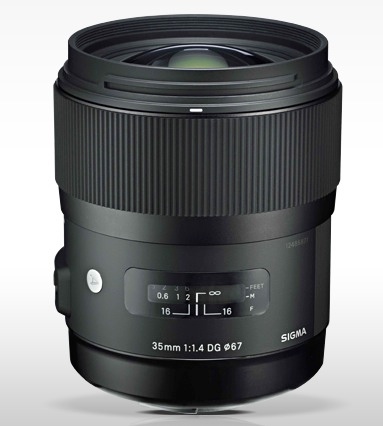
See my earlier Sigma 35/1.4 review comments based on the faulty first sample of the Sigma 35mm f/1.4 DG HSM A1 for Nikon bodies.
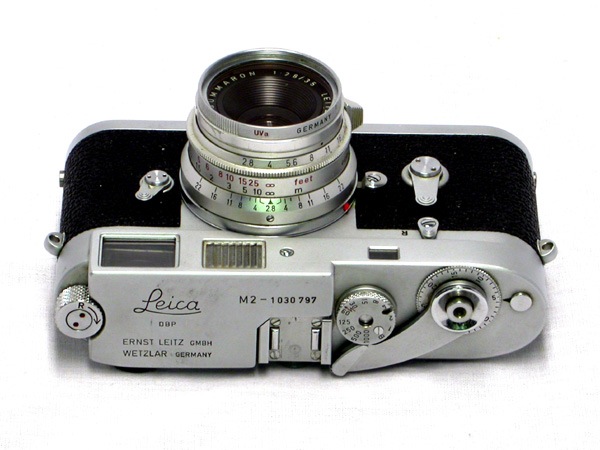
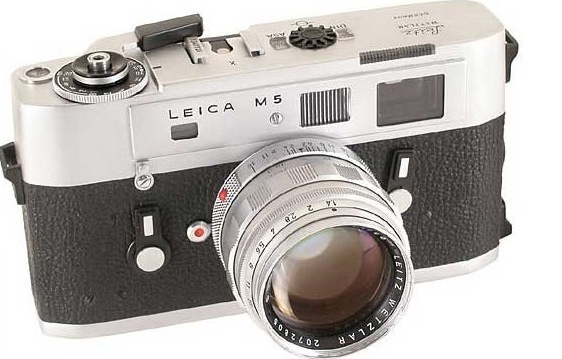
For the street snapper using an FF sensor body (me!), arguably no lens is more important than the 35mm. Trained in the classic Leica rangefinder tradition the 35mm was the lens I most often used in the days of film. When Leica’s bodies fell behind I moved on, first to a Canon 5D, then to a Nikon D700, and now a D3x. Thus it’s worth sweating the details in getting the best 35mm optic, especially if low light use is contemplated.
I would preface what follows with the fact that I am brand agnostic – camera and lens. Whatever works. Until now I have used only Nikkors on my bodies because I know little of aftermarket lenses and the price differentials are mostly immaterial for a long-term user.
After I complained to Sigma USA about the faulty loaner, they loaned me a brand new copy of Sigma’s 35/1.4 lens to try. They volunteered this. I did not ask. After some quick snaps at home of my long-suffering test target, Bert the Border Terrier, all seemed well, so I hit the streets. I did give him a cookie first, though.
The first lens I had borrowed from BorrowLenses.com had a random AF error, sometimes front- sometimes back-focusing. Heck, sometimes it was right, too! And when it was right it was beyond compare. So trying again with another sample was worth the effort.
I had explained to Sigma that I would be more than pleased to buy the loaned lens given its stellar performance, provided AF worked every time. f/1.4 is nice, but I already own the f/2 pre-Ai MF Nikkor, so spending all that money for one more stop and unreliable AF does not solve.
Results:
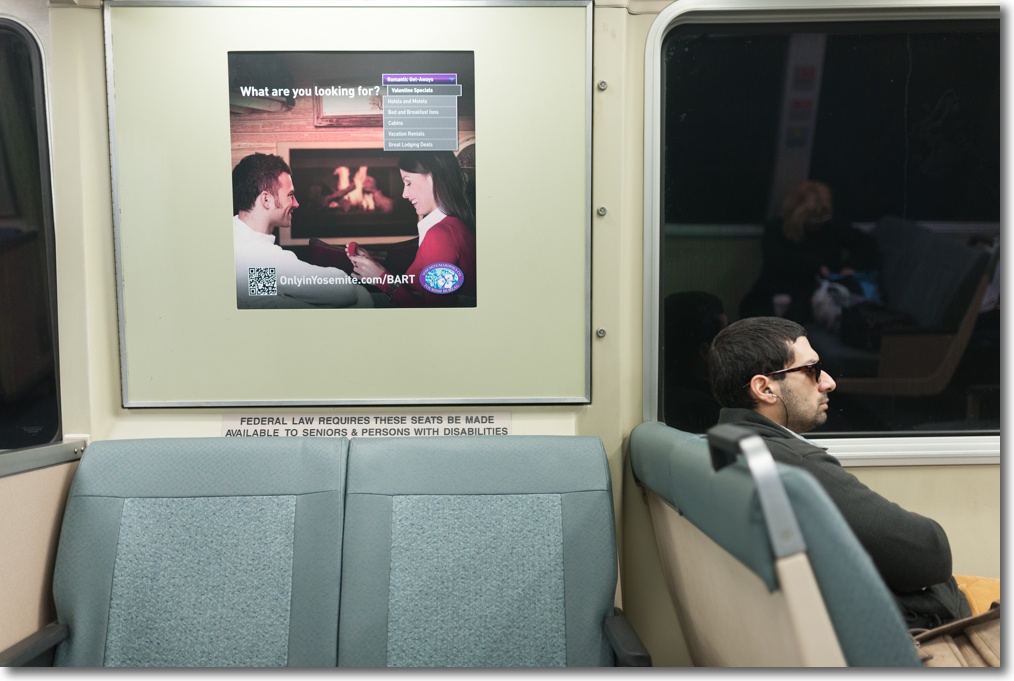
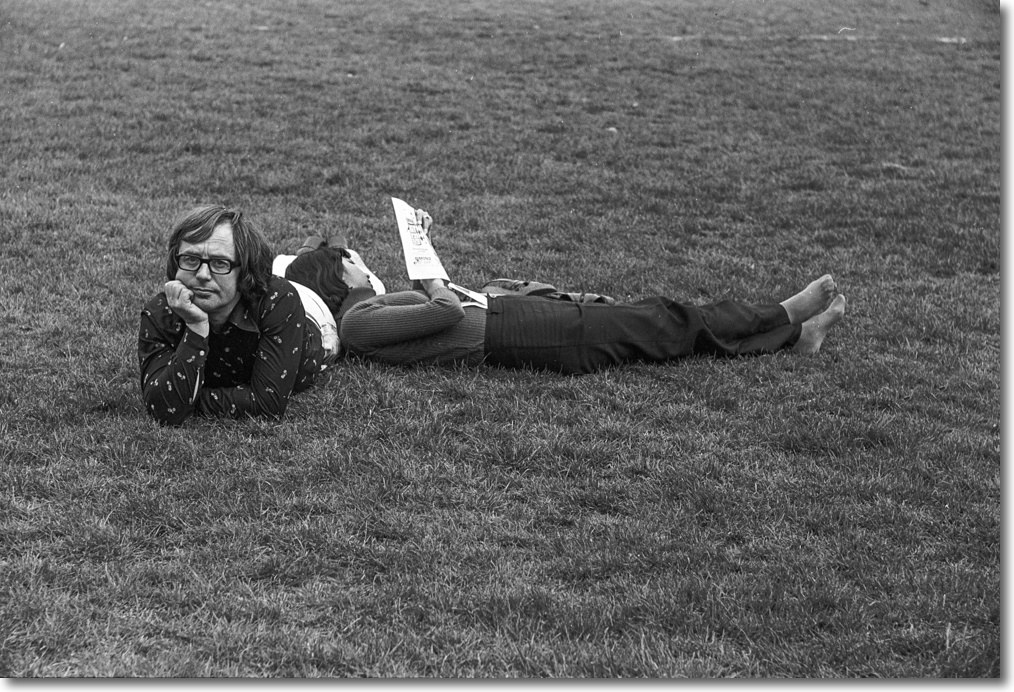
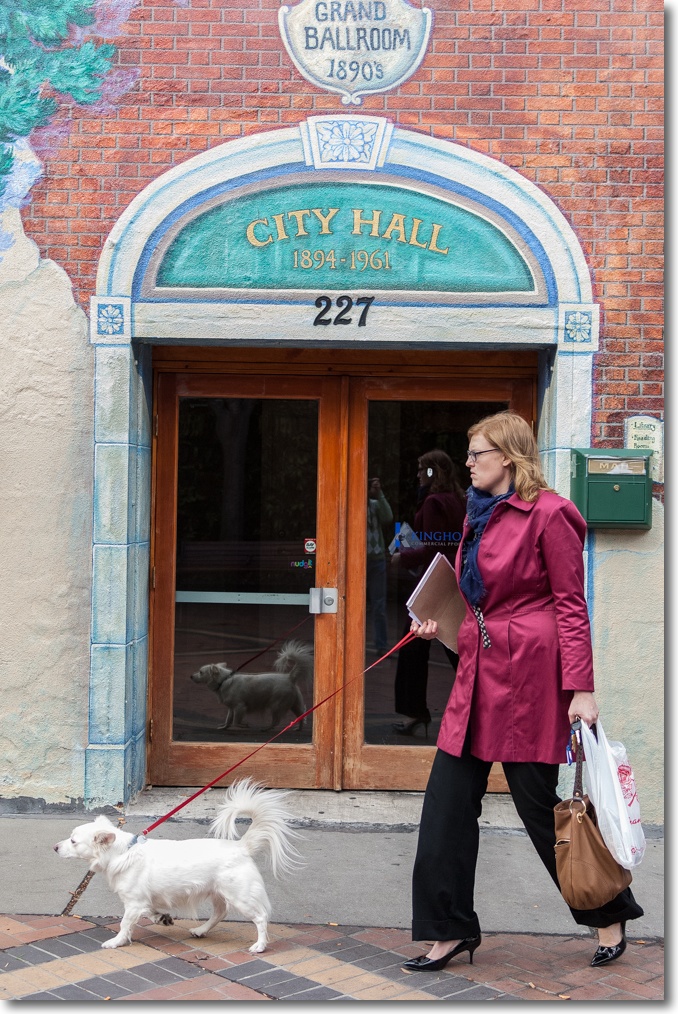
“What are you looking for?” At f/1.4.
Well, things worked out great and the second loaner was perfect in every regard. I ordinarily use point/lock focus/recompose with AF lenses, as it’s fast and consonant with my snapping theme which is mostly street work. Further I do not need focus tracking as my subjects are not moving fast and I certainly do not trust 51-point autofocus to decide where my key area of sharp focus resides. How on earth can it know? At very short subject-to-lens distances I will compose first, then change from the central focus point to one over the subject, thus obviating the change in subject distance occasioned by the ‘recompose’ step. However, I generally dislike using the adjusters on the Nikon’s back as they are slow and clunky. By the time I have dialed in the focus rectangle of choice the subject has moved on, as often as not.
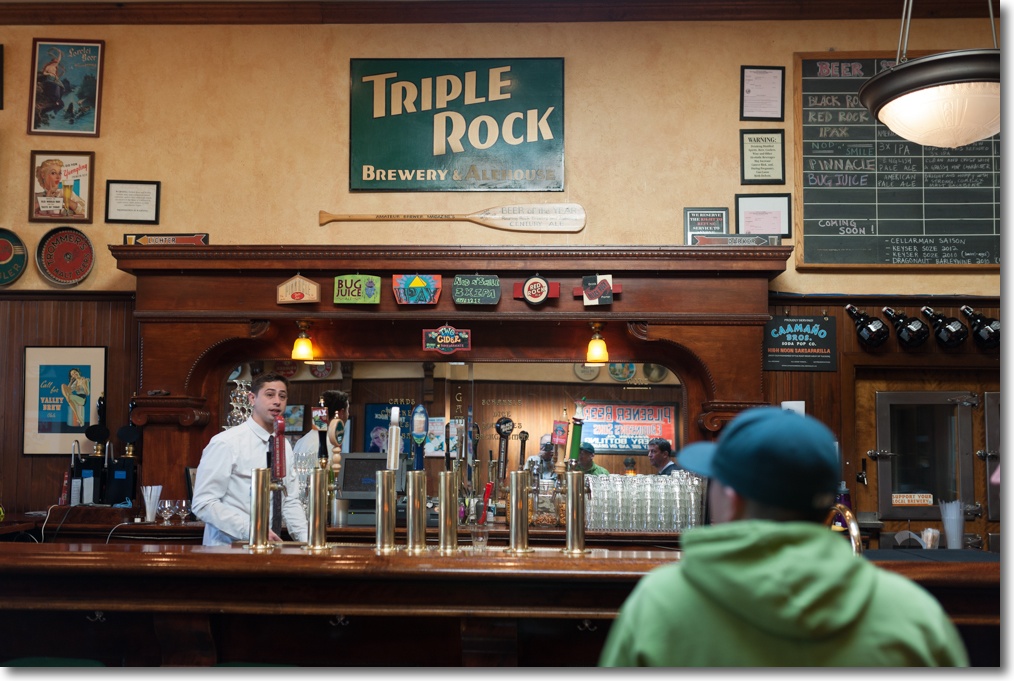
Triple Rock bar, Berkeley. At f/2.
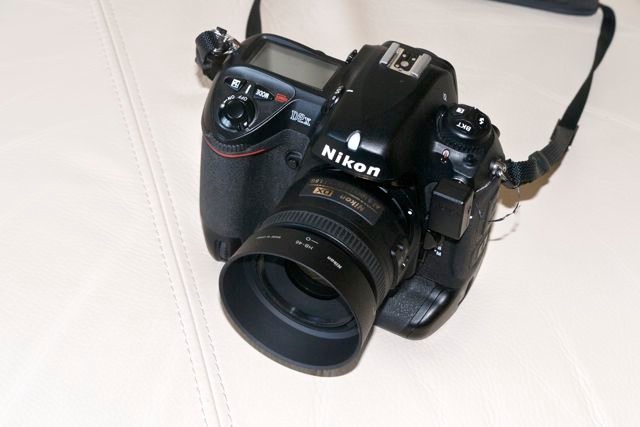
So good is the AF in this sample that my D3x body needed no AF fine tuning and that is just as well, for the APS-C sensor D2x in my other Nikon body provides no such capability and it’s nice to be able to use the Sigma on it with confidence. Sigma’s promised USB attachment which may make AF fine tuning possible in the lens might address issues for bodies without the fine tune capability, but that will have to wait determination until the device becomes available. One thing it will do is make it possible to do firmware upgrades as these come along, as possibly required by new bodies down the road.
Why buy it?
It bears repeating that there is very little point in buying this lens if most of your snaps are not taken at f/1.4, f/2 or f/2.8. There are any number of excellent Nikkors in both MF and AF guises which perform every bit as well from f/4 down and weigh a fraction of the Sigma. They are also far more compact. Indeed, so large is the lens hood Sigma provides with their optic that I do not use it as it simply sticks out too far, and I find I am constantly whacking it against something with the camera over my shoulder. I just opt for a protective (67mm) UV filter and have at it. The lens is very heavy and you are not going to enjoy carrying much more than one big body with this lens and maybe a medium telephoto like the 85/1.8. Much more than that and you will be hurting before long. Pain is not conducive to happy picture taking. Even on the heavy and large Nikon D2x and D3x bodies I use, the lens makes the combination top heavy and the kit will not stand upright on these cameras’ broad bases, preferring to tip forward. However the large size and excellent ergonomics more than counter this front heavy design.
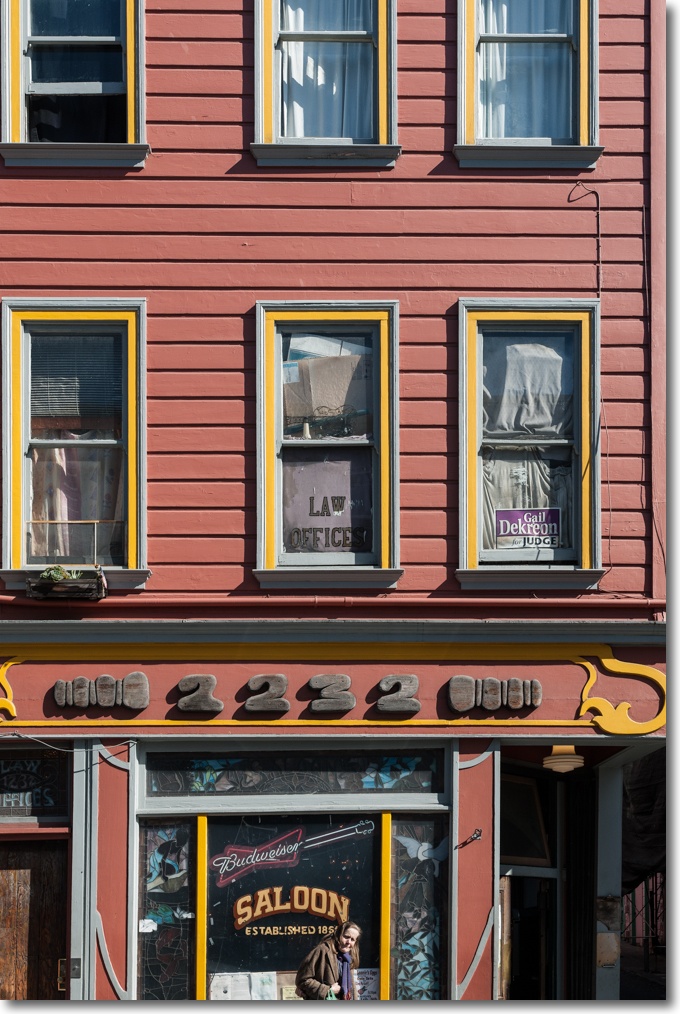
Saloon. At f/8.
AF versus MF. No test charts, honest!
I tested the lens on a tripod at typical snapping distances of 5 and 10 feet at f/1.4, taking sets of three snaps:
- Lens set at infinity, using AF
- Lens set at the closest focus distance, using AF
- Lens set on MF, using the focus confirmation light in the finder of the D3x
I did this both by daylight and by incandescent light at f/1.4.
The first two were always perfectly focused. The third was seldom correct, reflecting the too-broad range of the focus confirmation LED in the Nikon. AF beats MF every time at f/1.4. If your eyesight, like mine, is not the greatest, you propose to use f/1.4 and you find you opt for LED confirmation MF rather than screen MF, then this finding should give you pause in deciding whether an MF f/1.4 lens (Zeiss/Cosina, Nikon MF, Samyang) is for you. The AF choices – Nikon G or Sigma – appear the best option in this case. There are alternative focusing screens for certain Nikon bodies which might help, but I have no data. I got like AF results on both FF (D3x) and APS-C (D2x) sensor bodies.
For a whole bunch of AF examples at f/1.4, look here – I do not photograph test charts. These were taken under incandescent and fluorescent light. More wide aperture snaps accompany the article you are reading.
Buying the lens:
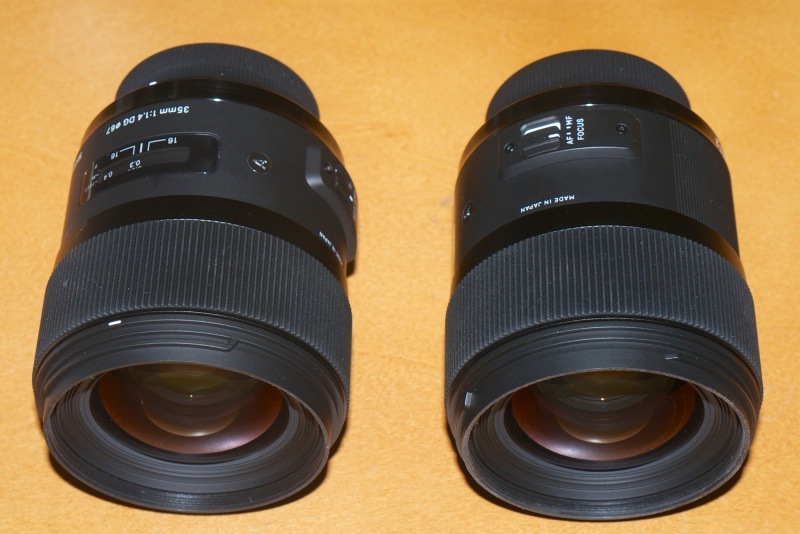
The owner and the loaner. Two 35mm f/1.4 Sigma lenses in Nikon mount.
I had made it clear to Sigma USA that I was a buyer, not a hack reviewer trolling for clicks and freebies, I told them I was pleased with the loaner and asked to buy it. But no. They wanted the loaner back. When I complained that made no sense they offered to sell me a new one from their stock, and I quote from their email:

The writer meant ‘courtesy’ but ‘curiosity’ seems equally appropriate.
Bottom line? The loaner I received was pre-screened. Rational extrapolation? I would guess that all review samples are cherry picked before being sent for review.
Well, this raises some questions as you only screen review samples if you are worried about your QC, but I reckoned I might as well make the process a ‘win-win’, so I replied thus:
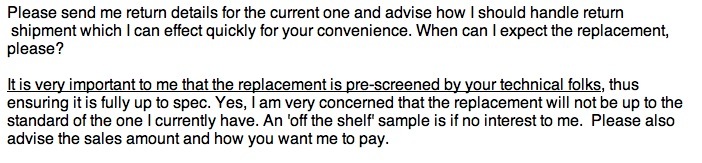
The one I eventually bought was every bit as good as it should be. It, too, was cherry picked, as the above emails disclose. Here is the serial number of the one I bought:

The lens I purchased.
Off-center focusing:
The Nikon D3/D3x/D3s/D700/D800/D800e/D4 all share the same AF module, the Multi-CAM 3500FX. Many users of the D800/800e have reported focus problems when using other than the center focus rectangle for AF. I tested this at 5′ distance and f/1.4 with the Sigma on my D3x focusing by using the extreme left and then right AF sensors at f/1.4. Focus was perfect for each, so it may be a D800/800e build or Nikon QC issue which is involved here. Once again, this is based on a sample of one, so treat this information with a pinch of salt.
What I saw:
Based on the two samples from Sigma and the loaner from Borrowlenses.com, this is the highest resolution 35mm lens, at wide apertures, I have used. It is also the bulkiest and heaviest. The Sigma easily out-resolves the 35/1.4 Nikkor G which BorrowLenses.com loaned me when I returned the first faulty Sigma, and is equal to or better at f/2 than the 35mm f/2 Asph Summicron for the Leica M which I owned for many years before giving up on Leica’s dated bodies. It also renders out of focus areas better at f/2 than the Asph Summicron, which tends to harshness. There’s more to life than raw resolution and the Sigma does not disappoint when it comes to color rendering where it easily matches the best I have owned from Nikon and Leica.
Images downloaded into Lightroom pop on the display. Colors have a natural quality commonly seen when Leica or older MF single-coated Nikkors are used.
And while pixel peeping will show that f/2 is better than f/1.4, f/1.4 is fully usable at all times and I find that I never hesitate to go full bore, gaining shorter shutter speeds in the process. F/1.4 with a fast shutter speed and no blur beats the alternative. As f/1.4 means backgrounds will be blurred, it bears adding that the out-of-focus bits are pleasantly rendered by this optic. You do not need a single test chart to tell you all of this. Just use your eyes.
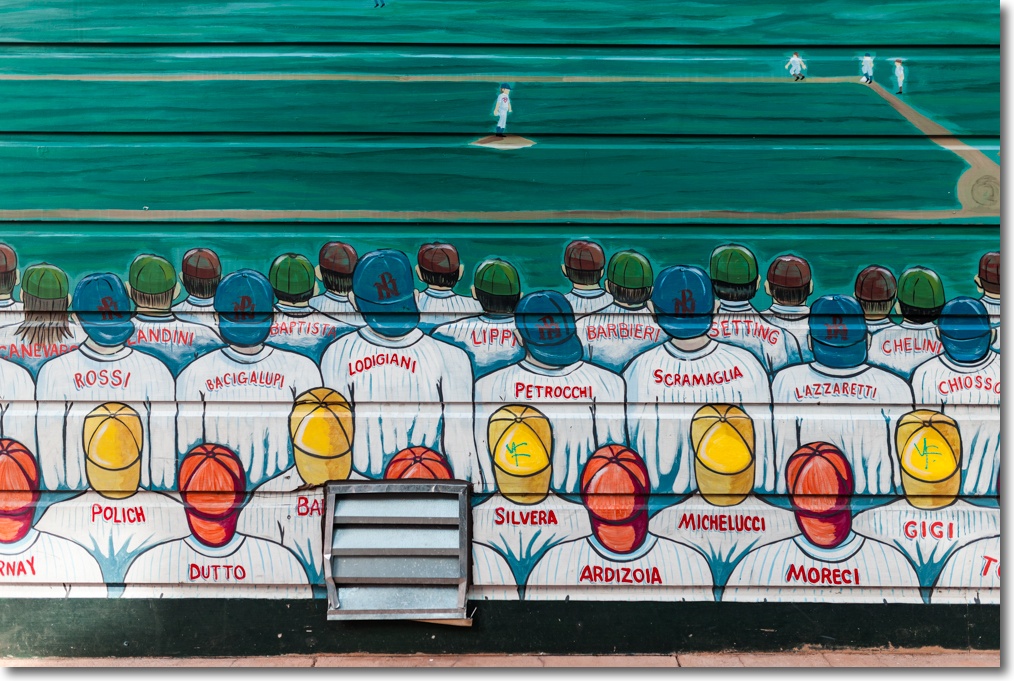
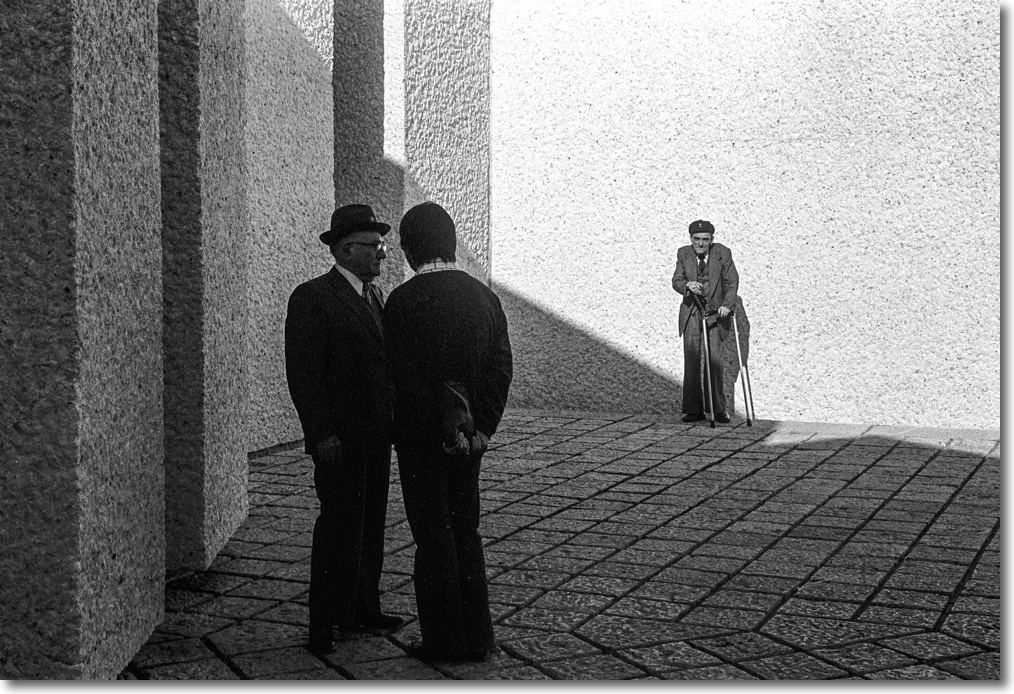
Ethnic pride in North Beach. At f/2.
Sample variations:
- The first loaner from Borrowlenses.com had perfect focus collar resistance but the AF was faulty. When focused correctly resolution was the best I had ever seen at f/1.4 to f/4, equalled by some other makers’ lenses at smaller apertures. Serial number 50004444.
- The second loaner, from Sigma USA, had a slightly too stiff focus collar, perfect AF and resolution to match the first loaner above. AF nailed focus every time. S/N 50004693.
- The one I eventually purchased from Sigma USA had perfect focus collar resistance, perfect AF and resolution to match the above two. An occasional squeak can be heard from the AF mechanism, audible to the operator only. I expect it will go away with use. S/N 50022095.
So there are sample-to-sample variations but the one constant was the high resolution of all three samples. Let’s be fair. Even Leica, Nikon and Canon have sample-to-sample variations in their premium lenses. Just check Roger Cicala’s blog to confirm this.
Other considerations:
What else is there not to like? The lens is a tad sensitive to flare when the light source is really bright and close to the axis. I suppose using the hood might help here but that’s not something I am willing to do. So, maybe not a fair test, but one consonant with my working method.
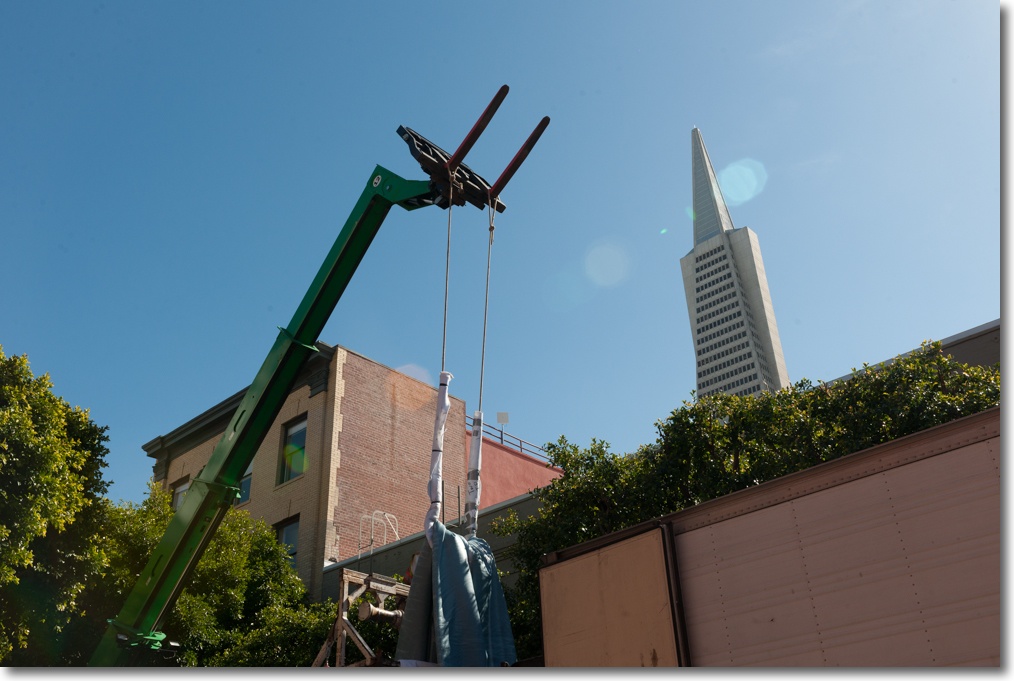
Flare central – what happens with the sun in the frame or just outside it.
The focus collar turns the way most lenses do, other than Nikkors that is. (Only Zeiss seems to go to the trouble of conforming the rotation direction on its Nikon versions). However, as I use AF with the Sigma all the time – and the AF is faster than that in the competing 35/1.4 Nikkor-G – it makes no practical difference. The focus collar on my loaner from Sigma was stiffer than on the first, the one on the purchased copy is just right.
I also dislike not having a physical aperture ring on the lens but that is the way of the world. That’s a Nikon issue, not a Sigma issue. You have to use the control dial(s) on the body to change apertures and may have to touch the shutter release first if the LCD display has gone to sleep to check your setting, otherwise no amount of control dial twiddling will change aperture. But the stellar performance of this optic makes this a light cross to bear.
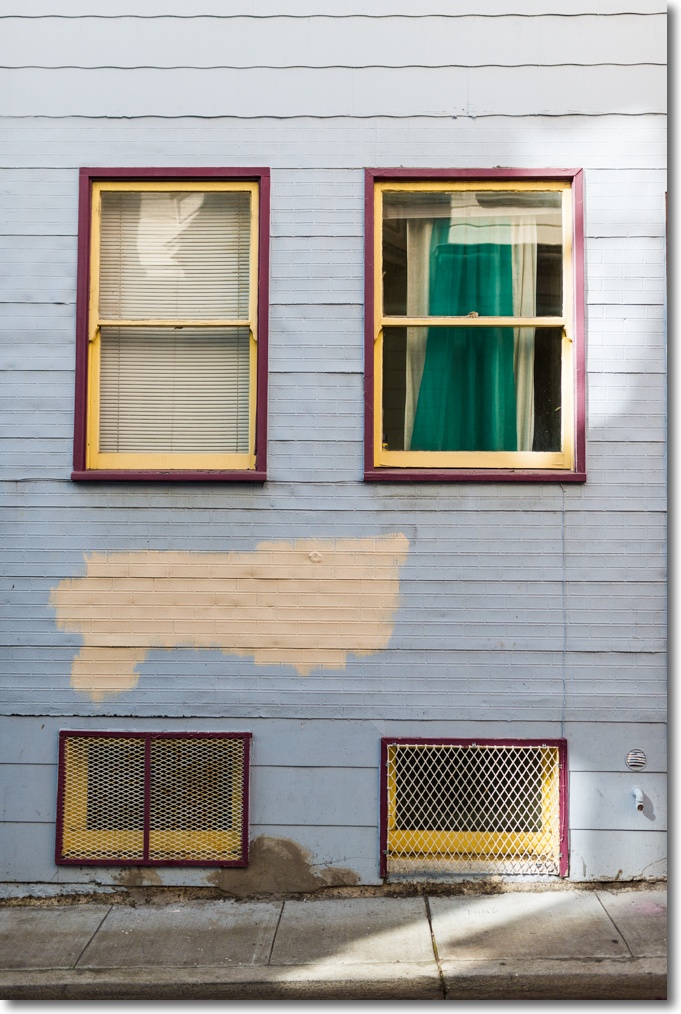
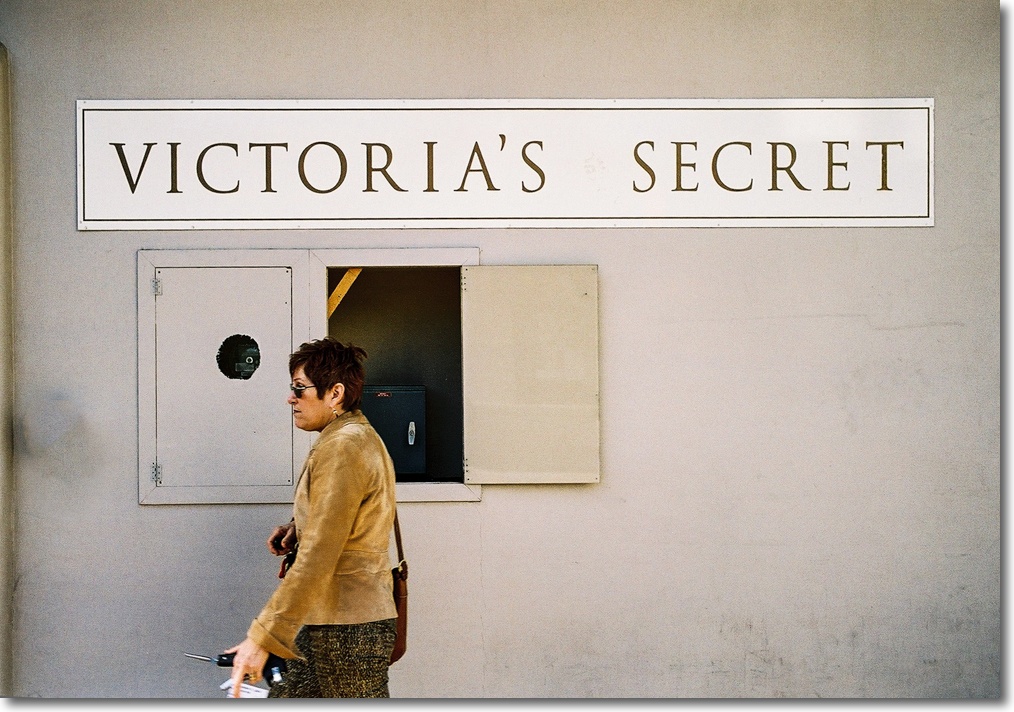
North Beach paint job. At f/2.
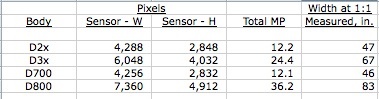
Best of all, paired with a high pixel count full frame sensor like those found in the D3x, D600 and D800 bodies from Nikon and in the Canon D1x, 1Ds/III, 5D/II and 5D/III, there is high excess detail in files which allows for selective cropping when you could not get as close as you would have liked to your subject. I have cropped to one quarter of the frame and made 24″ prints and the results are stunning. No other word for it. That makes for a very capable body-lens combination and increasingly finds me leaving the medium telephoto at home.

Warmth. At f/2.8. Cropped from one quarter of the D3x 24mp frame.
This prints beautifully at 18″ x 24″.
Qualified recommendation:
The circuitous purchase route I took and the fact that my lens was pre-screened by Sigma USA’s tech people makes it impossible to give a blanket recommendation for this lens. Yes, good ones are as good as it gets. Both the loaner, also pre-screened, and the one I finally purchased direct from Sigma are outstanding. But buy ‘off the shelf’ from B&H or Amazon or whoever, and you may still find you are in a lottery. This may mean returning one or two before lucking out, and a growing body of AF issues is now being reported on chat boards. These also seem to be a problem with Sigma’s 50/1.4 and 85/1.4 lenses with samples requiring substantial focus tuning adjustments. In fairness, chat boards tend to be like hospitals. Only the sick have an axe to grind there. Also, bear in mind that the issue with my first loaner was not one of micro-focus adjustment. The AF was faulty. Period.
All manufacturers will make occasional duds. It’s a toss-up whether Sigma’s QC beats that of the opposition. Only industry insiders know. At this time there is no statistical basis for concluding whether Sigma’s quality control is improved from the bad old days or not. Nor do we know how it compares to the QC at Leica/Zeiss/Canon/Nikon et al. What is troubling is that, as both the Sigma and the 80% costlier Nikon 35/1.4 lenses state ‘Made in Japan’, I struggle to understand how Sigma manages to sell its lens for so much less without some cost cutting along the line. The math does not solve. Would I pay $1,100, $1,200 or even more with assurance that my lens has been subject to rigorous QC or pre-screening? Yes. This optic is easily worth that amount, especially when compared to the competition from Nikon and Zeiss, the latter MF only.
One other unknown must be considered. Nikon lenses are famously long lived. Any number of 40+ year old pre-Ai MF Nikkors I own testify to that fact. Will AF lenses last as long, given the complexities of motors and gears and electronics? Has Sigma cut cost saving corners compared with Nikon in making this optic? I do not know. Only time will tell. Still, if one gets three years of hard use from the lens (which is the Sigma USA warranty period to the original purchaser from an authorized US dealer for its DG non-EX lenses, like this one) then it probably does not matter. Sell at the end of the warranty period and replace if it’s a concern.
Conclusion:
I recommend you buy this lens if it meets your low light needs. You may have to try more than one sample if your first is a bad one. While I was unlucky with my first sample, there is no statistical basis for making any conclusive statements about Sigma’s quality control. A sample of three is not meaningful. One day we will probably see statistically meaningful results from the likes of Roger Cicala at LensRentals.com. Roger tests dozens of samples of each lens and can meaningfully address sample variation. But Roger, please make these tests include finder controlled AF, not LiveView. That’s why you use f/1.4 – street snaps in poor light. LiveView is not a concept here nor are tripods involved.
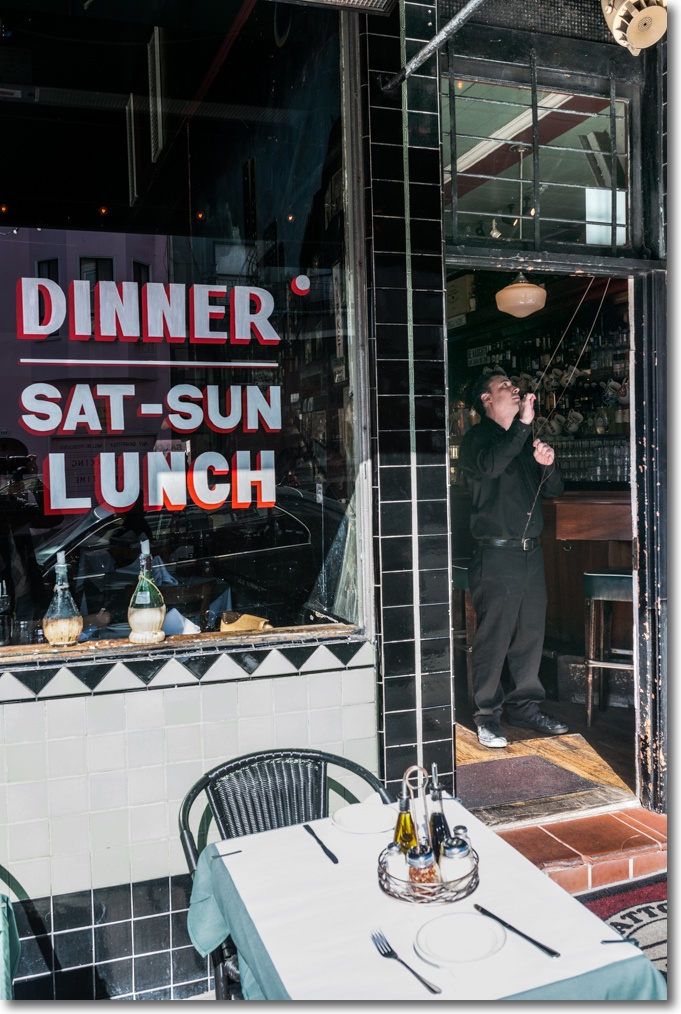
Blinds. In the tradition of Eugène Atget. At f/8.
USB dongle:
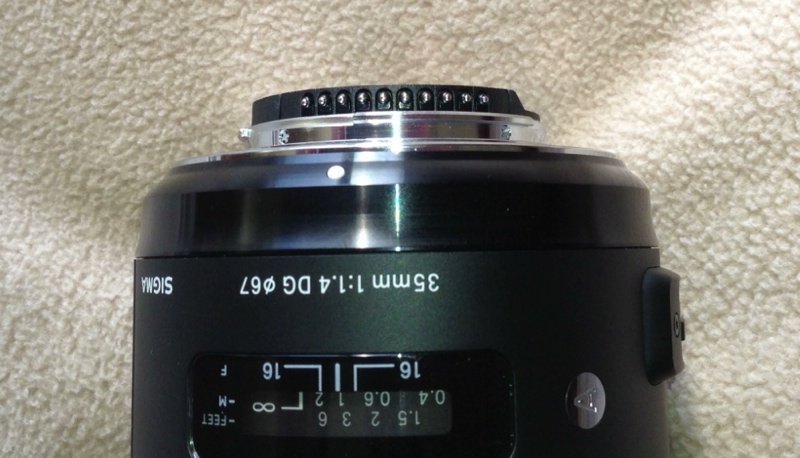
10 pins on the CPU.
Sigma has promised to sell a USB attachment which will allow firmware updates – and maybe other adjustments? – to the lens. As you can see, the lens has 10 contacts on the CPU compared to a maximum of 8 on Nikkors, suggesting the other two are needed for this device.
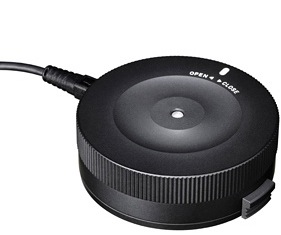
Sigma’s rumored USB dongle.
Serial number:
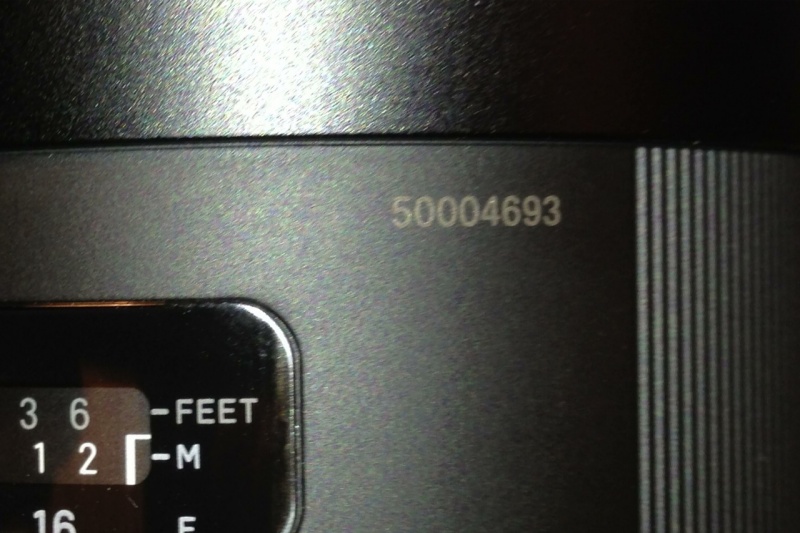
This is the s/n on the Sigma USA loaner I had to return.
The serial number on the Sigma is very hard to make out. It’s screen printed in faint type atop the lens, diagonally up and to the right of the (useless) distance indicator window. My previous loaner was 5000444 – that was the one with the faulty AF.
Both the above lens serial number images were made with the excellent Lumin app on the iPhone 5.
Comparison with the ancient Nikkor MF pre-Ai 35mm f/2 Nikkor-O:
The Nikkor is over 40 years old so this is a brutal comparison.
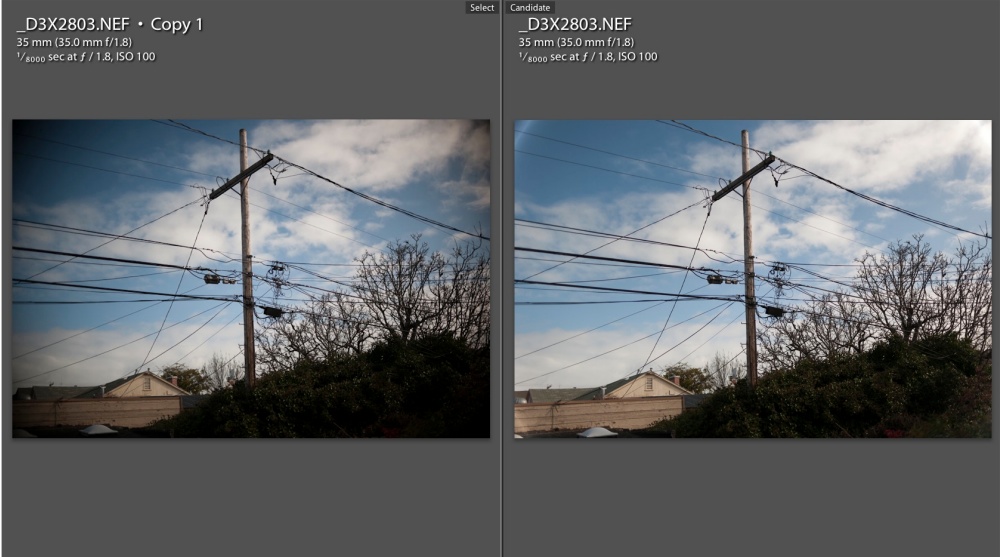
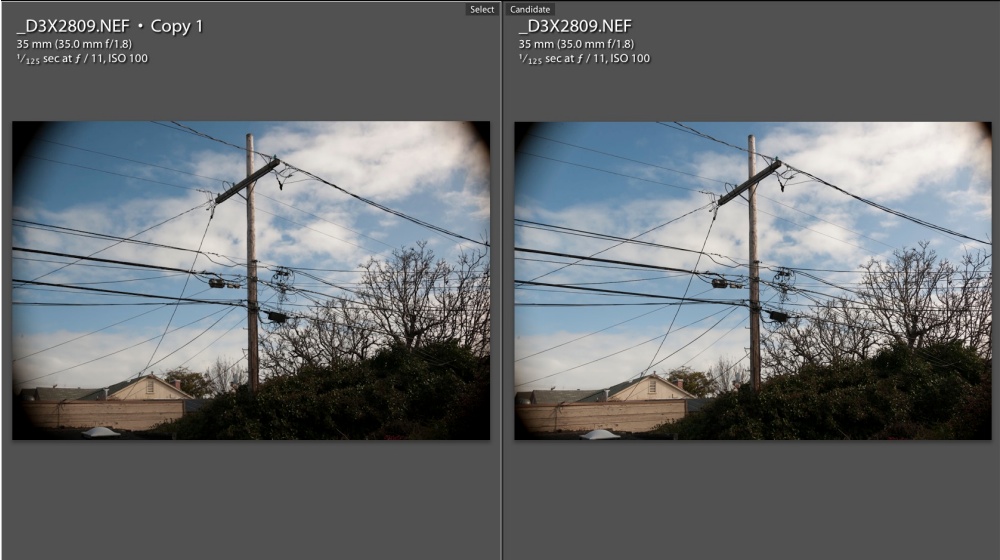
In each case I use the lens correction profile I have made using Adobe’s Lens Profile Creator application. It’s more necessary at large apertures in the case of the Sigma where significant vignetting (corner shading) at f/1.4 and f/2 is removed. You can expect Adobe to come out with their own version of this profile soon. I also apply Sharpening=66 for the Nikon D3x, which is what I find to be optimal to overcome the anti-aliasing filter located in front of the 24MP sensor in the camera.
Center performance of the Sigma is clearly better in 5 foot wide prints at all apertures down to f/4. The resolution of the Sigma is truly outstanding from f/2 down. Will the Nikkor yield good 5′ prints at f/2 in the center? Absolutely. Will the Sigma appear sharper? Yes. Enough that you will notice on critical inspection.
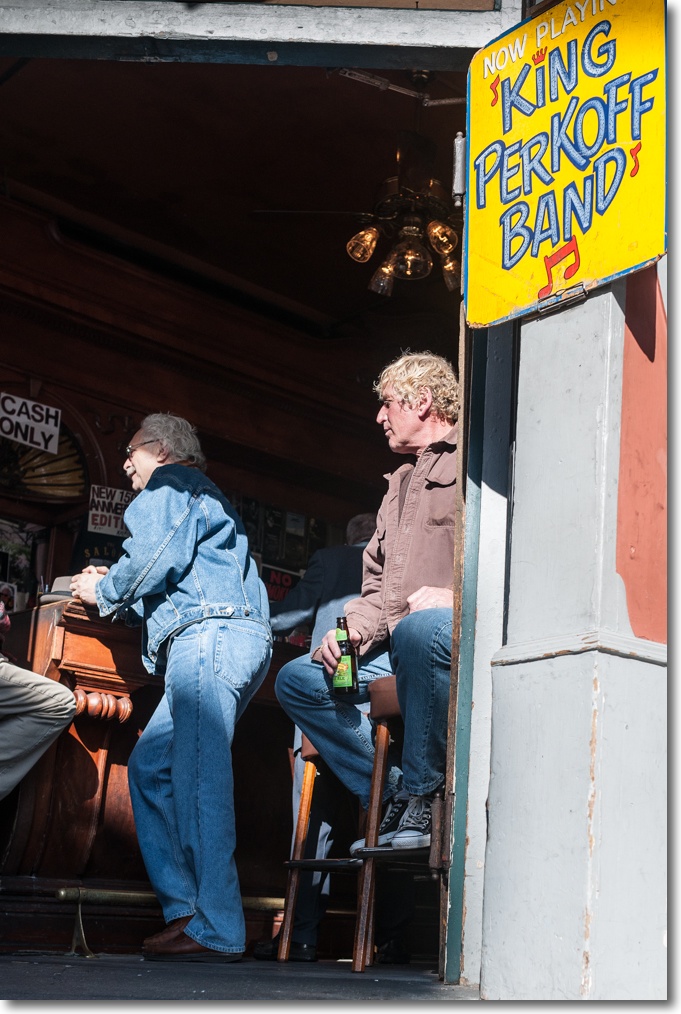
Boozers. At f/4.
Edge performance is a different story. The Sigma is greatly superior at all apertures, but especially in the range f/2 though f/8. There is no comparison. The Nikkor is a fine lens but it shows its age here. For the street snapper edges do not matter much. For the landscape artist there’s a big difference. The Sigma is in a different league.
The old Nikkor is marginally less prone to flare into a light source.
Color rendering for both lenses is outstanding. The Sigma is multi-coated, the Nikkor single-coated. Whatever.
Comparison with the current Nikkor 35mm f/1.4 AF-S G:
The Nikkor AF-S G is outperformed by the Sigma at center and edge through and including f/2.8. After that I cannot tell the difference. The Nikkor’s AF is slower but no big deal. The current Nikkor f/1.4 is equal to the old MF Nikkor f/2 in the center at all apertures but clearly superior at the edges at all apertures.
The current Nikkor is marginally less prone to flare into a light source and vignettes less, before correction, at f/1.4 and f/2.
The Nikkor is lighter – nice. The Nikkor costs 78% more than the Sigma in the US, ex-tax. Not nice. Used Nikkors are coming to market at $1250, probably as word gets out about the Sigma.

Lunch. At f/1.4.
Adobe’s lens correction profile:
The just announced Beta version of Lightroom 4.4 now includes an Adobe profile for the Sigma.
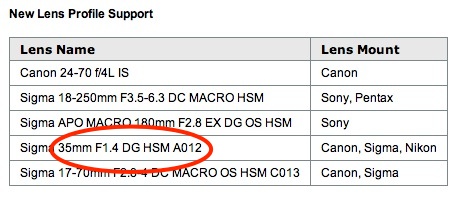
Lens correction profiles added in LR 4.4 Beta.
I have tested the Adobe profile against mine and there is no detectable difference at any aperture between the two. If you are using my profile there is no need to rush into the Beta 4.4 update of Lightroom. Let it mature and migrate when Adobe says it’s final. If you want to be sure Lightroom is using Adobe’s profile, do erase mine if you have it installed, as it otherwise takes precedence over Adobe’s.
Full disclosure: For reasons I do not understand, Sigma sold me the lens at a discounted price. I did not ask. They volunteered the discount out of the blue, even though I told them my income from photography is zero and that I am an amateur. While the discount I received was not monetarily significant to me, I reciprocated by sending them two nice 18″ x 24″ prints taken with the lens.