Category Archives: Photography

Publish or be damned

What do you do with all those old pictures, stuffed in boxes, lost to posterity?

Get off your duff and publish a book!

Too expensive, you say? Not with print-on-demand technology, available from the likes of Lulu. You submit your book in PDF format and what you see is what you get, whether you opt for black and white or the pricier color. A great way to memorialize family albums, your best pictures, the growth of a child. And friends love to get books as presents, especially as nothing could be more personal than your own book of photographs.

Here is the preface to my book Street Smarts, published in April, 2005:

The Swinging Sixties were over.

David Bailey was passé.

A Nikon was the required passport to photographic respectability. The pound in your pocket, the Prime Minister reminded us, had not been devalued. Princess Di and her coterie of press manipulators were nowhere in sight and the Third Estate still preferred discretion to disclosure.

That ne plus ultra of genteel camera stores, Wallace Heaton on New BondStreet, was still very much in business, replete with Royal warrants and walnut paneling. Later it was to suffer the ignominy of acquisition by amass merchandiser only to be bowdlerized into oblivion.

With my earliest visual recollections being of Degas, Sisley and Manet and their photographic successors, Cartier Bresson, Brassai and Kertesz, I wanted nothing so much in the whole world as to take street pictures. In1971 I was at college, aged 19, with my net worth invested in an already dated Leica camera with but one lens. Obsolete or not, it remains the best street photography machine yet devised.

Realizing that fewer variables made for less risk in the photographic process, I settled on Kodak TriX film processed at home in Kodak’s venerable D76 developer. The meat and potatoes of any self-respecting street photographer’s diet. Printing required that a piece of hardboard be attached to my bedroom window with three trays of smelly chemicals and an old Gamer enlarger. Plus a red bulb so as not to trip on our Scottish Terrier.

Why street photographs? It always seemed to me that the genre offered too much that was either humorless or contrived. Posed pictures trying to pass for spontaneity. Worst of all, much of the work out there was positively invasive when it came to respecting other’s privacy. Cameras cruelly stuck in the faces of the poor or destitute. Not for me. But make it spontaneous and interject a touch of humor and now you have a picture worth taking.

Life at University College, London was blissfully easy. Attendance was not monitored and class content was not especially challenging. Most of the professors preferred to work on their richly subsidized governmental contracts, caring little for their teaching. A degree could be earned by having fun for two years and nine months and then working like stink forthe final three. So fun it was.

London’s great spaces beckoned. The Courtauld Institute was across the road. The British Museum around the corner. UC’s magnificent library a few yards away. Then there were the great Victorian parks. Hyde Park, Kensington Gardens, Holland Park, Regents Park, Green Park, St. James’s Park – all a short, free, Tube ride away.

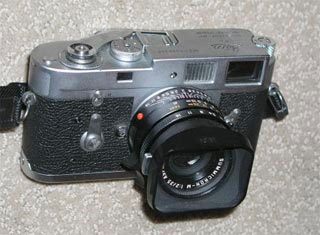
It took but a couple of rolls of film to learn that stealth and speed were the norm for the Leica, a near silent piece of engineering genius. Subjects were everywhere. Lenses were cheap. The small collapsible 50mm Elmar lens, which came with my M3, was soon supplemented with a long focus 90mm Elmar, costing all of $60 and a 35mm Summaron wide angle for $75. Thank God for scholarships….

It was the wide angle Summaron that was most frequently mounted on my Leica. You had to get close to your subject to fill the frame. “If your pictures are not good enough, you are not close enough”, Robert Capa had said. And when the opportunity finally arose to visit Paris, but one camera and lens came along – the Leica M3 with the 35mm Summaron. And six rolls of TriX film. No one had taught me that you had to take thousands of pictures to get a good one and some two rolls remained unused after a week in the world’s most beautiful city.

In the 1970s the British photographic press was mercifully more interested in pictures than in equipment. It was a fine outlet for publishing one’s photographs, and you even got paid, which is a good thing on a student’s income. Further, the occasional prize went a long way to providing film, paper and chemicals to keep the productive process going. Another great resource was the extensive photographic library at the Royal Photographic Society, which made its home in Mayfair at South Audley Street, offering a student membership for a negligible sum. It was a rare afternoon that would not find me in its warm interior, poring over the works of the Old World masters while also learning that there was a whole New World to be found across the Atlantic, in the guise of the works of Edward Weston, Imogen Cunningham and Walker Evans. Pictures and vistas we could simply not imagine in England’s subtler landscape. Then there was the public library on Hornton Street in Kensington with hundreds of books on art and photography. All free.

So there you have it. An easy life, no money, free resources and the beststreet photography opportunities life could offer. By 1977, now trying to earn a living and increasingly coming into contact with the New World, with all its energy and innovation, it was clear that the path to success lay elsewhere. While flying on a one-way ticket to the west coast of the United States in November 1977, it dawned on me that no one could take away all those warm memories which you see illustrated here.

You can buy the book by clicking here.

Where should the money go?

There used to be an old rule of thumb with hi-fi gear back in the days of the long playing record that 50% of your budget for an outfit should be for the loudspeakers, these being the weakest link in the chain. Of course, as with photographers, many disregarded this sound guideline, if you pardon the pun, and spent most of their money on the pick-up arm and turntable.

The assumption underlying what follows is that the goal is for prints which are made at a magnification of 12x or more on a consistent basis.

I think there a version of this “rule” which is equally applicable to expenditure on photographic equipment. If we break the process into two components – the front end (camera, film or digital card, lens) and back end (enlarger or scanner and printer) then I’ll bet dollars to doughnuts that most serious photographers spend 80% of their budget on the front end.

This is completely wrong, especially for film-based photography where processing is much more important than with digital. The best way I can think of solving the equation is to look at the back end first, because there is less to choose from there.

A dedicated film scanner for 35mm or medium format, I mean a good dedicated film scanner, will run some $1,000 (35mm) or $2,000 (medium format). For that you get a top quality lens backed by robust mechanicals and software to remove dust and scratches without significantly affecting image quality. In the wet darkroom, the cost is similar – you need a good lens and enlarger. A good enlarger runs $1,000 to $2,000 with a lens adding $200-300. Sure you can spend less but you get a poor screen, slow speed and modest storage. The digital back-end worker has to add a computer for another $2,000, Photoshop for $800 and a printer for $350 – $600, the latter for a wide-carriage version.

So your back-end for top quality exhibition work with a film front end runs $2,000 to $5,000, with the latter price point easily reached if you work in medium format. The worker using a digital front end saves money on the film scanner, as none is needed.

Yet how often do you read film users saying “My flat bed scanner does just fine on all film sizes”, this invariably written by someone who has never seen a good scan from a dedicated film scanner? Their mega dollar front end is being processed though mush. Quality in, garbage out.

So, with a back-end running $2,000 to $5,000 that leaves the quality oriented photographer a like sum, adopting the 50/50 Rule, for the front end. That sort of sum buys you just about anything you need.

Moral of the story? A cheap back end makes your camera into a Box Brownie, even if it says Hasselblad on the label.

Photography is not a group activity

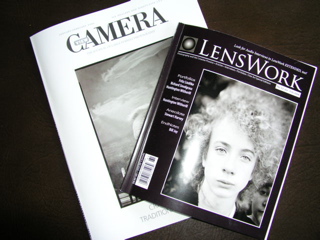
An enterprising Toronto-based photographer whose first name is Matt (he seems too shy to disclose his full name) took on the courageous, maybe quixotic, task of starting a web-based photography magazine named Photoblogs Magazine (May 2010 – now defunct). While I think the web is a great place to display pictures and try out new work on a broad audience, it lacks the permanence and sheer tactile feel of a good book.

You pass your bookshelf and grab that Harry Callahan book, wondering at just how he made that image which came to mind the other day. You switch on your computer and, by contrast, it’s a mixture of work (I stare at one of these things all day trying to make a living) and fear (Will it lock up on me again?) And with the present state of the art, the printed image leaves the electronic one in the dust.

Not least of a web publisher’s problems is how to get his site known in the vast sea of noise that is the world wide web. On the other hand, go to a good newsagent or bookshop and the handful of magazines publishing good photography are there, easily accessed and eagerly thumbed, without any fear of overload.

Still Matt should be respected for his efforts and I wish him well.

A few weeks ago I had the good fortune of being asked to be the first ‘Spotlight’ featured photographer in Matt’s magazine. The approach is that the photographer is asked five questions and his responses are then published with a few of his pictures. Well, strangely, even though my responses to the questions asked were exceptionally terse, sadly only four made the published page (or screen, if you prefer).

The unpublished question and answer were:

Q. With whom do you like to photograph most?
A. When it comes to taking pictures, one person is invisible, two are a crowd.

My response was rooted in the deeply held belief that photography, whether street candids or the great vistas of the American west, is a lonely pastime. You simply cannot go with another photographer, both set up your cameras in similar locations, and not be plagued by the thought that you are standing in the Kodak Picture Spot recording a Kodak Moment. The photographer must be free, whether to mutter aloud to himself and complain about the light, lean this way and that in the search of the perfect perspective, or wait for hours for just the right moment. Another photographer is a powerful distraction in all these activities.

Maybe the worst manifestation of the group approach so beloved amongst those with no individual thoughts or totally lacking in imagination, is the photo workshop. Given that technique can be learned from a book, and the art of seeing is either something you have or do not, what possible purpose can the workshop serve, unless it is to fill the pockets of the sponsors and the film stock of the participant with near identical images? Ok, so it’s fine for learning technical stuff, but it will not teach you to see. You can either see or you need to try another hobby. It’s a binary issue.

On Leica cameras

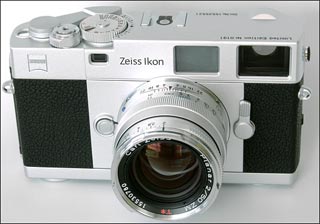
Beware of the Leica camera. It starts as a romance. Soon, it is an affair. Before you know it, flirtation blossoms into passion. Finally, it settles into infatuation. The four stages of a lifetime relationship.

Someone one asked me why I use a Leica when all around use an SLR. Why film when digital is the standard? Fast, instant results, low cost. My glib reaction was not unlike that of the Ferrari driver. “If you have to ask, you do not get it.” But that is no answer.

In truth, it is hard to explain an irrational attraction to this wonderful machine, the Leica camera. After all, it just takes pictures, right? It cannot do close-ups, right? And what is that you say? You have to process then scan the film? Ugh! Worse, like all infatuations, it can get dangerously expensive, no?

Then again, why even bother with this antiquated technology, unless it is some sort of affectation, a preference to live in the past, some perverse desire just to be different?

The SLR is superior in so many ways. A huge range of lenses. You bet. Automatic focus? Naturally. Shake reduction? You got it. Extreme zoom range? But of course. Macro capability? Every one has it. Motor drive? Would that be three or six shots per second, sir? Digital? Hard to get anything else today. Several hundred or thousand pictures a roll? Standard. Instant gratification? Naturally. 5, 10 or 15 megapixels? Take your choice.

However, maybe yours is a quieter world, eschewing the crass vernacular that is modern life. You value performance and results, not promises and looks. You appreciate iPods and cell phones as much as the next person. They are just not you.

Then you have one of those flashbacks. And all is clear as memories created with that ever present, sweet, speedy, silent Leica come flooding back.

Spring in Paris was especially welcoming that year, the air with that indefinable smell. Beauty, culture, women, food. The couture attired lady and her cocker glance up at you for the briefest of moments, unaware that their image has already been recorded. The spectator looks curiously at her friend, the latter surveying the nude on the wall of the Louvre with unusual interest, captured in an instant. The morning promenaders in the Jardin de Tuileries caught just so. A fraction of a second later and the scene is gone, its denizens no longer perfectly arranged like some latter day Seurat canvas.

Summer in San Francisco. The old man makes his way along the narrow sun lit street. Echoes of Edward Hopper’s lonely city abound in the lazy afternoon sun. He does not even know you took his picture, yet you were all of a few feet away. The little boy in the back of the pick-up in Union Square, lost in wonder, is another easy catch, before the swirl of traffic whisks him away. Did you take that? No, it took itself.

Autumn in New York. The sky has the pallor of cold cream. You are on walkabout, just for fun. Maybe something interesting will crop up. Then there it is. The huge Yogi Bear balloon overhead. It’s Macy’s Thanksgiving Day Parade. Click. You are enjoying your warming drink in one of those cozy Madison Avenue coffee shops, when a red flash catches the corner of your eye. No time to think. The soft, instantaneous camera shutter is released even before the viewfinder is at the eye. That blurred umbrella will forever say Autumn in New York. Clouds of steam emanate seemingly from his head, as the rain-coated man makes his way down Park Avenue, shoulders hunched, hands buried deep in his Burberry to stave off the cold. You take the picture without even thinking, focusing a matter of a moment, exposure second nature. You are in direct contact with what you see. No mirror, no motors, no flashing lights. Just a simple viewfinder. I am a camera.

Winter in London. The light is, well, London light. Gloom, rain, depression. Yet click, the girl in the railcar is caught, the iris unthinkingly turned to full aperture, the shutter as slow as you dare, too quiet to arrest her slumber. Hope that one comes out, you think. And of course it does. The little boy marches behind the band down Pall Mall, stretching his legs as far as he can. A young man in the making. Click. He is yours for ever. The dowager outside the Rolls Royce showroom gives you an icy stare. How dare you, she is thinking. Too late. Got her!

That ubiquitous Leica, quiet, unassuming, its amateur looks aiding the whole deception of invisibility, its petite size making sure that it is your constant companion, it is a machine that transcends time and technology. Not very good at lots of things at which its marvelous technological superiors excel. One day it, too, will be digital, with all the advantages that storage medium offers. And it will be fast. But it will never pretend to be a Swiss Army Knife for it knows one thing.

It is there for the moment that it alone can capture. And it is always with you.

Memory, nostalgia and family albums

I have been involved in creating electronic and book format versions of the many pictures in our various family albums for some two years now. This is proving a non-trivial task.

For one, the source content is, at best, poorly organized. Quality of the original pictures, which go back over one hundred years in some cases (one hundred years!) varies from wonderful to execrable, and some of the old albums need to be carefully unbound before scanning.

I’m not exactly sure how this started. I suspect that my mother’s death in early 2003 at the age of 88 was a driving force, confronting me with the reality of the impermanence of memory and the rapid passage of time. Add my son’s birth a year before mother’s death and the whole project assumed a sense of urgency and haste. It is no small hindrance that on my side of the family the prime link to the past, the Rosetta Stone, if you like, which can put life in those old pictures, is my eldest sister who, at 65, is some 12 years my senior. She knows the pictures better than anyone, being especially well versed in the pre-WWII ones. How all of this survived WWII not to mention any number of subsequent relocations as my parents became refugees from their native Poland, is not so much a mystery as a miracle.

For the past couple of years I have been unwrapping, disassembling, scanning, reassembling and returning a host of albums, not to mention many loose pictures.

The final tally is some 300 pictures.

As our audiences for the results vary in technological sophistication, it became clear early on that three variants of the output would be called for:

1 – A traditional web site, available to anyone with an Internet connection

2 – A CD or DVD that can be mailed to anyone willing to use a computer but without an Internet connection (don’t laugh, most of the world still lacks one)

3 – A book, not just for the techno-agnostic, but because it’s still the nicest way of relaxing with printed materials of any sort. Ever try to read your computer in the bath?

Now I’m at the point where everything is scanned, retouched and otherwise mended in Photoshop, and neatly stored in Apple’s wonderful iPhoto awaiting final agreement on order and narrative details.

Of course, it occurs to me that one hundred years hence, the DVD or CD will no longer work in anything on the market, the web ISP will likely have gone bankrupt and the book will have long curled up and yellowed. At least some succeeding generation can then rescan the book and start all over again.