Choices

They will always be limited at the top.

Reading the other day that Konica/Minolta had given up making cameras I started getting worried that we are headed for a world with too few choices when it comes to manufacturers of photo gear. Competition improves the breed, after all. Then a few moments of reflection suggested that maybe there never has been more than a very small handful of choices when it comes to the best of the best. What the pros use.

At the start of the second World War, your choice was 35mm or medium format. Sure, large format has been around for a hundred or more years and soldiers on today, but it’s hardly a product with what you would call critical mass. In 35mm it was the world of the rangefinder – meaning Leica or Contax. The Contax had it all over the Leica, more sophisticated in every way, but damned by a fragile shutter mechanism. Leica countered with a great shutter and maybe the worst viewfinder/rangefinder yet invented. In medium format there was no choice. It was Rolleiflex or nothing. Now little about twin lens reflex design makes sense, but it worked, had great lenses and a negative big enough that even the average duffer could make a decent 8″ x 10″ print.

In film the choice was greater – Kodak, Agfa, Ilford, Perutz, Adox – all made great monochrome emulsions and Kodak, of course, was working on Kodachrome. Two violin players, the Leopolds – Mannes and Godowsky – were locked in a lab by the boys in Rochester and emerged a couple of years later with Kodachrome, rated at all of 12 ASA. Just in time for the film to be used by Nazi photographers to record Hitler as he set about destroying the great race whence these two geniuses of chemistry came. If the Leica was the greatest camera of the century, and it was, then Kodachrome owns a similar place in the world of film. Kodachrome was simply fabulous. Without it 35mm color photography would not have blossomed the way it did.

In the early fifties Leica finally made the single greatest 35mm camera of all time. The M3. Learning from the Zeiss Contax that integration of the viewfinder and rangefinder into one eyepiece might just be a good idea, and that making the thing bigger than a pinhole could be a selling feature, they added a wonderful, sharply delineated rangefinder rectangle and those projected, illuminated, nay, electric, field of view frames that left you in no doubt whatsoever as to what your lens was seeing. And you could use that viewfinder in almost non-existent light, focusing and framing with the utmost confidence, taking your picture with the near silent whisper of the Leica shutter. They didn’t stop there. They crafted what remains the greatest 35mm lens made. The 50mm Summicron which remains, to this day, the standard all Japanese manufacturers aspire to. This pairing was a high point in engineering aesthetics and optical design.

The M3 and its descendants lasted in the pro’s gadget bag through the mid-sixties when machismo dictated long lenses and brutal looks. The former to avoid the bullets, the latter to state unequivocally that your camera could double as a weapon in time of need. The smart people at Pentax may have invented the instant return mirror, but the Nikon F was the camera of the Viet Nam generation. Its brute good looks, augmented by the equally masculine finish of the lenses, said you were the Real Thing. Pentax was not to be outdone, however. They started painting their cameras black and had the smarts to give a few to a London fashion photographer par excellence named David Bailey. In stark contrast to the stodgy, patrician, epicene Beaton, wedded to his Rolleiflexes and his Royal sitters, Bailey rocked. He was a real man. Pentax pushed it. They ran one of the greatest camera ads ever. It showed a beaten up black Spotmatic, brass wear spots everywhere, with just three words. David Bailey’s Pentax. Wow! Here was a guy slogging it out in the studios of London with all those dolly birds and clearly having every bit as tough a time of it as the fellows in Nam with their Nikon Fs. Years later, Bailey admitted he had taken sandpaper to his Spotmatics and rubbed the paint off at strategic locations. It got him a lot of dates. Not bad for a few bob and a couple of minutes of elbow grease, huh? So in the ’60s your choice in 35mm was Nikon or Pentax.

David Hemmings played Bailey in Antonioni’s wonderful movie ˜Blow Up”, though his weapons of choice were a Nikon F and a Hasselblad. Change in the medium format world was slower than in the frenetic corner known as 35mm. At least you finally had a choice. It was no longer just a clunky twin lens reflex Rolleiflex. Why, the Hasselblad, scarcely more competent, said you had arrived. Because you could afford it. OK, so the viewfinder was lousy and the mirror did not return after you pressed the button, but good marketing saw to it that you did not notice.

Enter the seventies and eighties and Canon began to get noticed. They could not compete with Nikon or Pentax for charisma, those marques having earned their stripes in the hellish fields of Viet Nam and Carnaby Street. So they had to sell something else. And that something was technology, backed with abundant capital. Fast, small motors to move the film? Of course. Coreless linear motors to focus the lens? Naturally. Fast sensors to provide autofocus? Absoluement. Eye controlled focus? Well, we did it just to show that we could. Suddenly the competitors were rocked by this Japanese copier-making powerhouse with seemingly infinite resources, and they have been playing catch up ever since. But the old rule prevailed. In 35mm your choices were few at the top. Canon, Nikon, and maybe Pentax.

In medium format, the old guys were still at it. Rollei came out with a camera that four people bought, the SL66. Its huge mass and focal plane shutter which hated working with studio flash made sure that no one bought it. Zenza came out with something even worse, the Bronica, which jammed as soon as you looked at it. They had taken the worst of the Rollei and made it …. worse. Working photographers preferred proper flash synchronization and bought a Hasselblad. Rollei fixed that deficiency with their wonderful 6000 series of medium format SLRs, but it was too late. Traction had been ceded to Hasselblad. The Hasselblad may have been horribly unreliable but it was glamor personified. Plus it shared Rollei’s great German lens providers. An entry ticket to the world of Madison Avenue. So, like a Jaguar owner, you bought two hoping that one would survive while the other was in the shop.

Then in the ’90s, digital arrived. No matter that the first efforts were comical in the extreme. Digital was Now and the old protagonists, Canon and Nikon, were at it again, followed by a somewhat breathless Pentax. The latter had one thing the two others could never understand. The word ˜elegance” is part of Pentax’s genetic make up, a concept that never graced the worlds of Nikon and Canon. Olympus gave Pentax some competition when it came to chic design but let’s face it. What self respecting, red blooded American male was going to be seen with his wife’s camera? David Bailey’s Olympus? I don’t think so.

So, once again, choice was limited. Sure, you could have flirtations with minority brands like Minolta or Konica, but it was always rather comical to see the poor photographers using this gear. Like the people who were buying Saabs, hoping they would be sufficiently different that the downright horribleness of their choice would qualify them as eclectic, independent, thinkers. Wrong. They just didn’t get it.

Meanwhile, digital completely bypassed the medium format boys during this decade, and they will never recover the lead established by the big Japanese houses. When full frame digital beats medium format film, why would you blow $15k on a digital back for your Hassy when you could get a couple of Canon’s best bodies for the same coin and have something reliable to boot?

Leica? While issuing quarterly denials of impending bankruptcy their apparent goal is to sell only to Japanese collectors and tax exiles in Geneva. So you can’t have one. Settle for a Rolls or Bentley instead.

Film, meanwhile, had gone the way of Contax and Yashica and Konica and Minolta. The choices in color were now down to just two – Kodak and Fuji. The latter may have done a number on the former, taking away market share daily, but it’s all history now. Neither will be making color film by the end of the decade.

So there never have been that many choices at the top. Today it’s Canon or Nikon. Pentax for those willing to be different. And for medium format it’s Hasselblad digital, but who knows how long that will survive. And no one needs film.
A ten year digital device

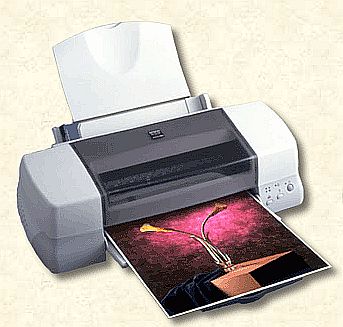
The Epson 1270 printer

When it first appeared on the market six years ago, the Epson 1270 color dye ink jet printer was the first consumer priced printer which could make large – meaning 13” wide and up to 44” long – prints with high quality and repeatability. I bought mine new in March, 2000 for $539.05 and proceeded to produce hundreds of color and monochrome prints with it. First in 8” x 10”, later in 13” x 19” sizes, which makes for a nice 22” x 28” wall sized matted, framed result.

I’m not writing this because the Epson has given up the ghost. Far from it. The only reason that I know exactly when I bought it and how much I paid is that I just resurrected the original shipping box from the attic and found the sales invoice in there. You see, the Epson will soon be making its way east to my nerdy friend whose current printer is limited to 8” x 10”, and he know and loves the quality this machine is capable of, reliably producing at 13” x 19” prints.

Ink remains easily available, even if all the colors are in one cartridge and the Epson’s software is about as good at predicting the ink levels as the Federal Reserve is at predicting inflation. Which is to say it gets it in the ball park but don’t stake your life (or next print) on it. Epson sold a lot of these wonderful printers and given the profit margins on ink sales you can bet fresh ink cartridges will be available for a long time.

Conservatively, I’m guessing that the 1270 has at least another four good years left in it, which makes for a ten year life in a digital age where products are seemingly obsolete days after hitting the market. Epson made the 1270 obsolete soon after I bought mine and eventually switched to pigment based inks with claims of great longevity. Didn’t worry me one bit. I have framed originals which are six years old and they look as fresh as the day they were made. I simply do not display them in full daylight eight hours a day.

One of the great appeals of the Epson 1270 was that its use of dye based inks, despite their reputation for fading, resulted in a color print quality very similar to that obtained with the old Cibachrome process. This was, for most, not something to be undertaken at home, as the temperature margins of the chemicals were narrow to put it mildly and their toxicity comparable to the effluent from Chernobyl. What Cibachrome gave you was a wonderful depth of color albeit at the expense of high contrast, so it matched up nicely with milder emulsions like Kodachrome II and, later, Kodachrome 25 and 64, provided your exposure was spot on. Paired with that old grain hound GAF/Ansco 500, Cibachrome was a dream. It was a strict teacher, but get the exposure right and the dynamic range was there for all to see.

The only reason the 1270 is moving on is that I find I want to make 16” x 20” and 18” x 24” prints more often, and if that does not sound like much of a change the latter size is almost twice the area of 13” x 19”. That’s a lot bigger when it comes to visual impact.

So B&H Photo has an order from me for a Hewlett Packard DesignJet 90 (they are backlogged, suggesting the secret is out) offering dye based inks which, miracle of miracles, are allegedly fade resistant. I toyed with the idea of the Design Jet 130 model which goes up to 24” wide, but concluded that prints that large were pretty much the exception rather than the rule for me, so common sense prevailed over machismo.

Truth be told, I am a tad apprehensive about the new printer. Not that installing the thing worries me – heck, with an Apple iMac it’s just one more ‘Plug and Play’ exercise. No, as a long time user of HP’s 12C calculator (a device now some 25 years old!) my wariness results from my all too great familiarity with HP’s instruction manuals. Hewlett Packard was always an engineer’s company, run by and for engineers, with the brief exception of a disastrous, mercifully brief, time under a chief executive who confused her posterior with her elbow daily, while spending far too much time on the former in the corporate jet. Now that the company has returned as an engineering powerhouse, I’m afraid that the same people who wrote the manual for my 12C calculator will have been involved in the book for the DesignJet. They or their kids.

On the other hand, like all good engineers, they probably believe that instructions are for losers, so the first thing I propose to do when the machine finally arrives is to pitch the instruction book. Worked with the HP 12C and Reverse Polish Notation was never an issue for this Pole. Any descendant of a proud nation that can charge Panzers on horseback needs no instruction book. And it doesn’t hurt that I have an honors degree in Engineering earned before the days of ‘open book’ exams.

Goodbye Epson. You delivered beyond any rational expectations.

Tony Snowdon

A great photographer

If nothing else, the British Royal Family has been adept at two things – choosing its parents well and being fortunate in having a select group of society photographers over the years preserve their likenesses.

They include Cecil Beaton, Norman Parkinson, Patrick Lichfield and Tony Snowdon.

Whatever one might think of his choice in mates, Anthony Armstrong-Jones, who became Lord Snowdon upon his marriage to Princess Margaret, rates not just as a fine Royal Photographer but also as one of the great photographers of our time. This vastly talented individual skipped easily between the worlds of industrial design (his work changed the making of wheelchairs for the disabled), architecture (the aviary at London Zoo is his) and photography. While many credit him with the first use of coarse grain in fashion pictures, his real forte lies in gritty social documentary, such as the series on mental institutions, and in portraiture.

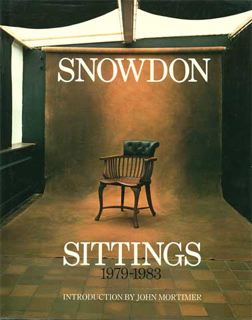
‘Sittings’ is a fine book, though long out of print. It is rare that the warmth and gentility of a photographer is so clearly reflected in his subjects’ faces, yet those attributes shine clearly here time and again. The portrait of Meryl Streep in the gnarled tree is a masterpiece, plain and simple. The darkness of Brideshead Revisited perfectly reflected in Jeremy Irons’s melancholic stare. And where many would have made cruel fun of him, Snowdon’s portrait of Prince Charles in his racing colors is a simple and subtle image of rank and privilege. Indeed, were it not for the trust that Snowdon clearly engenders in his subjects, pictures such as this would never have been taken. Just ask yourself if you were a member of that much maligned family, would you trust anyone to take your picture?

If there is one picture above all others that deserves singling out here it is the portrait of Lady Thatcher. As is common with most of the photographs in this slim book, the set is simple to the point of being barren, the better to emphasize that great leader’s resolve and determination. You don’t have to agree with her politics to admire Snowdon’s portrait which is apolitical in the best sense of the word.

Most of these images are to be found in a current book of Tony Snowdon’s work entitled ˜Photographs by Snowdon ‘A Retrospective’ “. Any photo portraitist seeking to learn from the very best should search out that volume.

A break in the storm

More than just a rainbow

Name any of the world’s great democracies and the chances are that you will find its happy residents indulging in the cocktail hour before dinner. America, Britain, France, German, Australia, Brazil – all favor this pastime which many regard, myself included, as the very touchstone of civilization.

Then look at those dour nations who struggle with the very idea of ‘one man, one vote’; God forbid ‘one woman, one vote’ for many do not even allow women the freedom of the ballot box. The Saudis? They don’t drink. The Russians? They do nothing but drink. The North Koreans? Please….

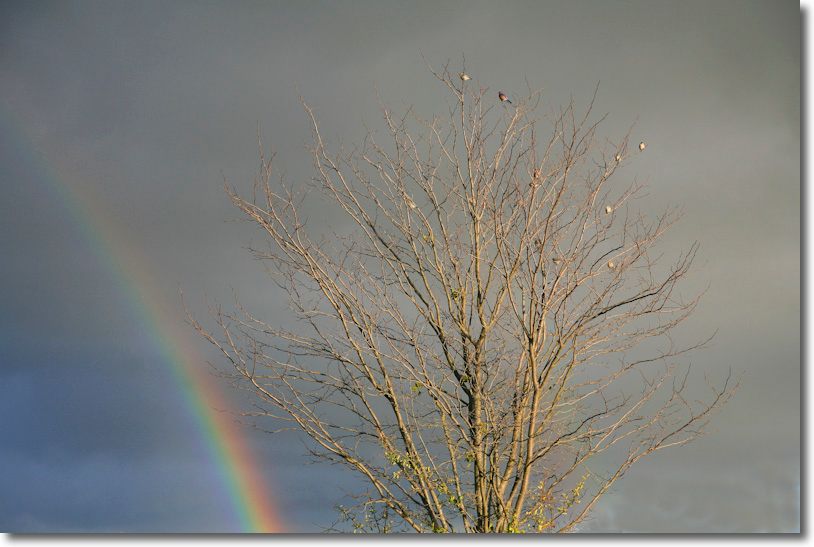
So after a day of truly wretched weather which saw thunder showers every few minutes interspersed with brief rays of sunshine, the thought of the daily libation was very much on my mind as I made my way to the freezer with its gin every bit as cold as the glass next to the bottle. Just before opening the refrigerator I glanced to my left and there it was. A superb rainbow gracing the old estate – clear sky to its left and threatening clouds on the right. Now you should know I’m pretty much blind without my glasses but that didn’t stop me from rushing to the office to grab the 5D, nearly damaging myself on that insouciant boulevardier Bertie the Border Terrier en route, and exiting stage left at a rate of knots that would have given pause to the staunchest of Olympic competitors.

Forget the old wives’ tale that landscapes are a stationary subject. Not a bit of it. Give the elements five seconds and, likely as not, the effect is gone. So throwing caution to the winds I banged off a couple of snaps even though what I saw through the viewfinder was mostly a ghastly blur, trusting to the gods and the Canon’s automation to get things more or less right.

I rushed back in at scarcely lower a pace and placed the card in the reader. Locating my glasses gave confirmation that all was right with the technology from Canon HQ, but when I loaded the picture into Photoshop and snapped it up to 100% original size (that’s some 30″ x 45″ on a print with the 5D’s full frame sensor) it became clear that the otherwise denuded tree on the right was replete with more birds than you could shake a stick at. The small picture here scarcely does it justice but a few moments later as I sipped the soothing elixir, the magic lighting long gone, I could not but help reflect on this wonderful bit of serendipity.

Paul Strand

Book review

Sorry, I just don’t get it.

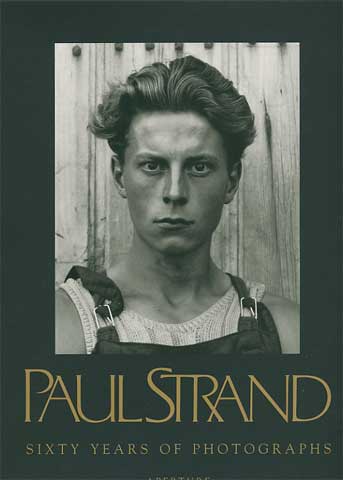
For some forty years I have been trying to like Strand’s work without success. Frankly, based on the evidence of this Aperture book, his output reeks of stunning mediocrity and, if the prints in this volume are a guide, he was a wretched printer to boot. Ansel Adams, at least, knew how to print.

The sheer pretentiousness of the narrative here, where it is expected that the reader will nod in breathless agreement at the genius of the photographs, is best typified by the way Strand’s street portraits are extolled for his use of a right angle lens to avoid detection. His well known ‘Blind Woman’ is singled out as a prime example of this approach. For heaven’s sake, the woman is BLIND. Why the subterfuge? He could have stuck his plate camera in her face and the result would have been no better, nor the photographer any more detected by the subject.

As for the argument that has it that technical limitations of the time explain the poor quality of the prints (or is it because of one of those hallowed rare metal printing processes where the resulting grime is meant to be admired?) that also fails to pass muster. Julia Margaret Cameron, a technically challenged photographer if ever there was one, was turning out superior work some 50 years earlier.

Pseudo intellectualism at its worst. If you an uncritical admirer of the New York Times, buy this book. Otherwise save your $50.