Category Archives: Hardware

Stuff

A tale of two lenses

Some empirical tests deliver surprising results.

Being the ‘serious’ photographer in the family, the sad responsibility of selling off everyone’s film cameras naturally falls on my shoulders as we all move on to the world of digital picture taking.

I made mention of my mother-in-law’s magnificent Kodak Medalist II earlier, at which time I also sold her film Canon Rebel, together with its cheesy 28-80mm ‘kit’ lens.

Years earlier I had bought the same Rebel but got so tired of the execrable quality of the kit lens that we sold it and replaced it with a better 28-105mm f/3.5-4.5 Canon with improved optical and mechanical quality. When she decided to upgrade to the digital Rebel, we did the same, buying the pricey EF-S 17-85mm f/4-5.6 IS in lieu of the 18-55mm f/3.5-5.6 non-IS kit lens. A wise decision once you have handled the latter.

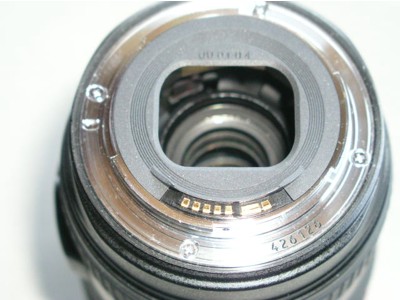
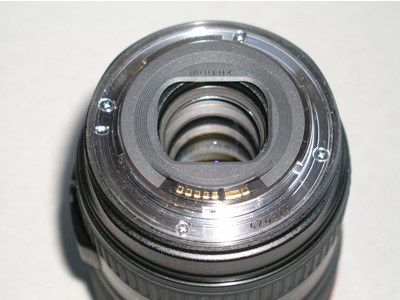
Anyway, I finally decided to sell the film Rebel and I dutifully listed it for sale. However, as the lens will cover a full 35mm frame I spent a few moments taking some pictures with it side by side with the costly 24-105mm f/4 L lens, both on my Canon 5D. You can get some sense of the relative sizes of the lenses here:


Both lenses at their shortest focal lengths


Both lenses fully extended

I took pictures at full aperture and f/8 with both, at 28mm, 50mm and the 105mm maximum.

Looking at the results, I must confess any differences are more imagined than real, and I know my 24-105mm L is good for enlargements to any size any rational user would want.

The L lens adds an Image Stabilizer, goes wider at a very handy 24mm, has lots of metal, very smooth controls no wobble anywhere plus …. lots of weight and bulk. By contrast, the 28-105mm lens is very light, although the mount is metal, has a horribly raspy, grabby zoom ring and the lens barrel wobbles about merrily when fully extended. Both have autofocus with the L marginally faster, but not enough to make any practical difference. Oh! and yes, before I forget, the L is $1,300 and the other is $230.

Now we may have been lucky and got a really good example of the cheaper lens, but based on this little exercise, I would recommend it without hesitation for anyone looking for light weight, fine resolution and a nice broad zoom range good for 95% of anything a regular photographer might need. You might not want to bash it about too much or expect it to last to the next millenium but, then again, you would also save a lot on chiropractor bills, not to mention over $1,000 on the lens.

Kitsch

Runaway winner of the 2006 Bad Taste award.

Kitsch is a German word used to describe taste so bad that you have to laugh that someone actually paid money for the item involved.

A friend (?) sent me a picture of this execrable excrescence, knowing full well it would incur my wrath. It looks too real to be a piece of Photoshop work. I was in two minds whether to share it in this journal but felt I had a duty to disclose. If you are thinking of doing this to your Leica, or maybe have already done so, please cease reading this journal. You are emphatically not a welcome reader of a journal noted for its good taste.

Before scrolling down to see the picture, please make sure you do so on an empty stomach.

The nominee shown here has to be the runaway winner of the 2006 Kitsch Award. And the year isn’t even over yet. There is no accounting what more money than taste will do.

Now you will have to scroll down – if you have the courage.

.
.
.
.
.
.
.
.
.
.
.
.
.
.
.
.
.
.
.
.
.
.
.
.
.
.
.
.
.
.
.
.
.
.
.
.
.
.
.
.
.
.
.
.
.
.
.
.
.


No, that’s not your imagination. That really is a yellow Leica

Vibration Reduction

The greatest photographic invention since digital imaging.

The current B&H paper catalog contains no fewer than ten pages listing some 132 digital cameras, from inexpensive point-and-shoots to full frame Canon DSLRs. So there’s no shortage of choice at any price point. What is intriguing is that some 25% of these now include words like “Image Stabilizer” or “Vibration Reduction” in their specification. Go back a couple of years and the only place you could find these technologies was in a select few exotic lenses for their DSLRs from Canon and Nikon. True, some makers cheat by simply upping the ISO where slow shutter speeds would otherwise be required, but you can see the general technological direction nonetheless.

My guess is that, a couple of years hence, every digital camera save the very cheapest will have this technology built-in. Makers have come to realize that it offers a competitive advantage and, until proper optical viewfinders make a comeback, holding a camera at arm’s length to squint at the little LCD screen on the back while composing the picture denies everything we were taught as children about holding a camera steady.

And steady means sharp.


The stabilizer switch on the superb Canon 24-105mm L lens

I have become so attuned to the grain-free sensor in the Canon 5D that an 18″ x 24″ print is, if not something that is made with impunity, at least pretty commonplace, and the definition in the details is nothing short of startling. There is simply no way that I would be turning out so many large, sharp prints, with 35mm film technology. The enlargement ratio would be the same, true, but the vibration reduction in that splendid 24-105mm Canon lens would be noticeable by its absence. So while Leica can justifiably lay claim to making the best 35mm interchangeable lenses on the planet, not a one of them boasts vibration reduction. Bottom line? The less refined Canon optic with VR beats the superb Leica one unless a very sturdy tripod is used.

And it’s not just at the slower speeds that this is noticeable. Like most photographers, the majority of my pictures is taken using shutter speeds in the 1/60th – 1/500th range. Now the old rule used to be that you had to use a shutter speed no longer than the reciprocal of the focal length for a sharp picture. So, 1/50th for a 50mm, 1/100th for a 100mm and so on. This rule, of course, is so much rot. Go to any photo show and viewers will not step back twice as far to view an 18″ x 24″ print as they would for an 8″ x 10″ one. So the effects of camera shake in big prints are effectively magnified from the viewer’s perspective. So that 1/50th at 8″ x 10″ suddenly becomes 1/100th at 18″ x 24″ for the same perceived absence of camera shake. Offset this with the three shutter speeds of added sharpness gained from VR and you can see why most of my 5D originals easily scale to 18″ x 24″ prints. I am, in effect, using far faster shutter speeds than ever before, thanks to VR. Take away the detail-robbing effects of film grain, courtesy of the 5D’s noiseless sensor, and you have another quantum leap in definition.

So VR will become as commonplace in digital cameras as anti-lock brakes have in cars.

No way I need VR in my Canon fisheye, which has an effective focal length of 12mm after applying ‘defishing’ software, but I would kill for it in the 200mm f/2.8 where it is sorely missed. So until Canon does that, I continue to drag my monopod around with me when using this otherwise excellent optic.

More censorship from Leica

Censorhip is simply much tougher than in day’s past.

I wrote of Michael Reichmann’s appalling behavior regarding his review of a faulty camera from Leica (the M8) here.

Now an erudite posting, addressing the M8’s problems that Reichmann struck from his ‘review’, was censored by one of the moderators on the Leica User Forum. Not so fast, Mr. Censor – you can erase the message on the forum, but you cannot remove it from my news reader:

Now I do not know the poster, but the message seems rational and well argued. Why then was it struck soon after posting?

Leica’s Watergate

Just another case of a lack of journalistic integrity?.

When I trashed the Panasonic L1 I wrote positively about Michael Reichmann’s objectivity when he wrote about this camera on his web site.

I now have no reason to any longer think that Reichmann is an objective writer.

He has admitted (after clicking the link go to the bottom) that, in ‘reviewing’ the Leica M8 he pulled critical comments from his piece as requested by the Leica Company who had loaned him the camera. It is possible that many who based their purchase decision on his purportedly objective review would have refrained from buying the camera had these comments not been censored.

While he has since bought an M8, I assume using his own money, the reality is he allowed his objectivity to be irrevocably compromised, in this writer’s eyes, by the provision of a free loaner, trading it for self aggrandisement that comes from being one of the favored few to be graced with a pre-production M8. “Look how important I am. Leica gave me a free loaner.” Psychic payola, and good value, had it worked for Leica. They didn’t even have to write a check. In the event, collusion between manufacturer and ‘reviewer’ has, in this case, hurt both.

Had Mr. Recihmann published his adverse findings, explaining that Leica told him they had fixed the problem (they have not) that would have been quite different. In that case he could have stated that he would verify such claims in a follow-up to his review.

As long time readers of this journal know, there is no earthly chance that Yours Truly would ever be given anything free by any manufacturer to ‘review’, as a manufacturer’s publicity machine is not intended to spread truth, justice and the American Way. Rather, its sole intent, which is fine with me, is to sell products. Just don’t expect me to write manufacturer-censored reviews under the guise of objectivity.

You may check my ethics policy by clicking ‘Author and ethics’, below.

The closing three sentences of Reichmann’s apologia are breathtaking and I quote – my underscore. I quote, in case they should one day disappear from his site – please read his whole piece to put these in perspective by clicking on the link in the third paragraph above:

“But, in the end I would do what I did again, simply because I felt that potential owners needed to know what I had learned in my testing, without delay. And, I would have held back again on the issues that I was requested to because that’s the proper way to deal with manufacturers, who one assumes will take their responsibilities to journalists seriously. Enough said.”

If you can reconcile the first and second sentences, please educate me by leaving a comment, below.

So now that you understand Mr. Reichmann’s “….proper way of dealing with manufacturers….” you will know better than to believe anything he ever writes again on his Luminous Landscape web site.

Mr. Reichmann, let me put you out of your naïveté. A manufacturer’s goal in a capitalist system is to get journalists to write what is best for the profitability of the manufacturer. A journalist’s goal is to write unconflicted truth as he sees it, pulling no punches with regard to material facts.

And here is what you really meant to write, and do feel free to copy and paste it into your column – no attribution needed:

“Dear Luminous Landscape readers – I made a serious ethical and journalistic error in withholding information regarding product defects in the new Leica M8. I did this at the request of the Leica Company who had given me a free loan of the camera. In doing so, I made a material misrepresentation to you, my readers. I have seriously compromised my journalistic integrity and accept full responsibility to all of you who bought the camera on my recommendation and now find that, had my findings been uncensored, they would have changed your purchase decision.”

Trust, once lost, Mr. Reichmann, is seldom regained. Print a proper retraction on the lines of the above and I will be happy to publish it here.

As for Leica, the company may have knowingly released a faulty product. If that is the case, the class action lawyers will take care of them, assuming there’s enough money left there to make the suit worthwhile. Why, even Mr. Reichmann would collect something in the settlement.