Well, just one Leica left.
For an index of all Leica-related articles click here.
Be under no illusion. Selling off the last of my Leica equipment was emotionally wrenching. These may be mass produced machines, true, but when something has been a part of you for more than a third of a century, well, parting is not easy.
I cannot but reminisce about some of the wonderful optics that made their home on my Leica and Leicaflex bodies. And, in truth, there were more optics than one could recall without saying, in the same breath, that he was privileged indeed to have enjoyed so much that was wondrous. For whatever their future, Leica can claim, without any fear of exaggeration, to have made most of the best lenses that have graced any camera. Ever.
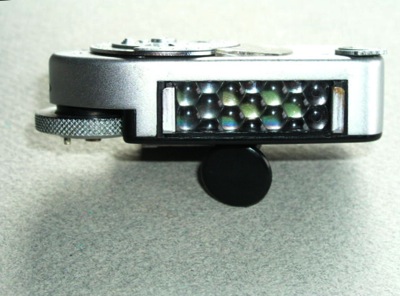
Some stand out not so much for their optical prowess as for the results they delivered. And if I sound a bit like Woody Allen reciting his favorite things on this earth, towards the end of the beautiful film that is Manhattan, well, so be it. Favorites in the early years were the 90mm Elmar – small, modest, unpretentious, yet always willing. The perfect match for that stroke of genius we know as the M3 viewfinder. On those trips to Paris it ceded primacy to the 35mm f/2.8 Summaron. The “eyeglasses” this needed to frame properly with the M3 were not the most chic of Leitz’s designs, but the lens was superb in every way, certainly more affordable to this impecunious student than its f/2 Summicron stablemate. Suffice it to say this optic saw more use on the M3 than anything else during my monochrome London years.
As affluence raised its head after a year or two in the world’s greatest democracy, the M3 was joined by a Leicaflex SL with the ne plus ultra 50mm Summicron-R.
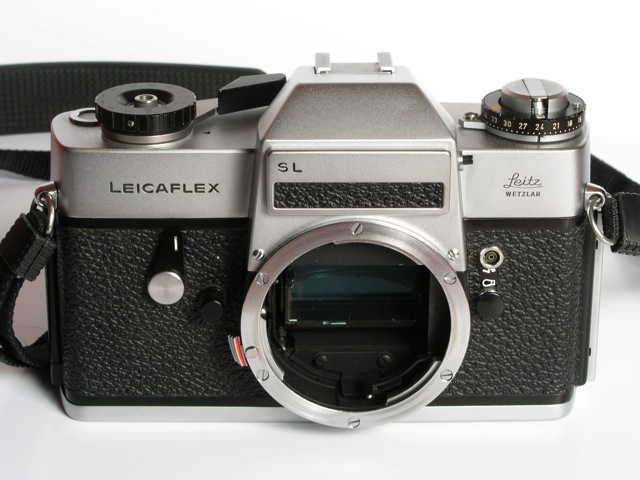
Hard to do anything wrong with that combination. Certainly, the svelte style of the M3 was missing from this bulky pair, but the camera came with the best viewfinder and focusing screen ever built into an SLR – a fact to this day – and once that body was mated to the superb 180mm f/3.4 Apo-Telyt-R, well, this photographer had found his Chateau Lafite Rothschild of landscape equipment. Throw Kodachrome into the mix and you have maybe the finest equipment the twentieth century ever made available to an aspiring photographer. With but one exception, read on below, this was the best lens I have ever owned.
After years of providing for old age, a process that common sense dictated was something you would be foolish to trust to government, the photographic ethic saw a return to the M and its street capabilities. The so-so 50mm f/2.8 Elmar gracefully gave way to a lovely v3 Summicron, the last model with the removable lens head, and the increased contrast and lovely tonal rendition of this masterpiece, now used exclusively for color, were a joy to behold.
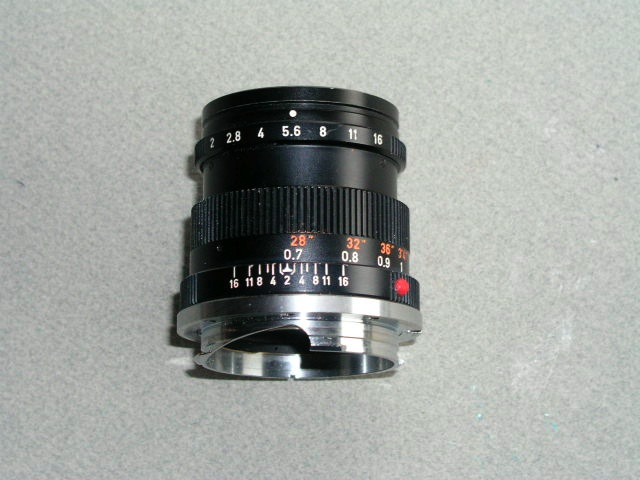
Small, fast focusing, it has moved to a good home. It served me faithfully for the best part of two decades.
The 90mm Elmar gave way to a Leicaflex design mounted in an M mount, the 90mm f/2.8 Elmarit-M. Nowhere near as compact as the old Elmar, its lens element did not rotate as you focused, so the apertures were always clearly visible on top. Almost worth the trade off in size and weight, and the jump in definition and resolving power was out of this world.
But the M3 lusted after something better still, and before you knew it the Elmarit-M was joined by a brand, spanking new 90mm Asph Apo-Summicron-M. The only new Leica lens I ever owned and there are no words in the vernacular to describe the capabilities of this optic. It is as if the M3, released in the early ’50s, had finally found a lens to do it justice some forty years later. Suffice it to say that it simply intimidated me every time I mounted it on the camera, for the knowledge was certain that there was simply no way I could do it justice. Without a doubt one of the best lenses I have ever owned.
But that was far from the end of it. Like the poor kid who grew up lusting after Ferraris but never dreamed he would own one, I chanced upon a new 400mm f/6.8 Telyt.
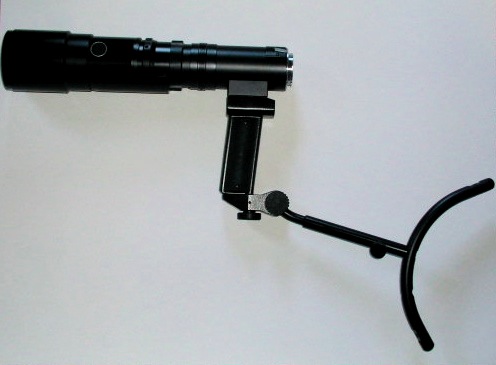
This lens had always fascinated me when I was a kid, just like those Ferraris.
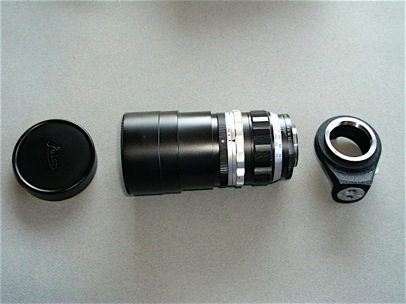
The lens had been owned by a collector (Ugh! A lawyer to boot, as if that was a surprise) for twenty years and never taken out of the box. Sacrilege! The lubricants in the trombone focus action were dried up, the schmuck lawyer’s protestations notwithstanding, making focusing about as much fun as a root canal, but a quick trip for relubrication saw another example of Leitz’s genius mated, with the appropriate adapter, to the Leicaflex. The design may only have used a couple of glasses but, goodness, was it sharp. The thing was a foot and a half long, making for a discomfiting feeling in later years as everyone was now watching everyone else, but it cranked out some great pictures despite the perceived threat to life and limb of all and sundry.
Reverting to the streets, where I had pretty much grown up as a photographer, called for something really wide, so why not the best? The late ’90s market was booming, everyone was an investment genius, money was cheap and, so it seemed, was the outrageous 21mm Asph Elmarit-M.
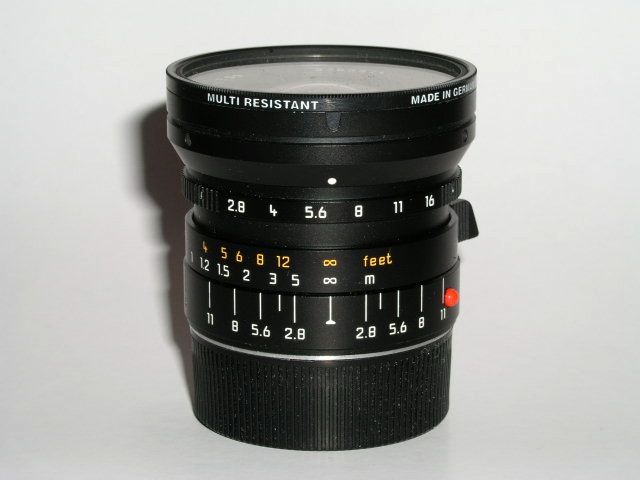
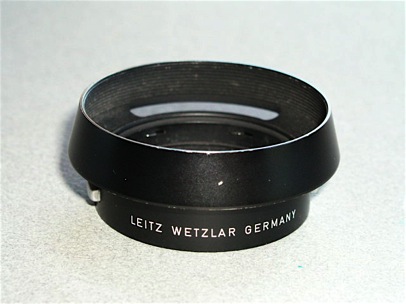
The third best lens I ever used. Sure, the clip on viewfinder was simply lousy, plastic casing and all, and the lens hood was consigned to the garbage can as soon as I looked at it, but it replaced a bizarre, if cheap, Russian 20mm Russar (a design that Comrade Stalin appropriated from Zeiss) and showed this user what a super-wide was really about. This one really became a part of me. I find it hard to believe that the coverage and micro-contrast of this very special optic will be exceeded at this focal length.
And finally, because I simply had more money than sense at the time, why not a 135mm f/3.4 Apo-Telyt-M?
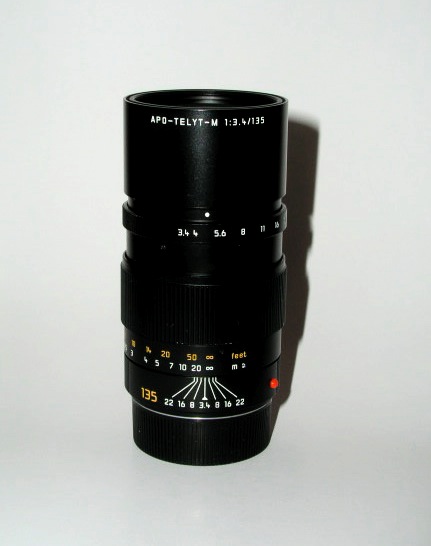
I already knew what the magical combination of apochromatic glasses and Telyt design could do, so the 135mm replaced a long string of 135s – the Hektor, the Elmar, and the Tele-Elmar. It badly embarrassed all of its predecessors.
There were many others, of course. Like old girlfriends, you never forget them. (There were, I hasten to add, more lenses than girlfriends). Each had its genius. Each had its faults. All were loved. And remain so to this day. (Lenses and girlfriends).
So now I have one Leica left. My M2, with what is perhaps the ultimate street snapper’s lens, the 35mm Asph Summicron-M. Yes, another gift courtesy of the Internet Bubble. The pairing is on extended loan to a fine English photographer, and will probably return home sometime in 2007. That Summicron replaced a very modest 35mm f/3.5 Summaron which, despite its unprepossessing looks, was as good as you could wish, at any aperture. Indeed, with the sole exception of the 50mm Elmar my M3 started life with, all those wonderful Leica lenses never much cared what aperture you selected, for they were equally good at anything the lighting conditions dictated. And the 35mm Asph is maybe the only design where Leica finally got the lens hood dead right.
So, will I sell both? Well, the M2 body must move on. I am simply not returning to the drudge of film/processing/scanning/dust removal that digital obsoleted. Further, I have little interest in cropped digital sensors, especially at the outrageous price Leica is asking for the M8, so unless the House of Leica comes out with a full frame sensor, affordable M9 (as likely as finding integrity in a politician), and stops making all those darned excuses about technology, the 35mm Asph will go also. Modern point-and-shoot digitals get better daily at prices, compared to the M8, that represent impulse buys. They also permit cost effective annual upgrades, something no M8 owner will like to contemplate after a mere twelve months of ownership. And that, by the way, is why I think Leica’s M8, after the honeymoon is over, is doomed to fail.
Complacency is easy. Change hard. Neither negates the fact that technology marches on.