Everything looks worse in black and white
Smirking with ridiculously self-satisfied glee at a joke he has just told to the wife of one of his flunkies, Hitler reaches for the cookie bowl. His pasty faced complexion contrasts strangely with the tanned, Aryan health evidenced on the woman’s beaming face, her gingham dress replete with red and white stripes.
Turn the page and there’s a post-Bitzkrieg Warsaw in September, 1939, its ancient buildings just so much rubble, with a proud, well fed line of Wehrmacht soldiers guarding their spoils, grey helmets shining in the sun, the sky a pure azure, doubtless wondering about that evening’s forthcoming excesses at the cost of their Polish captives.
One more page and Rotterdam is in ruins, one hour after the German bombardment, the sky a threatening dark indigo this time.
One more page and it’s the turn of the French, surrounded by German troops, brown shirts everywhere.
Yet another page and there’s a rotund, self-satisfied German actress in Hitler’s Chancellery, massive gold necklace and ruby red lips glistening just so in the Berlin of 1940. Enjoy it while you can, baby.
The sheer depressing nature of these pictures, blow after blow after blow, each speaking to the Master Race’s self-pronounced superiority, has a strange way of jolting the viewer into reality. Suddenly you are wide-eyed with amazement when you realize all these pictures, by unnamed photographers, were taken on Kodachrome.
Many, many years later Paul Simon was to crystallize the essence of this very American invention in the lyrics of his song. He was doubtless writing about the demise of TriX:
When I think back
On all the crap I learned in high school
It’s a wonder
I can think at all
And though my lack of edu—cation
Hasn’t hurt me none
I can read the writing on the wall
Kodachrome
They give us those nice bright colors
They give us the greens of summers
Makes you think all the world’s a sunny day, Oh yeah
I got a Nikon camera
I love to take a photograph
So mama don’t take my Kodachrome away
If you took all the girls I knew
When I was single
And brought them all together for one night
I know they’d never match
my sweet imagination
everything looks worse in black and white
Kodachrome
They give us those nice bright colors
They give us the greens of summers
Makes you think all the world’s a sunny day, Oh yeah
I got a Nikon camera
I love to take a photograph
So mama don’t take my Kodachrome away
Mama don’t take my Kodachrome away
Mama don’t take my Kodachrome away
Mama don’t take my Kodachrome away
Mama don’t take my Kodachrome
Mama don’t take my Kodachrome
Mama don’t take my Kodachrome away
Mama don’t take my Kodachrome
Leave your boy so far from home
Mama don’t take my Kodachrome away
Mama don’t take my Kodachrome
Mama don’t take my Kodachrome away
And if you want to catch the spirit of the piece, go no further than the lovely Coneheads on DVD, to see what I mean.
The Leica may have been the greatest machine invented for photography, and its gritty, grainy black and white film stock enshrined an era seen through the eyes of street photographers everywhere. But the snaps were not color. And pragmatic Americans, ever looking for the latest gadget, the true reality, wanted color. So Kodak gave them Kodachrome.
The single greatest photographic invention since the Leica.
The book is ‘Kodachrome, 1939-1959, The American Invention of our World’, and you can get it for chump change from Amazon.
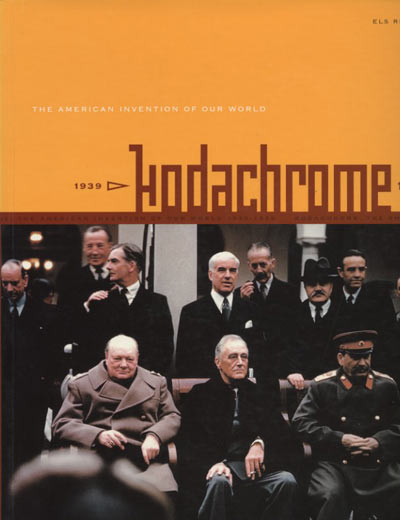
Yalta, 1945. Stalin decides the future of Western Europe while WSC and FDR look on. Click the picture.
It is, perhaps, unfair to refer to this as Kodak’s invention, though Kodak deserves credit for letting two professional musicians, one a pianist, the other a violinist, take up laboratory space in upstate New York in 1930. Leopold Mannes and Leopold Godowsky, Jr. just happened to be keen amateur photographers and geniuses at chemistry. Clearly, God did not allocate talent equally. After thirteen years of research, Kodak announced Kodachrome on April 12, 1935 as the first continuous tone color film. Imagine a thirteen year development cycle for anything today.
That early emulsion faded badly but by 1938 the Leopolds (‘Man’ and ‘God’ as they were known in Rochester) got it right and the Kodachrome you can still – if only just – buy today is little changed. Best of all, unlike any other color film ever made, processed and properly stored it is virtually fade proof. History may not record how Mannes and Godowsky felt about their emulsion being used to photograph the creator of the Final Solution, but the oh! so satisfying picture of German prisoners of war in a prison cage on Normandy beach (page 44) doubtless warmed the cockles of their hearts, especially as it was taken on the emulsion they created.
Kodachrome in 1938 was some 12 ASA in speed. Later, as Kodachrome II it became 25 ASA, where it stayed until being discontinued, now as Kodachrome 25 (I suppose that sounded faster) a couple of years ago. Meanwhile Kodak had also added Kodachrome X (later Kodachrome 64) and Kodachrome 200. For years, such was the repute of this emulsion, National Geographic would only accept Kodachrome slides for reproduction in its pages.
Jane Russell frolicked in the hay for all to admire for a poster for her film ‘The Outlaw’ in 1944. Howard Hughes, who bankrolled the movie, famously remarked “There are just two reasons to go and see her”, summarizing succinctly what every American male was thinking. Americans were happy in 1944, if not gay, and Kodachrome captured Jane’s …. womanhood just so. No one organized a protest, men continued to eat red meat and smoke Marlboros, and women had 2.4 children and craved a starter home in the San Fernando Valley, north of Los Angeles. Political correctness, refuge of cowards and lawyers, had yet to raise its ugly head. Marlene Dietrich looked ravishing in Kodachrome and jewels in 1948 (it’s OK, she was on our side) and General Douglas MacArthur could look macho in his jeep in 1950. Doubtless the vain General liked what Kodachrome did for him, even if Harry Truman later fired him for insubordination.
So a vital part of the chronology of American life, of what it meant to be American, is recorded for all time on fade free Kodachrome, in true colors that tell how it was.
There’s Elizabeth Taylor, ravishing in a white dress. The young JFK with Jacqueline Bouvier, film stars both, enjoying a game of tennis. Brooklyn Dodger Jackie Robinson helping destroy one of the last great bastions of White American bigotry, baseball. Marilyn entertaining the troops, her generous lines lovingly rendered. Hitchcock looking like … well, like Hitchcock, ruddy pink face and cigar. Kodachromes all. The El still ran in New York and Kodachrome proves it. Gamine Audrey Hepburn and blowsy Jayne Mansfield showed their true colors. Tarty Shirley MacLaine juxtaposed with a sneering Elvis. Zapruder used Kodachrome in his 8mm movie camera to record JFK’s murder in Dallas. Tricky Dick tried to look like presidential material next to Ike. Not very successfully, let it be said. Even Kodachrome could not hide the fact that his sly smile might just be something to worry about. And even the great Walker Evans got in on the act with a storefront snap in Kodachrome, though in this instance it’s only fair to add that he should have stuck to black and white.
I used Kodachrome exclusively during the period 1977 through 1990. The absence of grain, the consistency of processing by Kodak, the tonal range and color accuracy, all were simply wonderful. Eventually color negative films would rival, maybe surpass, these qualities, and once you could scan the originals and save them to properly backed-up hard disks, fading ceased to be an issue. For in much the same way as I used TriX during the years 1971-1977, Kodak showed what world class products were all about.
You can still get Kodachrome. K25 is no more and Kodak doesn’t want you to know about the alternative as evidenced by a search on their web site:

But go the the B&H web site and Kodachrome 64 can still be had in 35mm cassettes, in 64 and 200 ASA speeds. Only one lab remains in America that can perform the wildly complex processing of this emulsion, and the lovely 120 film size disappeared years ago, as I found to my cost. Unearthing two rolls from the dark recesses of the film shelf in the fridge the other day, it transpired that no one, not even Kodak UK, processed this size any more. Oh! well, I had to throw them out. Just think, through the late 1950s you could get Kodachrome in sizes up to 8″ x 10″. Imagine that. Today it’s 35mm or nothing.
And the inventors? Kodak’s historians have wiped them from the memory banks. Search on Mannes or Godwosky and you get nothing. Shameful.
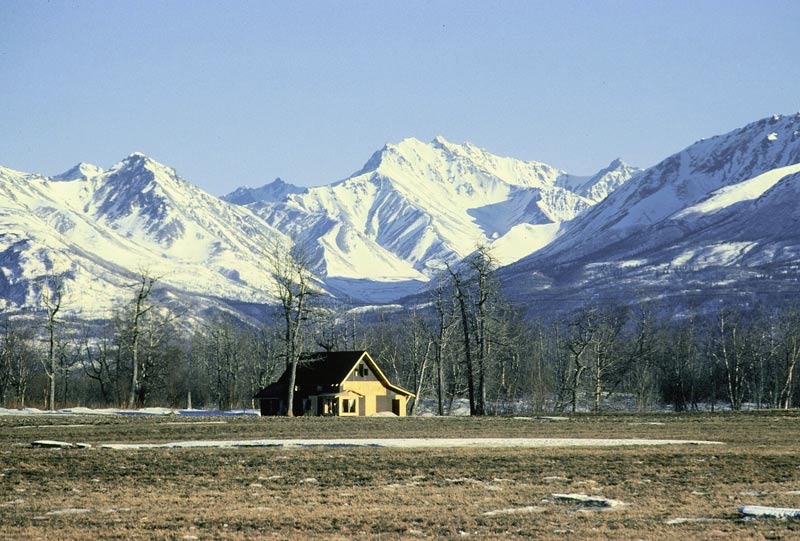
Matanuska Valley, Alaska, 1978. Leica M3, 50mm Summicron. Kodachrome II.
Taken by this newly affluent immigrant shortly after arriving in America.
At last I could afford not just color film, but Kodachrome, no less.
So if you still use film but have never used Kodachrome, please rush and get one of the remaining rolls now. Your scanner’s dust removal software will not work (silver is required in the emulsion for that and Kodachrome has none), it’s not especially fast by today’s standards, but do you really want to go to your grave and say “I never used Kodachrome?”. No, I didn’t think so.
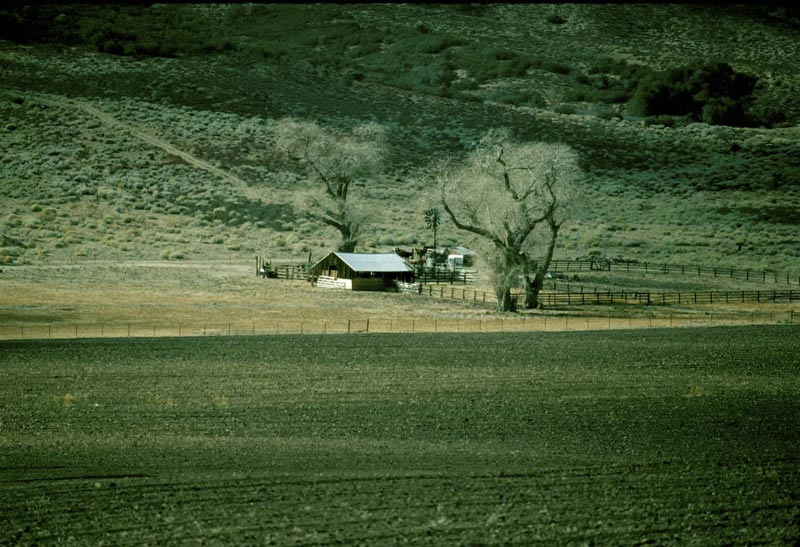
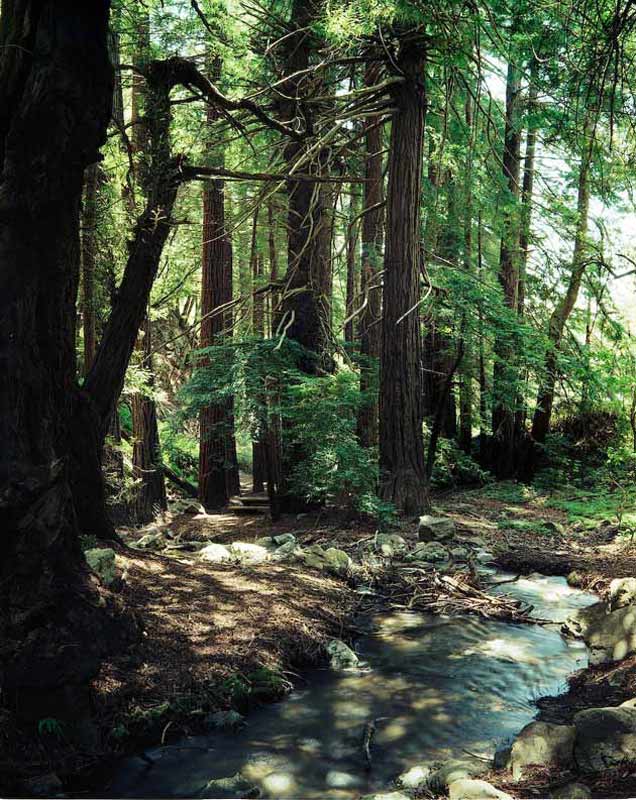
Lake Elizabeth, California, 1990. Leicaflex SL, 180mm Apo-Telyt-R. Kodachrome 64. One of my
last Kodachrome pictures. After that, scanners became affordable and Kodak color negative film,
impermanent as it may be, provided a far faster processing turnaround.